

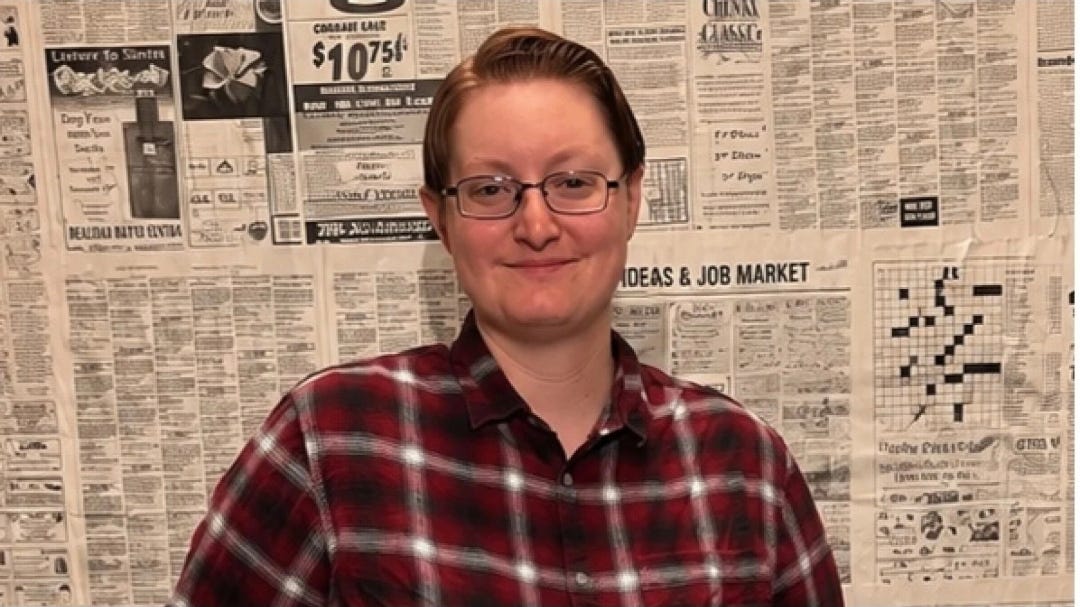
Shepard Scalf says he lost his teaching job after a parent wrongly believed he was transgender.
According to an EEOC complaint filed by the ACLU, the ACLU of Florida, and Chanfrau & Chanfrau, Scalf was working as a middle school language arts teacher at Patriot Oaks Academy in St. Johns County, Florida, when he was called into a meeting and told he had to resign or be fired. The complaint alleges the district gave him no legitimate reason for the decision, despite positive performance feedback and no prior discipline.
Scalf is intersex. He is not transgender. But the complaint alleges the district knew he lived as a man, knew he had been assigned female at birth through hiring paperwork, and later forced him out after complaints about his perceived gender identity.
That is part of the harm.
A person should not have to explain his chromosomes, medical history, or sex characteristics to prove he belongs in a classroom. Scalf’s case shows how anti-trans suspicion can turn someone’s body into evidence and someone’s privacy into collateral damage.
The complaint alleges that Scalf had met expectations, was developing strong relationships with students and staff, and was told his performance was not the problem. Scalf has said the experience made clear to him that the issue was not his teaching, but who others believed him to be.
The public danger is not only that one parent was wrong. It is that institutions can convert suspicion into employment consequences before the truth is even allowed to matter. Once that happens, the burden shifts onto the targeted person to prove their body, history, and identity are acceptable.
This is what anti-trans panic does when it becomes a system of surveillance. It does not only target trans people. It can also target intersex people, cisgender people, educators, students, and anyone perceived as failing to match someone else’s narrow expectations of sex and gender.
Scalf’s story makes that danger visible. The machinery built to police trans people does not stay contained. It can reach anyone whose body, identity, voice, appearance, or private medical history becomes suspicious to people trained to look for difference.
At the center of this case is a teacher who says he wanted to keep teaching his students. Instead, according to the complaint, he was pushed out after a parent thought he was someone he is not.
This was not a misunderstanding without consequence. It was a warning about what happens when institutions allow suspicion to become punishment.
Anti-trans panic does not stay contained.
It follows people into classrooms, workplaces, public records, medical privacy, and daily life. Shepard Scalf’s case shows how a culture built to police trans people can also punish intersex people and anyone perceived to defy gender norms.
Trans United documents these harms because survival is not only about policy. It is about the people forced to defend their jobs, bodies, names, privacy, and safety against systems that should never have targeted them.
Upgrade to support Trans United and help keep this documentation going.
OMFG - basic human rights! 🤬