

Ballot committees, petition campaigns, and state lawmakers in Arizona, Colorado, Missouri, and Washington have placed restrictions on transgender healthcare, school participation, privacy, and public access before statewide voters in November 2026. The measures differ in scope, but each asks an electoral majority to authorize unequal treatment of trans children, students, patients, and families.
The strategy moves anti-trans policy beyond statehouses where governors, lawmakers, or existing state protections have blocked similar restrictions or made them more difficult to enact. Organizers can gather signatures, finance statewide messaging, secure official ballot placement, and ask voters to impose those restrictions through elections.
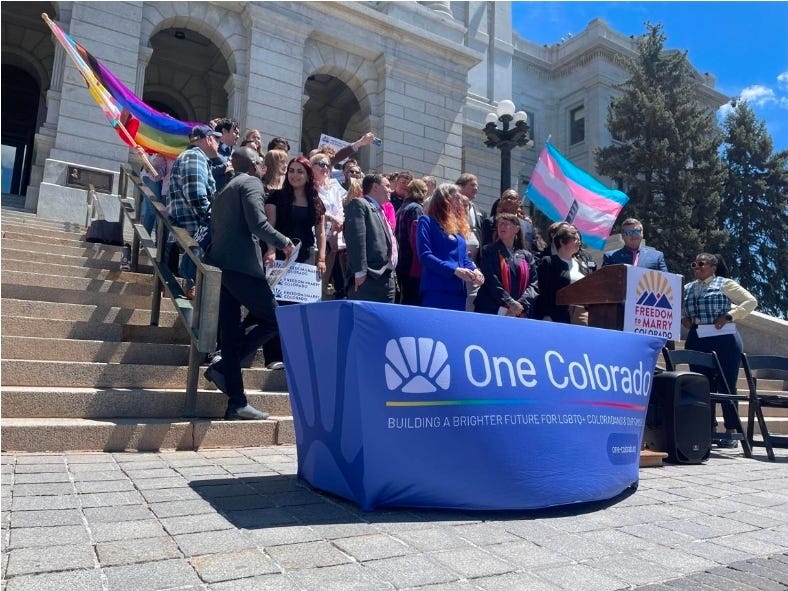
Colorado and Washington show why that shift matters. Both states maintain stronger protections for transgender people than many states where Republican legislatures have enacted healthcare restrictions, sports bans, and limits on public participation. Ballot initiatives give anti-trans campaigns another route to weaken those protections by turning equal treatment into temporary permission that voters can revoke.
Washington Initiative IL26-638 would prohibit students the measure classifies as biologically male from participating in female-designated K–12 interschool athletics. Every student seeking eligibility for a female-designated team would have to submit verification from a personal healthcare provider based on reproductive anatomy, genetic makeup, or naturally produced testosterone levels.
The requirement would extend beyond openly transgender students. Every student seeking eligibility for a female-designated school team would enter a system requiring medical confirmation that their body satisfies the initiative’s definition of sex. Trans students are the political target, but the measure would create a legally mandated verification system across female-designated school athletics.
Megan Rapinoe has warned that the Washington initiative could drive girls out of sports by creating testing costs and pressuring families to submit their children to invasive examinations. The official measure requires healthcare-provider verification based on specified biological criteria. Its enforcement structure would make access to school athletics depend on medical documentation of a student’s body.
Colorado voters will face two separate measures. Initiative 109 would restrict transgender students from participating in school and college sports according to their gender identity. Initiative 110 would prohibit specified surgeries for minors when performed to alter sex characteristics and would restrict related public funding and insurance coverage.
The Colorado initiatives create two forms of state control. One targets transgender students’ participation in education and athletics. The other allows statewide voters to restrict healthcare decisions made by transgender patients, their families, and medical professionals.
Colorado’s existing protections explain the importance of the ballot strategy. Anti-trans organizers are using statewide initiatives to pursue restrictions that would face greater resistance through the state’s current political leadership. The campaigns attempt to transform legal protection into something trans people retain only until another petition drive places their rights before voters.
Arizona Proposition 318 would expand restrictions affecting transgender students in sports and sex-designated school facilities, including restrooms, locker rooms, and showers. Gov. Katie Hobbs has used her veto power to block anti-trans legislation. Proposition 318 gives supporters a route around that barrier because a voter-approved measure would not require her signature.
The Arizona measure would make transgender students’ ordinary participation in school life the subject of a statewide political campaign. Access to teams and facilities would be determined through an initiative built around separating trans students from their peers and treating their presence as a matter requiring public restriction.
Missouri voters will face Amendment 3, a legislatively referred constitutional measure that would repeal the reproductive-healthcare protections voters approved in 2024, allow abortion restrictions with limited exceptions, and prohibit gender-transition procedures for minors. The official ballot language defines those prohibited procedures to include gender-transition surgeries, cross-sex hormones, and puberty-blocking drugs, with exceptions for specified medical conditions. Missouri lawmakers have placed restrictions on transgender healthcare inside a broader attempt to reverse voter-approved reproductive rights and expand state control over private medical decisions.
Nebraska organizers submitted signatures for a proposed constitutional amendment restricting transgender participation in school and college sports. Election officials were still reviewing those signatures during the latest confirmed reporting, so the proposal cannot yet be described as certified for the November ballot.
Maine demonstrates that these campaigns can be stopped before reaching voters. A proposed sports restriction failed to qualify after election officials determined that supporters had not submitted enough valid signatures. Petition review and qualification requirements prevented the proposal from becoming an official ballot measure.
Across the confirmed and pending measures, transgender people are singled out for restrictions that do not apply equally to everyone else. Petition systems provide the procedural route. Political committees organize the campaigns. State election systems convert the proposals into official ballot questions. The broader electorate is then asked to approve limits on healthcare, education, privacy, or public participation.
LGBTQIA+ advocates have compared the strategy to the 2004 wave of ballot amendments targeting same-sex marriage. Those campaigns also placed the rights of a minority before statewide majorities and turned legal equality into an election-season weapon. The 2026 measures revive that political method with transgender people as the target.
The damage does not begin on Election Day. Statewide campaigns can fill television, social media, mailboxes, advertising, and public meetings with messages portraying transgender people as threats to children, schools, medicine, or women’s safety. Trans students become symbols in campaigns they did not create, families are forced to defend private healthcare decisions in public, and children must explain why they deserve access to classrooms, teams, bathrooms, locker rooms, and medical care alongside their peers.
The danger is especially serious for transgender people who relocated to Colorado, Washington, or other states seeking stronger protections. A state may offer refuge from legislative bans, but a statewide ballot campaign can place that security back into contention. Legal protection becomes unstable when political committees can repeatedly force a targeted minority to defend it through statewide elections.
Supporters often present the measures as disputes over fairness, safety, or parental rights. Their legal effects are direct. The proposals restrict transgender people’s control over their bodies, limit participation in schools and sports, separate students from public facilities, and weaken families’ authority to make healthcare decisions with medical professionals.
Transgender people did not place their healthcare, privacy, education, and public participation on the 2026 ballot. Political committees, petition campaigns, and lawmakers did. The accountability belongs with the actors who organized these measures and the institutions that converted anti-trans restrictions into official questions for statewide voters.
Anti-trans organizers are moving restrictions from statehouses to statewide ballots, creating another route to target transgender healthcare, education, privacy, and public participation. These campaigns gain power when their legal mechanisms, political committees, and institutional consequences remain hidden from public scrutiny.
Trans United tracks the policies, ballot campaigns, political committees, and institutions placing LGBTQIA+ rights under attack—and keeps transgender people and families at the center of the record. Upgrade to a paid subscription to support continuing LGBTQIA+ rights and accountability reporting.
This makes me sick!