

UPDATE — July 30, 2026: The Advocate has now confirmed that the Palm Beach Sheriff’s Office is investigating Jayla McGee’s July 5 shooting death as a homicide. In its official response, the sheriff’s office misgendered and deadnamed the 19-year-old Black trans teen. The Advocate also reported that Jayla’s killing received almost no local media coverage and cited Trans United’s reporting on how her family and community were forced to preserve her identity, life, death, and grief themselves because public systems failed to do it.
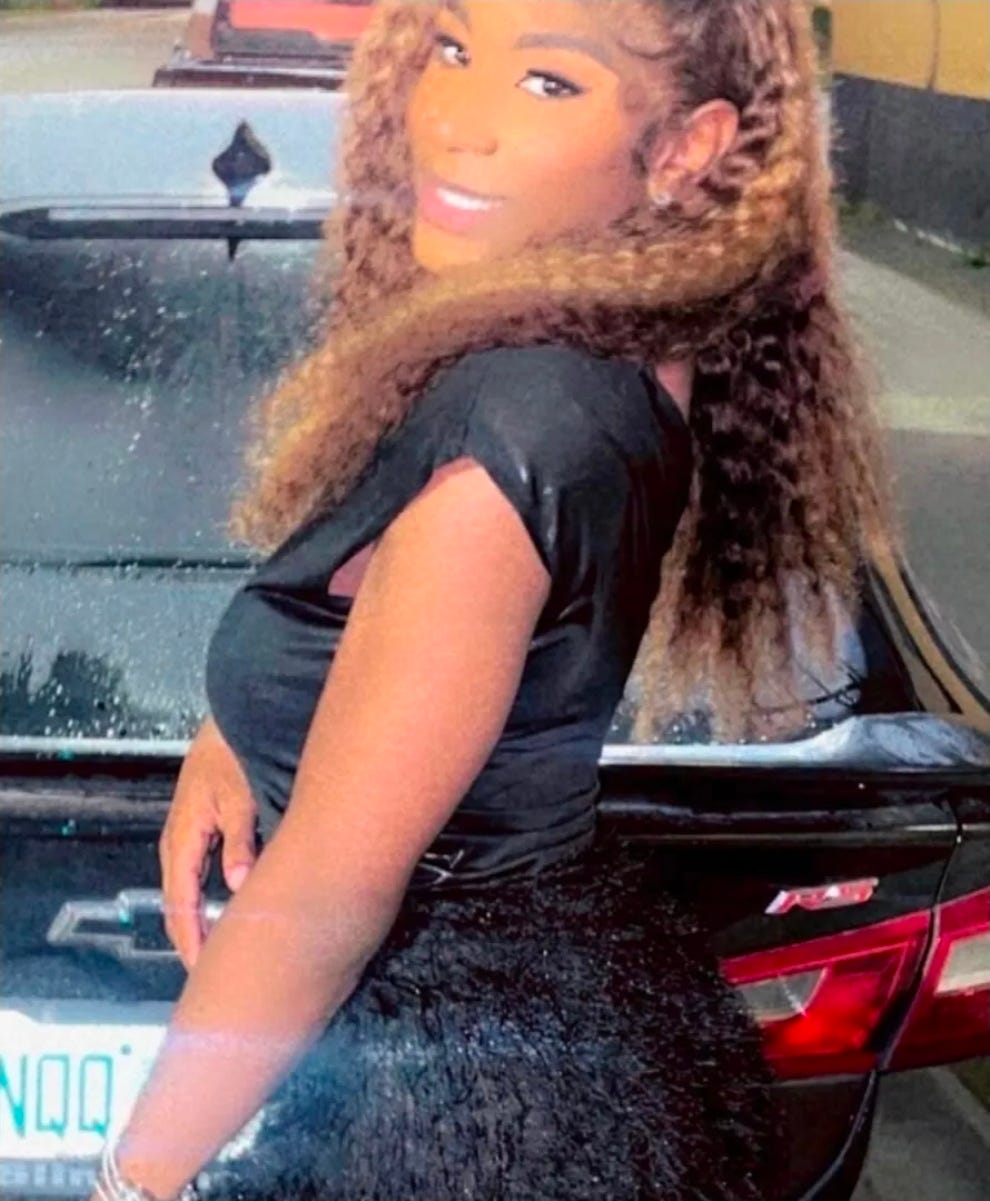
Jayla McGee’s family and friends say the 19-year-old Black trans teen was shot and killed in Belle Glade, Florida, on July 5, 2026. Her loved ones announced her death, gathered for a vigil, shared photographs and memories, and prepared to bury her, while almost no visible public account named the young woman her community was mourning or explained what happened to her.
That silence forced Jayla’s family and friends to preserve the record themselves. They documented her face, identity, names, date of death, the gun violence they say ended her life, and the grief that followed. Without their testimony, a young Black trans person could die violently and then disappear from public understanding because official documentation failed to connect the death to the person her community knew.
Jayla was born and raised in Belle Glade, part of western Palm Beach County. She belonged to a large family of siblings, cousins, aunts, uncles, and others whose grief shows how deeply she was woven into their lives. She was also known as Javarous McGee and Baby J, names that appeared across profiles, memorial materials, and the relationships through which people knew and loved her.
Her social-media presence was vivid. Jayla shared funny videos, photographs, memes, family pride, and the constant back-and-forth of someone closely connected to friends and relatives. The posts she left behind show a young person who was expressive, socially present, and loved without qualification. Friends remembered her as the life of the party and as someone who made her love unmistakable.
Those same feeds that once documented Jayla’s ordinary life are now carrying evidence of her death. Family and friends circulated arrangements for a Friday-night viewing and a Saturday celebration of life, with mourners invited to wear pink and white. People gathered at a vigil on July 18 and shared the footage repeatedly. Photographs became memorial images, while messages once exchanged between friends became testimony about who Jayla was and what her absence had taken from them.
Her loved ones say she was shot and killed. While they prepared to bury Jayla, the public record remained nearly silent about the violent death of a 19-year-old Black trans teen in Belle Glade.
A death can exist somewhere in official documentation while remaining publicly disconnected from the trans person being mourned. A report entered under another name may never appear when someone searches for Jayla. A record that omits gender identity may document a death while erasing that the person killed was transgender. Misgendering at the beginning of an investigation can travel through databases, medical systems, newsrooms, and public records until the person remembered by loved ones becomes almost impossible to find.
Institutions may claim they merely repeated information supplied by another agency, but repetition does not neutralize the harm. It carries the erasure forward. Journalists searching Jayla’s affirmed name find almost nothing. Researchers attempting to count violence against trans people may never see the case. Advocacy groups and community members are left reconstructing the death through funeral notices, photographs, vigils, videos, and testimony from people already carrying the burden of grief.
Her family should not have to prove Jayla’s existence while simultaneously mourning her death and rebuilding the public account institutions failed to provide.
That burden becomes heavier when the government removes the tools used to measure violence against transgender people. Trans United previously documented how eliminating gender-identity questions from federal victimization data weakens the ability of researchers, journalists, advocates, and communities to identify patterns of anti-trans harm. The violence does not stop when the data disappears. It becomes harder to count, compare, and expose.
Federal data removal did not create the silence surrounding Jayla’s local record, but it strengthens the same architecture of disappearance by weakening the tools needed to expose the pattern. Locally, a death can be recorded without the affirmed name or trans identity known by the victim’s community. Nationally, the data needed to reveal how often that happens is weakened or removed. The local failure can hide the individual case, while the national loss of data makes the broader pattern harder to prove.
The consequence is visible in a family posting funeral arrangements while the public searches for any institutional account explaining why their 19-year-old loved one is dead.
Jayla’s life cannot be reconstructed completely from social media, and it should not have to be. Public posts do not reveal every school she attended, every private hope she carried, or every future she imagined. They show only the parts she chose to share: her humor, style, family, friendships, and the social world she helped create around herself. She should have had years to reveal more of herself on her own terms, rather than having her life reconstructed through fragments after her death.
At 19, Jayla should have been moving further into adulthood, changing her mind, making plans, discarding them, choosing new ones, and growing into herself. Instead, the people who loved her are gathering photographs and memories because they say gun violence ended her life before adulthood had fully begun.
Her family has already endured devastating gun violence. In 2022, Jayla’s eight-year-old sister Ronziyah was shot and killed outside the family home in Belle Glade. Jayla was still a young teenager when her family was forced to survive that loss. The deaths occurred four years apart, but together they show the extraordinary grief this family has been forced to carry and the cruelty of leaving them to document another loss without meaningful public acknowledgment.
Jayla’s life does not depend on mainstream coverage or a police release for recognition. Public institutions still have a responsibility to identify violent deaths accurately, preserve the identities of the people killed, and give communities an account of what happened.
When institutions fail to identify a trans person accurately, that person becomes harder to find in public records and their death becomes harder to count within the broader pattern of violence against trans people. The gun violence Jayla’s loved ones describe can become separated from the Black trans teen whose life was taken, leaving future reports incomplete because another person has disappeared inside records that do not reflect who she was.
Jayla’s community has refused that erasure by sharing her face, preserving her laughter, style, relationships, and affection, gathering publicly, and telling the world that she was shot and killed. Their testimony is not a substitute for the record. It is the record public systems failed to provide.
Jayla McGee was a 19-year-old Black trans teen from Belle Glade. She was a sibling, cousin, niece, friend, and loved member of a large family. She filled social feeds with humor and fierce presence, and she was moving toward an adulthood she deserved to reach.
Her loved ones say she was shot and killed on July 5, 2026. Institutional silence does not erase the account they have placed into the public record; it exposes the systems that left her family carrying it alone.
Trans United is placing Jayla McGee’s name, identity, life, and reported killing into the public record because violence must not be allowed to take a Black trans young person and then let institutional silence finish the erasure.
Jayla McGee’s family and friends say the 19-year-old Black trans teen was shot and killed in Belle Glade, Florida. Their testimony, memorials, photographs, and vigil preserved the public account that institutions failed to provide.
Upgrade to a paid subscription to support independent reporting that documents violence against trans people, preserves the names public systems erase, and keeps Black trans lives in the public record.