

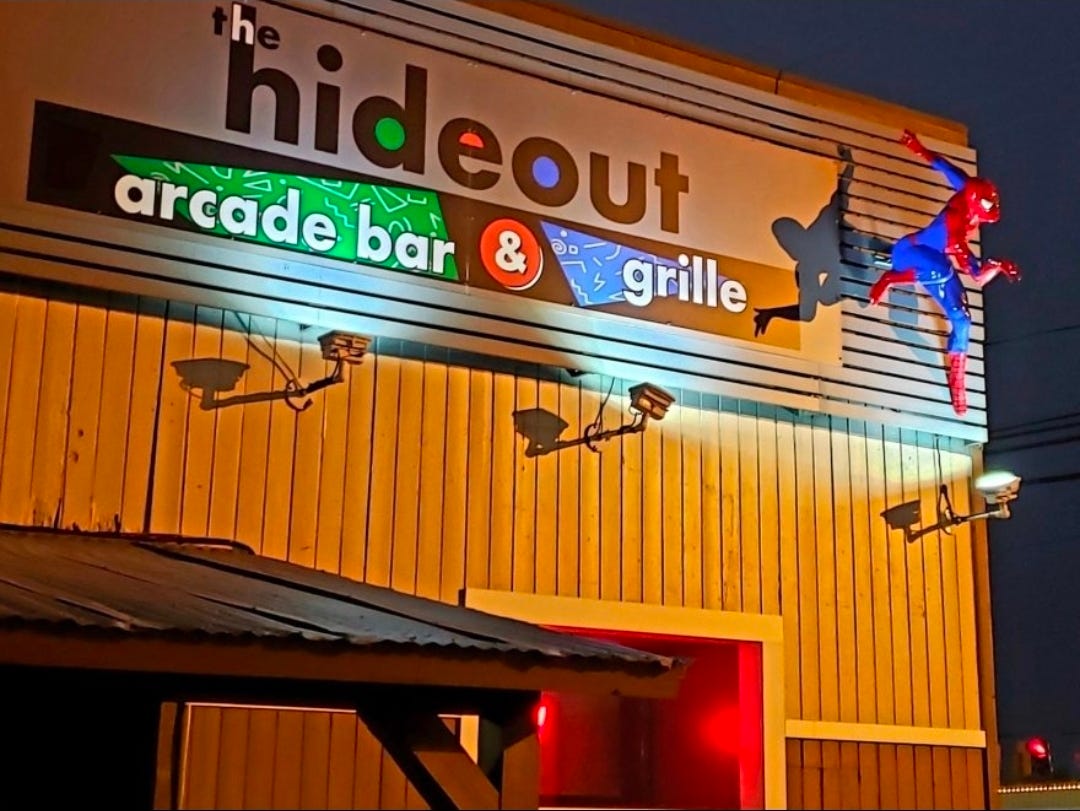
Kaitie Sorber had been a regular customer at the Hideout Arcade Bar & Grille in Rehoboth Beach before employees turned a trip to the restroom into an act of gender policing.
On April 5, 2023, Sorber, a trans woman, was stopped from using the women’s restroom because her Delaware identification still carried a male gender marker. Employees directed her to use the men’s restroom instead. Delaware’s Human and Civil Rights Commission later found that the Hideout discriminated against Sorber because of her gender identity in violation of the state’s Equal Accommodations Law.
The discrimination did not stop with the restroom denial. After Sorber publicly criticized what happened, she returned to the Hideout on April 12 and learned that the business had banned her. The commission found that decision amounted to unlawful retaliation for opposing the bar’s discriminatory policy.
The ruling documents more than an isolated argument over which restroom someone could enter. Hideout had tied restroom access to the gender marker printed on government identification, allowing employees to police patrons whose appearance or gender identity did not match what staff expected to see on an ID.
Sorber had already produced identification when she entered the establishment. She was required to show it again when employees challenged her restroom use. The commission found that Delaware law did not require trans patrons to produce identification before using a restroom consistent with their gender identity and rejected the business’s attempt to make an ID marker controlling.
The commission also warned about what such a policy meant in practice. It could subject patrons to additional scrutiny whenever an employee decided that someone did not fit a subjective view of masculine or feminine qualities. For trans people, that turns ordinary access to a public business into a judgment about their gender made by whoever happens to be standing at the door or outside the restroom.
For Sorber, the consequences were documented. The commission found that the discrimination and retaliation caused emotional injury, humiliation, embarrassment and distress. She was singled out because of her gender identity, denied equal access inside a business she had frequented and then barred after speaking publicly about what happened.
Sorber’s case was not the only discrimination complaint involving the Hideout’s treatment of trans patrons. Kathy Carpenter Brown, another trans woman and the founder of LGBTQ+ organization Transliance, brought a separate complaint after an April 12, 2023 encounter at the bar. Brown said she was denied entry after refusing to allow a bouncer to scan her identification, and her complaint challenged how the business was using ID checks and enforcing its policies against trans patrons.
A separate Delaware commission proceeding also found gender-identity discrimination involving Brown. Together, the two cases document how the Hideout used identification and gender-based scrutiny in its treatment of trans patrons, while keeping the distinct conduct in each case clear: Sorber was denied restroom access and later retaliated against, while Brown’s case centered on ID scanning and denial of entry.
Hideout owner Bryan Derrickson defended the bathroom policy by pointing to a customer complaint involving a child and arguing that Delaware law governing restroom access was confusing. Those were his explanations for the policy, but the commission did not accept them as a legal justification for discriminating against Sorber. It found that Delaware’s public-accommodations protections did not authorize Hideout to impose an identification requirement on trans patrons seeking to use restrooms consistent with their gender identity.
The July 22, 2026 order imposed concrete consequences. The Hideout and Derrickson were ordered to pay Sorber $10,000 in compensatory damages for the discrimination and retaliation, and the commission imposed an additional $5,000 civil penalty. The business was also ordered to remove Sorber from its banned-patron list, revise its bathroom policy and complete anti-discrimination and equal-accommodations training.
Derrickson has said he intends to appeal the ruling. Unless and until a court changes the commission’s decision, the public record remains that Delaware’s Human and Civil Rights Commission found that the Hideout discriminated against Sorber because she is transgender and retaliated against her after she spoke out.
That finding reaches beyond one bar and one restroom because policies that force trans people to prove their gender through identification do not operate as neutral paperwork requirements. They give employees power to scrutinize appearance, identity and documents before deciding whether a trans person belongs in an ordinary public space. In Sorber’s case, the commission documented where that system led: restroom exclusion, retaliation after she objected and harm carried by the trans woman the law was supposed to protect.
Sorber did not create the discrimination by entering the women’s restroom, and she did not create the retaliation by speaking publicly about how she was treated. The Hideout imposed the policy, enforced it against her and then banned her after she challenged it. Delaware’s commission has now ordered the business to compensate her, pay a civil penalty and change the policy that produced the discrimination.
Trans United documents the discrimination, policies and systems shaping trans survival — and keeps that record visible when the headlines move on.
Upgrade to a paid subscription to support independent reporting and accountability work.
Screw the Hideout. I hope their business loses a ton of patrons.
Take the money and spend it in a more hospitable bar.