

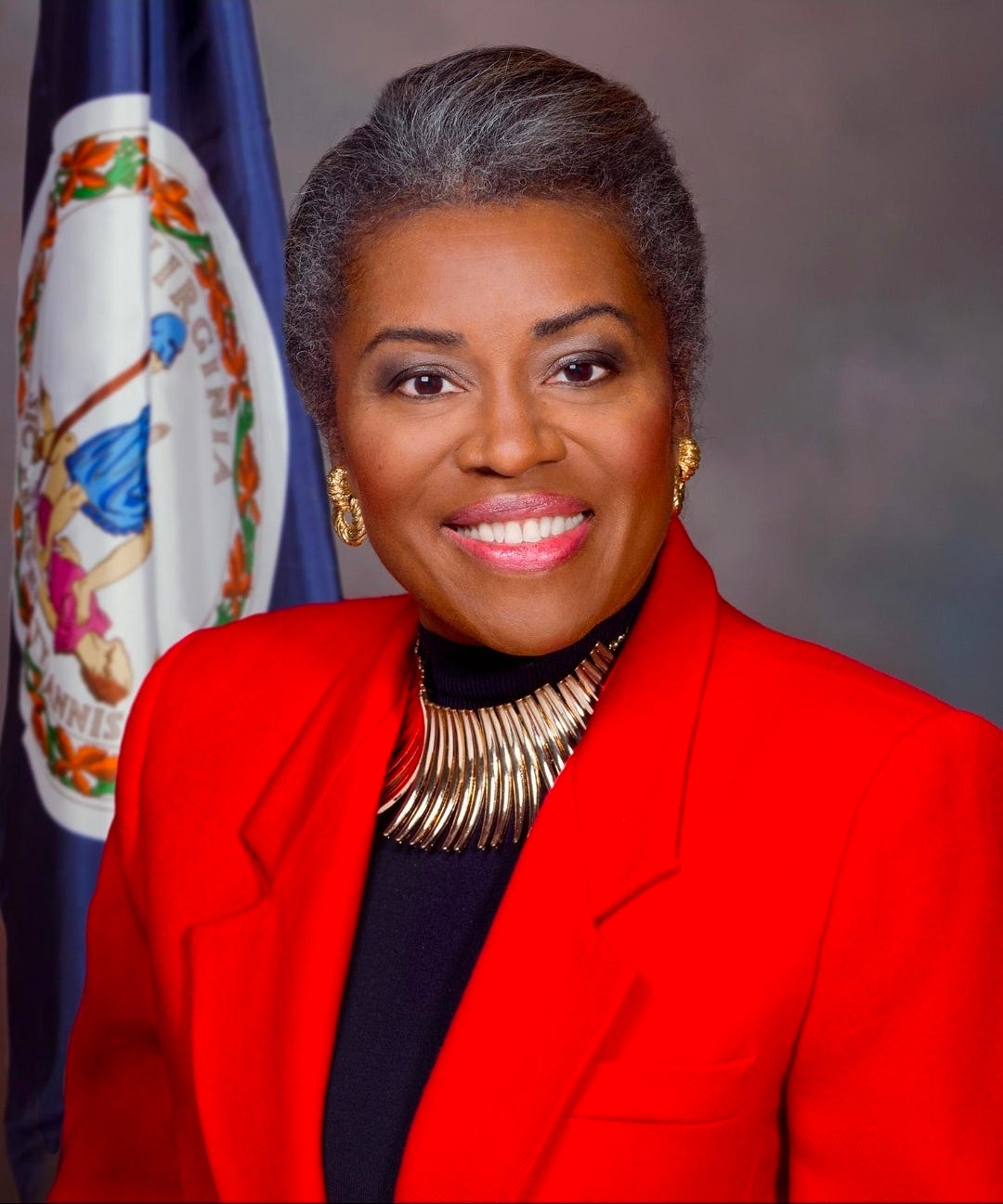
Same-sex couples and LGBTQ+ families in Virginia are being forced to defend the legal security of their marriages again. Former Lt. Gov. Winsome Earle-Sears has launched a statewide “Life and Marriage Tour” urging voters to reject the constitutional amendment that would remove Virginia’s same-sex-marriage ban and place equal marriage protection directly into the state constitution. Her campaign asks voters to preserve language written to exclude those families and leave their security tied to federal court precedent that a future Supreme Court could dismantle.
Virginia voters will decide the amendment on November 3, 2026. The official ballot question asks whether the state constitution should remove the same-sex-marriage ban, affirm that two adults may marry regardless of sex, gender, or race, and require all legally valid marriages to receive equal treatment under the law. The amendment would also prohibit Virginia from denying two adults a marriage license because of their sex, gender, or race.
The protection matters because Virginia’s constitution still declares that only a union between one man and one woman may be recognized as marriage. It also prohibits the Commonwealth from recognizing another union, partnership, or legal status carrying the rights, benefits, obligations, or effects of marriage. That language was created to deny same-sex couples recognition and remains embedded in Virginia’s Bill of Rights.
The ban cannot currently be enforced because the Supreme Court recognized a constitutional right to same-sex marriage in Obergefell v. Hodges. Virginia election officials state directly that if the Supreme Court overturns that decision, the prohibition written into the state constitution would become enforceable again. A successful campaign against the amendment would therefore preserve more than an offensive historical statement; it would preserve legal machinery capable of regaining force if federal protection falls.
For same-sex couples, marriage recognition is woven into the structure of family life. It affects who is recognized as a spouse during a medical emergency, who inherits shared property after death, who qualifies for survivor benefits and family insurance, and whose parental relationship receives legal protection. These are not distant constitutional theories. They are the rules families depend on when illness, death, custody disputes, financial crisis, or government bureaucracy places their relationships under scrutiny.
Virginia law currently requires officials to issue marriage licenses without discrimination based on sex, gender, or race and requires the Commonwealth to recognize those marriages. A statute cannot remove the hostile language still sitting above it in the state constitution. The proposed amendment would eliminate that conflict and replace exclusion with a constitutional right to marry and an explicit state obligation to treat lawful marriages equally.
Earle-Sears is campaigning to prevent those protections from becoming part of Virginia’s foundational law. A “no” vote would leave the ban in place, block the stronger constitutional safeguard, and require LGBTQ+ families to continue depending on federal precedent to stop Virginia from enforcing language written against them. The administration of marriage rights would remain vulnerable to future changes in the courts rather than secured by the voters and constitution of their own state.
Her opposition is not new. In 2024, Virginia enacted HB 174, which prohibited officials from denying marriage licenses based on the sex, gender, or race of the applicants. Earle-Sears was constitutionally required to sign the enrolled legislation in her role as lieutenant governor and president of the state Senate, but she added a handwritten declaration saying she remained “morally opposed” to the bill’s contents. The message was attached to legislation protecting the equal treatment of the same-sex couples whose rights she is now campaigning to keep out of the constitution.
Her broader record reinforces the target of the new tour. During Virginia’s 2025 gubernatorial debate, Abigail Spanberger raised Earle-Sears’s opposition to same-sex marriage and said she had supported allowing workers to be fired for being gay. Earle-Sears twice interjected, “That’s not discrimination.” That response rejected the harm at the center of the accusation and exposed the same political frame now driving her campaign against constitutional marriage protection.
Calling the tour a defense of “life and marriage” reverses the actor and the target. Same-sex couples are not threatening marriage by asking Virginia to remove a ban directed at them. They are asking the state to stop maintaining a constitutional hierarchy in which different-sex marriages are treated as legitimate by the document itself while their marriages remain protected only because federal law prevents the ban from operating.
The campaign depends on voters treating an unenforceable ban as harmless. Because same-sex couples can currently marry, opponents can portray the amendment as unnecessary. Virginia’s own election materials make the consequence explicit: the prohibition remains in the constitution and would become enforceable again if Obergefell were overturned.
The aftermath of Roe v. Wade demonstrated what happens when hostile state provisions are preserved until the Supreme Court removes the federal barrier restraining them. Laws that had been blocked regained force because states had kept the machinery intact. Virginia’s marriage amendment offers voters the opportunity to remove that machinery before LGBTQ+ families are forced to discover what it can do after another judicial reversal.
Keeping the ban also imposes harm before any future ruling. Same-sex spouses must continue watching elections, court appointments, lawsuits, and national campaigns for threats to marriages around which they have already organized homes, children, finances, healthcare, and end-of-life decisions. Their legal security remains politically conditional while different-sex couples are not being asked to defend the validity of their marriages in this election.
The amendment would end that unequal condition inside Virginia’s constitution. It would remove language created to deny same-sex couples recognition, affirm marriage as a right belonging to two adults, and require the Commonwealth to treat lawful marriages equally. Earle-Sears’s campaign would deny families that protection and preserve the ban for a future in which courts may once again allow Virginia to use it.
Same-sex couples and LGBTQ+ families have built their lives around marriages recognized today. They share homes, raise children, care for spouses through illness, assume shared financial and legal responsibilities, and depend on the law to recognize the families they have already created. Earle-Sears is asking Virginia voters to preserve a constitutional ban written against those families rather than replace it with equal protection. The amendment would remove that exclusion and place LGBTQ+ families under the same constitutional protection as every other married family in the Commonwealth.
LGBTQ+ families should not have to keep proving that their marriages deserve equal protection.
Upgrade to support the reporting that documents who is fighting to preserve Virginia’s marriage ban, the families placed at risk, and the legal consequences behind the campaign. Paid subscribers also receive exclusive updates and deeper reporting.
Thank you for supporting this work.
The woman is insane, and should not be taken seriously.