


Before her death became a criminal case, Gabriela Denisse Banach was fighting to make survival less precarious for trans people in Rosario. Friends and fellow activists remembered the 47-year-old for work around housing, employment, food, gender violence, and the everyday needs of people pushed to the edges of formal systems. She advocated for the Trans Labor Quota and Argentina’s Gender Identity Law, volunteered in community food programs, accompanied people facing extreme vulnerability, and worked on proposals intended to improve housing access for travesti and trans people.
Housing was not an abstract policy issue for Gabriela. People who knew her said she had experienced serious housing instability herself, including periods of homelessness, while continuing to help others confronting similar conditions. She was involved in efforts around an integrated housing-access project and proposals aimed at identifying and reducing the barriers that keep travesti and trans people outside formal housing systems. Her activism grew from a reality she knew personally: survival can become a daily negotiation when stable housing, work, healthcare, and public support remain difficult to access.
Prosecutors allege that Gabriela was killed inside her apartment in Rosario’s República de la Sexta neighborhood in the early hours of August 9, 2026. Her body was discovered days later. An autopsy established fatal cranial trauma and documented additional injuries. The violence ended Gabriela’s life, but it did not erase the public record of what she had spent years trying to change.
Investigators detained a 24-year-old man on August 13 after reviewing surveillance footage and other evidence. He remains accused, not convicted. Prosecutors also allege that after the attack he took Gabriela’s cellphone, wallet, cards, and identification. Those allegations now form part of a criminal case in which prosecutors have formally charged transfemicide.
Before that legal shift happened, Gabriela’s community was already demanding that the gendered violence surrounding her death be named. Travesti-trans, feminist, and LGBTQ+ organizations mobilized in Rosario and called for her killing to be investigated as a travesticide or transfemicide. Their demonstrations placed Gabriela’s trans identity and the violence faced by trans women into the public record before prosecutors formally adopted that framework.
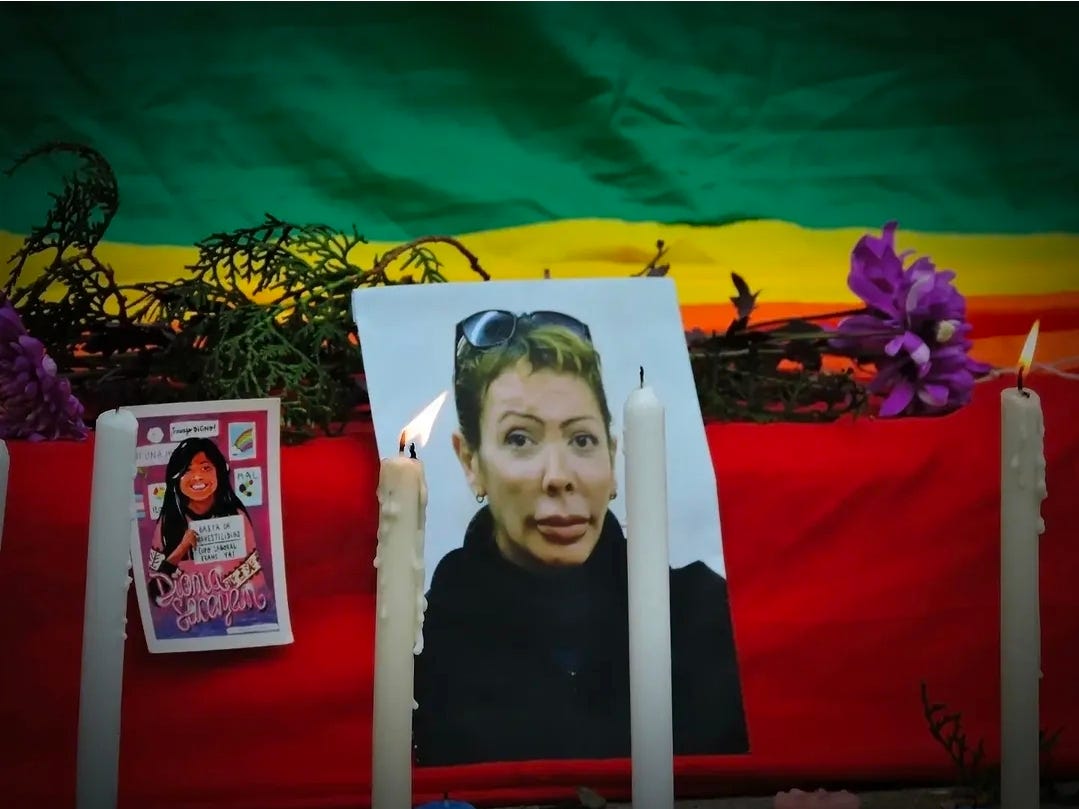
On August 21, prosecutor Rodrigo Urruticoechea formally charged the 24-year-old defendant with transfemicide. Prosecutors allege that Gabriela was killed in circumstances involving gender violence and gender hatred. Judge Aldo Bilbao Benítez ordered the defendant held in pretrial detention while the case proceeds. The charge marks an important change in the legal record: the transfemicide framing is no longer only a demand from activists and people who knew Gabriela; it is now part of the prosecution’s formal theory of the case.
That charge is not a conviction, but it changes what investigators are formally alleging about the violence that killed Gabriela. Her trans identity is not being treated as incidental to the prosecution’s current case. Prosecutors are alleging that gender violence and gender hatred were part of the circumstances surrounding her death, bringing into the courtroom a dimension of the killing that Gabriela’s community had already demanded authorities examine.
The legal case, however, captures only one part of what was lost. Gabriela spent years helping people whose lives were shaped by housing instability, unemployment, hunger, discrimination, and gender violence. She worked in community kitchens, accompanied women facing violence, advocated for trans employment and housing access, and pushed public institutions to recognize the conditions that leave travesti and trans people especially vulnerable.
Her killing interrupted that work at a moment when many of the problems she confronted remained unresolved. Gabriela’s own experience with housing instability gave her organizing a human urgency that cannot be separated from the life she lived. She was not observing exclusion from a distance; she was fighting systems that had also failed her.
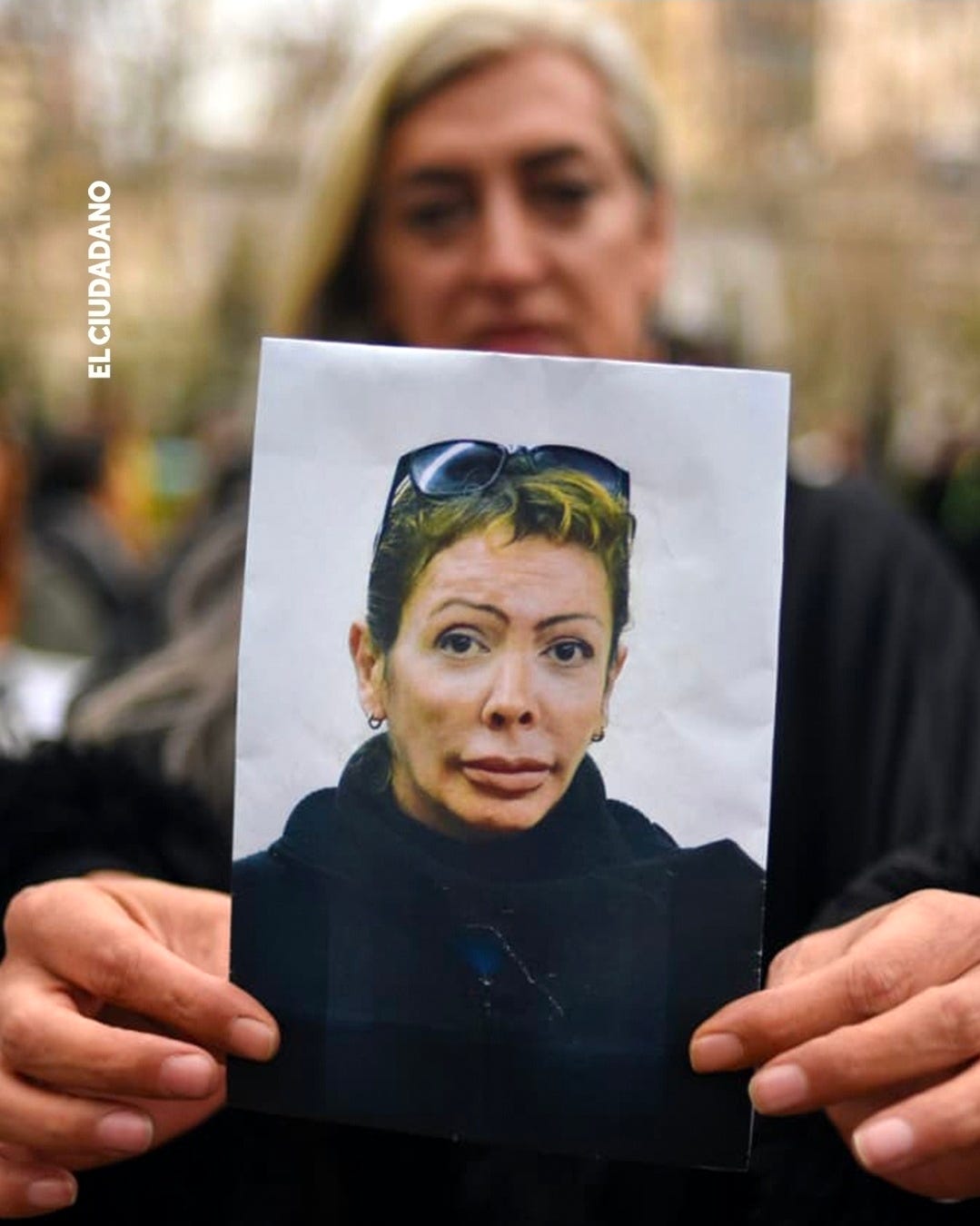
That is what makes Gabriela’s public record larger than the prosecution now unfolding. Criminal accountability matters, but so does the work she left behind. A transfemicide charge can address the violence prosecutors allege ended her life. It cannot, by itself, resolve the housing exclusion, economic precarity, discrimination, and survival barriers Gabriela spent years confronting alongside other trans people.
Her death also came during a period of alarm within Argentina’s trans and LGBTQ+ communities. Days later, Jessica Núñez, another trans activist, was fatally stabbed in Córdoba, prompting separate demands for a gender-and-diversity investigation. Activists connected the deaths as part of a broader concern over violence against trans women, even as each case follows its own legal path. Jessica’s case remains separate; Gabriela’s story stands on its own through the life she built and the work she carried.
For Gabriela, the accountability record now has two fronts. One is the criminal case against the man prosecutors accuse of killing her in an act of gender violence and gender hatred. The other is the unfinished fight over the conditions she spent her life trying to change: whether trans people can find stable housing, access work, obtain support, and survive without being pushed continually into vulnerability.
Gabriela Banach should not be remembered only through the injuries that killed her or the charge filed after her death. She was a trans activist who fed people, accompanied people through crisis, fought for housing and employment, and worked to make survival more possible for others. The prosecution will determine what criminal responsibility can be proven in court. Gabriela’s years of housing, labor, and community work already show what she spent her life fighting for.
Gabriela Banach spent years fighting for housing, work, food, and survival for trans people in Rosario. Her killing ended her life, but not the conditions she was working to change.
Trans United documents the people, systems, and failures that shape whether trans people can survive safely — and keeps that record visible after the headlines move on.
Upgrade to a paid subscription to support independent Trans United reporting and accountability work.