

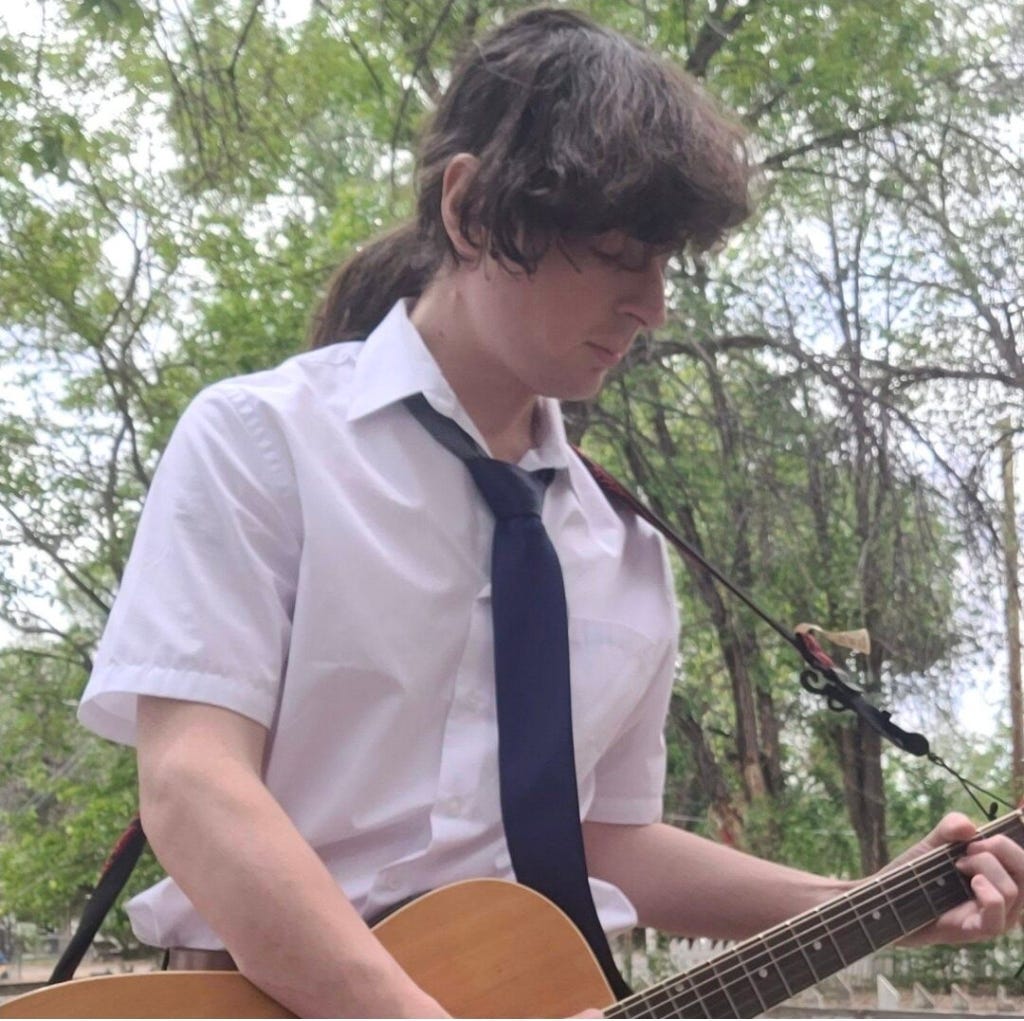
Patti Wilson made music under the name Patti Dracula. Friends remembered the 31-year-old as an artist whose life included periods of instability, mental-health struggles and homelessness, as well as a recent abusive relationship they said she had left. Her mother later sought help bringing Patti’s remains home to Dixon, Illinois.
Those parts of Patti’s life matter because the final minutes of June 19, 2026, would quickly reduce her to police radio traffic, video evidence and a use-of-force investigation. The conduct that brought officers to Dairy Queen was serious, but once police confronted Patti outside, a separate accountability question emerged: whether firing at her vehicle matched the standards governing deadly force.
Police were called to the Dairy Queen at 709 North Avenue in Grand Junction at about 6:30 p.m. after multiple reports of a person with a knife. Another person suffered serious injuries consistent with a knife assault.
Video from inside the restaurant, as described by Colorado Times Recorder, shows a sequence more complicated than a simple description of Patti attacking a stranger. An older man is shown striking Patti with a chair. He is then cut while attempting to punch her. Patti has a knife and can be heard telling him to stay away. She later moves toward him before leaving the restaurant.
Patti had a knife inside the Dairy Queen, another person suffered a serious injury, and those facts explain why officers were called to the scene. They do not independently establish what deadly force was permissible once Patti had left the restaurant, reached her vehicle and encountered Grand Junction officers Zachary Diaz and Tim Long outside. The accountability question therefore shifts at that point from what Patti had done inside to what threat officers faced when they chose to fire.
Friends described Patti as experiencing a mental-health crisis and said her behavior that evening was unlike the person they knew, adding context to an encounter that moved rapidly from public distress into lethal police force.
Diaz and Long confronted Patti at or near her vehicle. The department later identified both men as the officers who discharged their duty weapons. Diaz had served about nine years with the department, while Long had served about five.
Local reporting says Patti got into the car and drove away. Colorado Times Recorder reports that the available footage appears to show Patti’s vehicle turning away from the officers as they fired. The final investigation has not yet publicly resolved the vehicle’s exact movement at the moment of gunfire, making that sequence central to the department’s restrictions on shooting at moving vehicles.
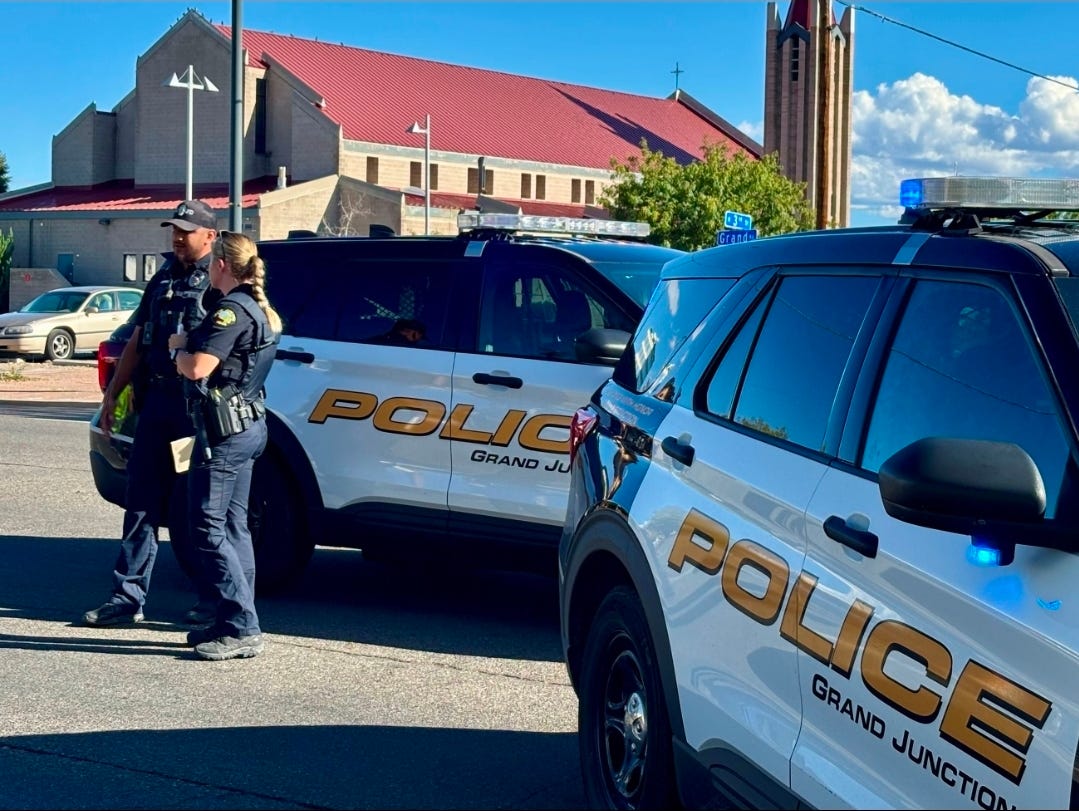
Audio from bystander video indicates that 11 shots were fired. Grand Junction has confirmed that both Diaz and Long discharged their weapons, but the official material does not provide a final total round count or establish which officer fired which shot.
The Mesa County Coroner later determined that Patti died from two gunshot wounds. The coroner’s finding establishes the fatal injuries but does not show how many rounds struck her vehicle, how many missed or who fired the shots that killed her.
After the gunfire, Patti’s vehicle continued moving and struck multiple vehicles before coming to a stop. Public reports conflict over the exact number of collisions; the public record establishes only that multiple vehicles were involved.
Colorado Times Recorder reported that bystander footage appears to show an officer firing toward North Avenue as Patti’s vehicle moved away. No public trajectory analysis or final investigative finding identifies which civilians, if any, were placed in the line of fire. The shooting’s proximity to active North Avenue traffic still makes risk to surrounding drivers part of the accountability question.
Grand Junction’s city-posted Response to Resistance directive addresses shooting at moving vehicles directly. It states that such gunfire is rarely effective, generally instructs officers to move out of an approaching vehicle’s path instead, and reserves shooting at a driver or occupants for circumstances involving an immediate threat of death or serious bodily injury when no reasonable alternative exists.
The city currently posts an April 4, 2018 version of that directive, and its public policy materials do not identify a newer replacement.
Against that standard, the unresolved factual issue is what Diaz and Long perceived at the instant they fired and why that perception led them to use deadly force. Public releases do not provide a final district-attorney decision or complete officer account explaining whether Patti’s vehicle was moving toward them, whether another person faced an immediate threat, whether the officers could reposition or why shooting into or toward the vehicle was considered necessary. Those details are essential to determining whether the shooting can be reconciled with the standards Grand Junction itself has publicly posted.
The same directive calls for de-escalation and alternatives to force when possible and appropriate. Colorado Times Recorder reported that time-stamped radio traffic moved from officers having Patti’s vehicle at gunpoint to reports of shots fired within seconds. That compressed sequence makes the officers’ positions, available alternatives, visibility and assessment of the developing danger central to determining why deadly force was used within seconds.
Colorado law adds another layer of scrutiny by limiting deadly force during an arrest to circumstances involving an immediate threat of death or serious bodily injury, unreasonable alternatives to apprehension and protection against substantial danger to others. Patti’s conduct inside Dairy Queen explains the seriousness of the call that brought officers there, while the legal and policy questions surrounding her death depend on the circumstances that existed later, when Diaz and Long encountered her at the vehicle and discharged their weapons.
Patti’s death also became a target for transphobic commentary before the use-of-force investigation had publicly resolved its central questions. Her actions inside Dairy Queen can be described accurately, including the knife and the serious injury suffered by another person, without treating those facts as an automatic answer to why police fired at her vehicle. The same record can hold Patti accountable for conduct before officers arrived while requiring government officials to account independently for the lethal force they used afterward.
Diaz and Long were placed on paid administrative leave, the 21st Judicial District Critical Incident Response Team opened a criminal investigation, and Grand Junction announced a separate internal review. As of August 11, 2026, no final public CIRT disposition, district-attorney charging decision or clearance determination has resolved the shooting.
The investigation still has to connect the documented gunfire, Patti’s fatal wounds and the vehicle’s movement to the threat Diaz and Long perceived when they fired. That explanation is necessary to determine how their decision fits the limits Grand Junction publicly places on shooting at moving vehicles.
Initial scanner traffic and early coverage misgendered Patti before investigators later publicly acknowledged that she was Patti Wilson and used she/her pronouns. Reporting also documented transphobic reactions surrounding her death, turning an unresolved police shooting into another opportunity to attack her identity while the central use-of-force questions remained unanswered.
Patti Wilson made music as Patti Dracula, had friends who remembered the person behind the crisis and had a mother who sought help bringing her remains home to Dixon. Her final hours were complicated and included conduct that caused real harm, but those facts do not eliminate the government’s obligation to explain the force used against her. Because Patti can no longer provide her account of those final seconds, that responsibility now rests with Grand Junction, the investigators and the officers whose gunfire ended her life.
Patti Wilson’s case shows why accountability cannot end with the final seconds of a police shooting. The policies, investigations and institutional decisions that follow determine whether the public ever gets a complete record of what happened.
Trans United keeps the people subjected to state power at the center while tracing those systems beyond the first headline.
Upgrade to a paid subscription to support independent reporting that documents how anti-trans harm intersects with policing and the institutions responsible for answering for it.
Unacceptable