

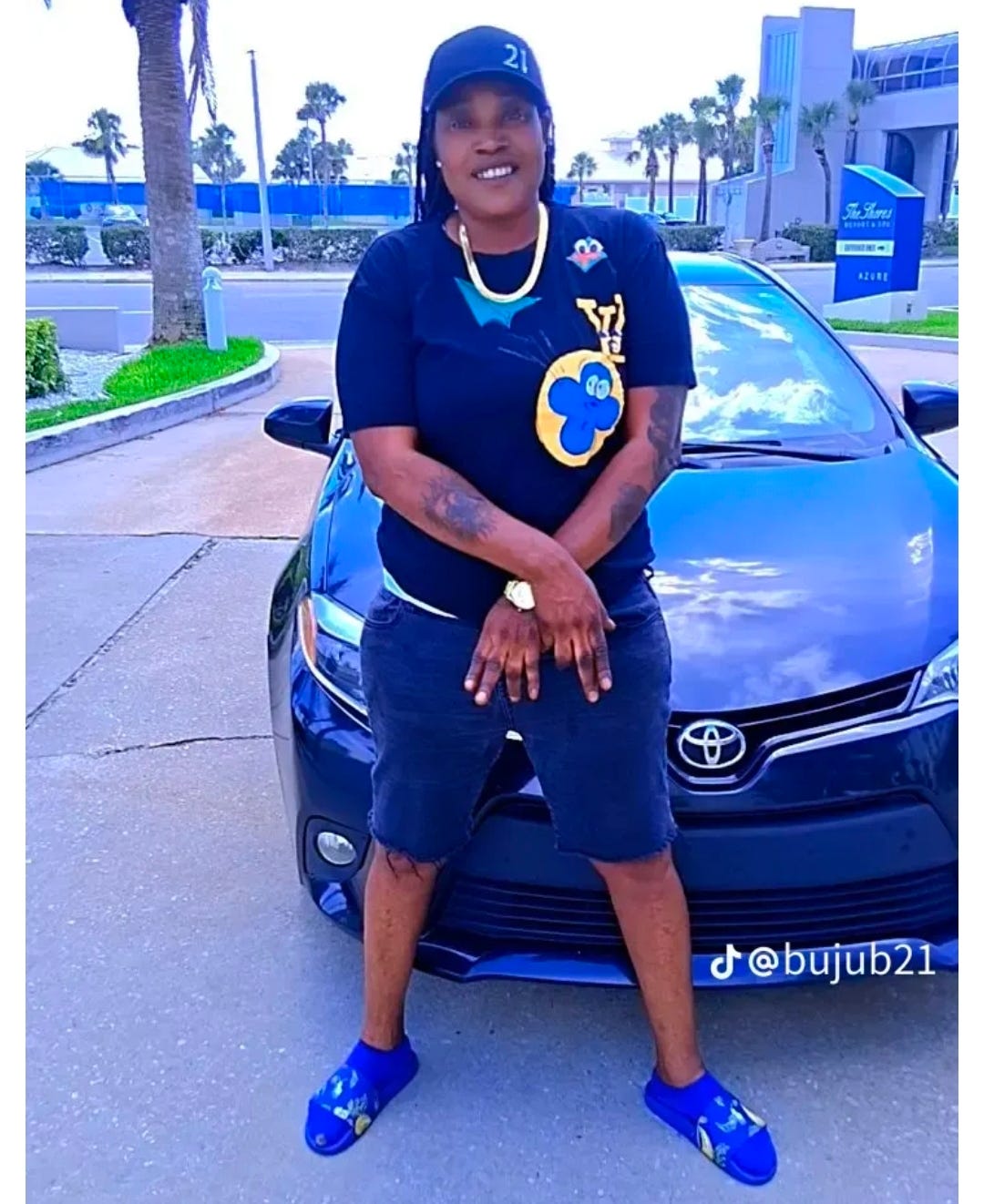
Latoya “Buju” Bulgin was shot and killed by Jamaican police in Granville, St. James. She was 45 years old, a Black Jamaican woman from the community, and her death has already become more than a local killing because the pattern around it is too familiar to ignore. Public reporting identifies Bulgin as the woman killed in the Granville police shooting, and community outrage has focused not only on the shooting itself, but on what happened to her body afterward.
This is not only a Jamaica story. It is also an American story because the same architecture was already visible in the killing of Renee Nicole Good in Minneapolis. Renee was killed by ICE agent Jonathan Ross during a January 2026 immigration enforcement operation. A private autopsy found she was shot in the forearm, breast, and head, with the head wound proving fatal, while federal officials tried to frame her vehicle as the threat.
That is where Latoya and Renee meet inside the same pattern. A woman is in a vehicle. Armed state force moves around that vehicle. The state claims danger. A shot is fired. Then the machinery moves quickly to control the story before the public can fully name what happened.
In Jamaica, the language is security. In America, the language is immigration enforcement. Those are different systems, but they serve the same purpose after state violence: they make force sound necessary, they make the victim sound like the threat, and they give the institution that fired the first chance to explain why the killing should be accepted.
Latoya Bulgin’s killing happened inside a wider Jamaican pattern that was already escalating. By late April, reporting showed more than 100 people had already been killed by state agents in Jamaica in 2026, with fatal security-force shootings climbing at a pace that made the pattern impossible to treat as isolated. That is not a minor oversight problem. That is a state-violence pattern moving through poor Black communities under the language of order and security.
Bulgin’s death now sits inside that machinery. Public reporting places her in a black Toyota Voxy in Granville before she was shot. But the clean wording used in reports does not carry what the public video shows. After the shot, police dragged Bulgin out of the vehicle, one holding her feet and another holding her upper body, then threw her into the back of a police pickup while people screamed.
🎥 Video circulating on TikTok shows the Granville police shooting and the aftermath: Latoya “Buju” Bulgin’s dead body dragged from the vehicle and thrown into the back of a police pickup while people screamed.
That was not care. That was not aid. That was not procedure. That was armed state power handling a Black woman’s body like rubbish after its own violence had already done the damage.
This matters because the violence did not end when the shot was fired. It continued in the way the state handled her body, controlled the scene, and expected the public to accept cleaner language afterward. A person does not stop deserving dignity because police have already killed them. A body does not become cargo because the state wants the scene cleared.
Bulgin’s life also carried a layer mainstream coverage may avoid naming. A wedding video under the @bujub21 TikTok handle shows Latoya “Buju” Bulgin with a woman in a recent wedding ceremony. That matters because Jamaica’s anti-LGBTQ climate gives media and institutions every incentive to flatten queer lives after death, especially when the death involves police violence.
🎥 A wedding video under the @bujub21 TikTok handle shows Latoya “Buju” Bulgin with a woman in a wedding ceremony, adding another layer to the public record of who she was beyond the state’s version of her death.
That detail should not be erased. Since Bulgin was recently married to a woman, the mirror with Renee Nicole Good becomes sharper, not because their lives or identities were identical, but because both women lived outside the narrow categories that state systems and mainstream media are willing to fully honor after death. Renee was queer. Bulgin was a Black queer Jamaican woman. Both were killed by armed state power around vehicles, then pushed into official language that could never hold the fullness of who they were.
That is why the Renee Nicole Good mirror is so hard to look away from. In Minneapolis, the state also turned a vehicle into the center of its justification. Federal officials tried to describe Renee’s SUV as the danger, while reporting and video evidence challenged that version and raised the central question of why an ICE agent fired into a vehicle as she was trying to get away.
The vehicle becomes the excuse. The officer’s fear becomes the official story. The woman killed becomes secondary to the institution’s need to protect itself. By the time families, witnesses, lawyers, independent reporters, and communities push back, the state has already fired and already started writing its own defense.
That is not coincidence. That is the architecture.
Jamaica’s police and America’s ICE do not need to be the same agency to operate through the same logic. Both systems use public-safety language to aim force downward. Both systems know how to turn the person killed into the problem after the fact. Both systems rely on institutional language to make people doubt what they saw or what the body itself proves.
In Jamaica, that language says security. In the United States, it says immigration enforcement. In both places, the public is told to trust the same state power that created the death scene.
That is why the earlier article mattered before Latoya Bulgin was killed. The warning was already there: Jamaica calls it security, America calls it ICE enforcement, and both systems use the language of safety to normalize force against people with less protection. Latoya’s killing did not create that pattern. It exposed it again.
Renee Nicole Good was not supposed to become a symbol for what ICE can do inside everyday American life. She was a mother and a civilian. But the federal government tried to make her death about an agent’s fear, not about the life that was taken. Latoya Bulgin was not supposed to become another proof point in Jamaica’s security-force death toll. She was a woman in her community, a Black queer Jamaican woman with a life, love, and family ties beyond anything the state’s version can hold. But the state’s violence placed her inside a record that communities already understand too well.
The connection is not that every detail is identical. The connection is that the same structure keeps appearing. A woman in a vehicle. Armed state force. Gunfire. Body control. Official language. Public outrage. Then the long fight to stop the state from turning the killing into paperwork.
That is why the public record matters. Footage matters. Witnesses matter. Community pressure matters. Independent reporting matters. The social record matters too, especially when mainstream coverage leaves out the parts of a person’s life that make the state’s violence harder to sanitize. Without those records, the state gets to own the first story, the cleanest words, and the official timeline. The dead cannot correct that timeline. Their families and communities are left fighting the language that comes after the violence.
The state wants people to separate these deaths. Jamaica over there. America over here. Police over there. ICE over here. Security over there. Immigration enforcement over here. But the pattern is not separated. It travels through the same logic of armed power, racialized threat, queer erasure, official excuse-making, and institutional protection.
Latoya Bulgin should be alive. Renee Nicole Good should be alive. The public should not have to watch queer women killed around vehicles and then be told to wait for official language to decide what their deaths mean.
The meaning is already clear.
A Black queer Jamaican woman was shot by Jamaican police. A queer woman was shot by ICE in Minneapolis. The uniforms were different, but the machinery was recognizable: state force aimed downward, protected upward, and sold to the public as safety after the body is already down.
The state should not get to shoot first, drag the body away, control the first story, erase the fullness of the person killed, and then demand that the public call it security.
Support reporting that keeps queer lives, state violence, and official erasure on the record.
Trans United exists because queer and trans lives are too often flattened after death, especially when police, ICE, or the state control the first story. Keeping the record alive is part of the protection work.
Subscribe to Trans United ↓
Read more context ↓
This article documented the same state-force pattern before Latoya Bulgin was killed: Jamaica calls it security, America calls it ICE enforcement, but the machinery is the same.

Yeah that is terrible. Just tragic. As someone who is Jamaican that sucks. Just terrible all around. Hope her and her family get justice. May she R.I.P. unfortunate and just disgusting. Jamaica does have issues with gay so maybe there was something else around that.
United States is not the only country in the world that is a police state.