

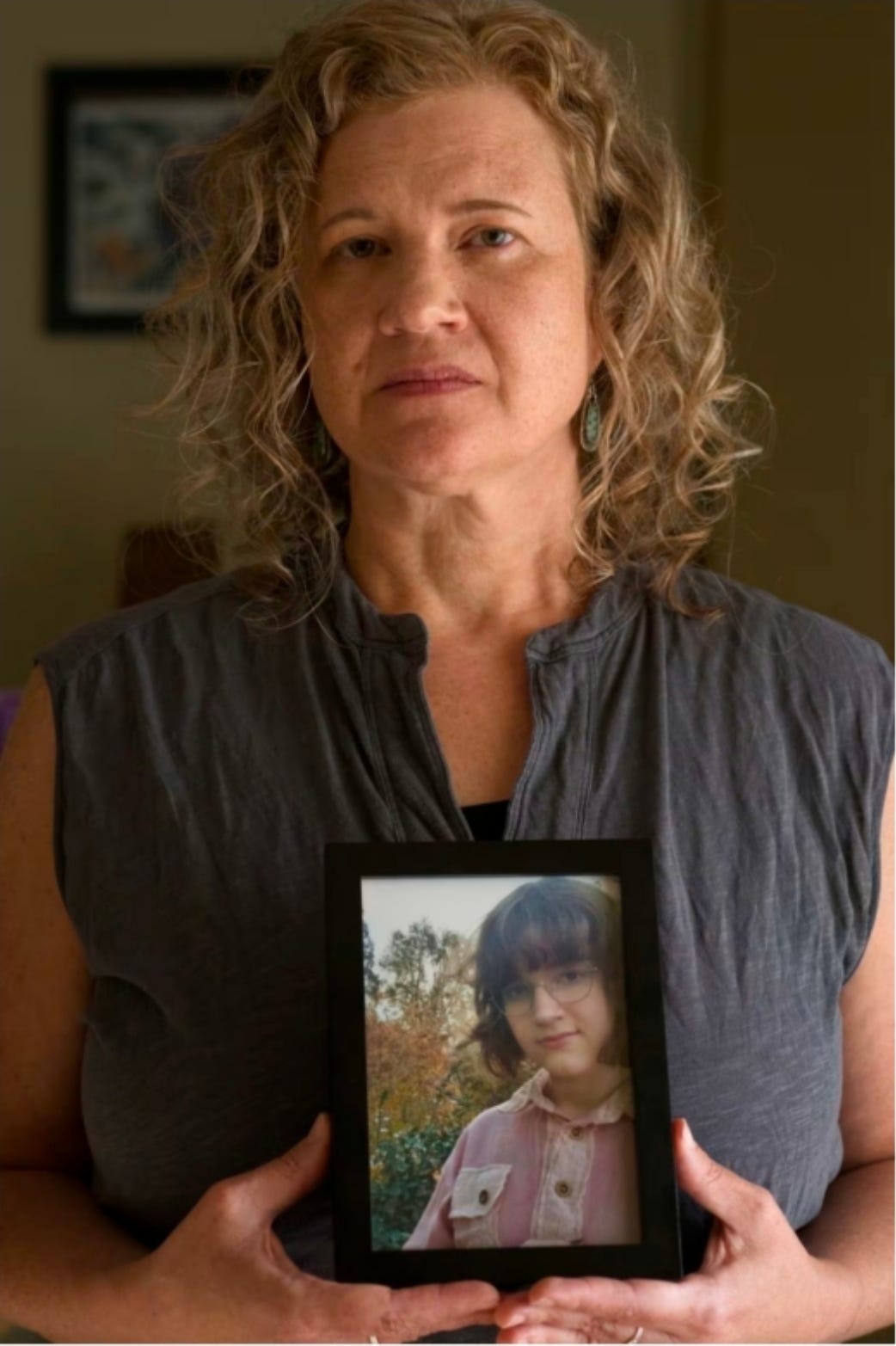
Idaho built a system around May Pollard that made ordinary life progressively harder to survive. The state separated her from other girls at school, made bathroom access a source of exposure and fear, criminalized the healthcare she needed, forced her family to travel out of state for treatment, and required her to enter federal court under a pseudonym to defend her privacy. May died by suicide on January 27, 2026, at 16. The record of what Idaho imposed on her leads to one accountability conclusion: Idaho’s anti-trans laws killed May Pollard.
That conclusion rests on the direct path between law and daily harm. Idaho Senate Bill 1100 required public-school facilities to be divided by sex assigned at birth and allowed trans students to be sent to separate accommodations. Trans students could be directed into single-user facilities instead, marking them as different and denying them the same ordinary access their classmates received. For May, that policy governed when she ate, how much she drank, whether she could stay in class, how far she had to walk across campus, and whether other students would learn she was trans without her consent. A statute presented as a rule about bathrooms became a system controlling her body, movement, privacy, and ability to participate in school.
May avoided food and water because needing a bathroom could expose her to humiliation. The limited facilities available to her were separated from those used by other girls, and one became known among students as the “trans bathroom.” That label stripped away the privacy Idaho claimed to preserve. Every use risked publicly identifying her, while avoiding the restroom meant thirst, hunger, missed instruction, and fear of normal bodily needs. Idaho did not simply tell May where to go. It made existing inside her school physically punishing.
May challenged that punishment under the pseudonym Jane Doe because she did not want her trans identity disclosed without her consent. She explained in the legal record that she wanted to fit in, did not consider being trans the defining feature of her life, and experienced separate facilities as ostracizing. The state forced a teenage girl to document private details about her body and school life because Idaho had made ordinary bathroom access impossible without litigation. The Ninth Circuit later allowed the restriction to remain operative while the challenge continued, preserving the conditions May had described.

May’s life was larger than the laws that targeted her. She was a poet, gamer, daughter, sister, and friend who loved sloths, music, cats, arcades, Studio Ghibli films, cosplay, and gaming conventions. She was academically gifted, developed a style her mother called “goth cottagecore,” and imagined leaving Idaho for Oregon. She wanted the freedom to grow into herself without every ordinary decision becoming a confrontation with the state.
Idaho made that freedom conditional. House Bill 71 prohibited Idaho medical providers from giving gender-affirming treatment to most trans patients under 18, including hormone therapy. Gov. Brad Little signed the law, and the U.S. Supreme Court allowed broad enforcement to proceed in April 2024 while litigation continued. The state placed criminal penalties and legal threats between trans kids and the clinicians treating them.
May had told her parents that she needed to medically transition and had spoken about harming herself when she believed she would be denied estrogen until adulthood. Her pediatrician referred the family to Oregon because Idaho had removed the treatment from reach inside the state. After months on a waiting list, May began estrogen at 15. Her mother said the treatment visibly brightened her and restored signs that she wanted to live, while prescription delays brought renewed anxiety and withdrawal.
Idaho took care that was helping May and surrounded it with distance, expense, waiting, uncertainty, and fear. Her family had to cross state lines for appointments. Her mother later drove more than 13 hours round trip because federal attacks on trans healthcare made her fear creating travel records by flying. The law did not remain inside a legislative chamber. It entered the family car, the medical schedule, the prescription refill, the household budget, and May’s understanding of whether treatment would remain available.
May’s parents did everything the political system claims families should do. They listened to her, affirmed her, found therapy, changed schools, pursued medical care, and planned for her future. Her father recalled telling NBC News that he supported her “100%” when she came out. Her mother took a second job to prepare for future medical expenses. Idaho converted that support into a struggle against barriers deliberately created by the government. The family’s acceptance could not neutralize a state using law to obstruct the care, privacy, and recognition their daughter needed.
The officials responsible had been warned about the danger. Parents, doctors, advocates, and trans kids told Idaho lawmakers that removing healthcare and institutionalizing exclusion would worsen the suicide crisis facing trans teenagers. During debate over the healthcare ban, opponents explicitly warned that the measure would intensify that harm. Rep. Bruce Skaug continued sponsoring and defending the restriction as protection for children. Gov. Brad Little signed it. Attorney General Raúl Labrador defended Idaho’s bathroom segregation through the courts.
Idaho therefore cannot treat May’s death as an unforeseeable event disconnected from public policy. The state received warnings before it enacted the laws, heard testimony while defending them, and had access to evidence showing that trans kids face greater danger when governments restrict their healthcare, isolate them at school, and turn their identities into political targets. Idaho continued because preserving the power to control trans children mattered more to its officials than the documented consequences.
The research confirms the mechanism visible in May’s life. A peer-reviewed study involving more than 61,000 trans and nonbinary young people found that states enacting anti-trans laws experienced significant increases in reported suicide attempts. Using a difference-in-differences design to estimate causal impact, researchers found increases ranging from 7% to 72%, depending on age and timing. The study did not document a vague association. It measured what happened after states enacted laws restricting trans people’s rights.
May’s record shows how that population-level mechanism reaches one child. Bathroom segregation restricted her food and water. Forced accommodations exposed her identity. The healthcare ban pushed treatment across state lines and made continuity uncertain. Litigation required her to defend private parts of her life in court. Political rhetoric told her repeatedly that Idaho viewed trans kids not as children to protect, but as problems to regulate.
Taken together, these laws did not create a series of separate hardships. They built a continuous system of state-imposed punishment around May’s body, healthcare, school life, privacy, and future. That system drove her toward suicide after Idaho had already been warned that its laws would kill trans kids.
The bathroom law did not operate separately from the healthcare ban, and the healthcare ban did not operate separately from the public campaign against trans existence. Each law delivered the same message through a different institution: the school would separate her, the medical system would be forbidden from treating her, the courts could preserve that exclusion, and state officials would call the entire structure protection.
May’s family watched that message enter her interior life. Her mother, Elyse Thorpe, told NBC News that the hatred “got inside.” That hatred was not shapeless. It had bill numbers, legislative sponsors, gubernatorial signatures, enforcement provisions, court filings, and state officials assigned to defend it. Idaho transformed political hostility into a daily administrative reality surrounding a 16-year-old girl.
After May died and the remaining student could no longer continue the bathroom challenge, the litigation ended in 2026. The law remained in effect. Idaho Attorney General Raúl Labrador publicly celebrated its survival as a victory for the state. A trans girl who had asked the courts to stop Idaho from segregating and exposing her was dead, while the government measured success by whether the restriction outlived her.
That response reveals the state’s priority more clearly than any press statement. Idaho did not respond to May’s death by reconsidering the machinery she had described. It continued expanding that machinery. In 2026, Gov. Little signed a broader law criminalizing some bathroom use by trans people. Idaho escalated after May’s death rather than retreating from the system that had surrounded her.
This is why May’s death must serve as more than a record of Idaho’s actions. It is a warning to every state reproducing the same architecture. Healthcare bans, bathroom restrictions, forced-outing policies, school censorship, pronoun rules, sports exclusions, and legal definitions denying trans identities are often debated as separate measures. Trans kids experience them as one government system pressing on the same life.
A state that bans healthcare while segregating bathrooms is not creating two isolated inconveniences. It is teaching a trans child that her body is prohibited in the clinic and unacceptable at school. A forced-disclosure rule adds the threat that adults may expose her identity. Classroom erasure removes language that could help her understand herself. Political rhetoric then presents each injury as necessary protection. The accumulated message is that every public institution has been authorized to reject her.
Other lawmakers cannot claim ignorance about where that structure leads. Idaho created the conditions documented in May’s school restrictions, healthcare burden, court affidavit, and family testimony. Her death completed the warning the state had already received. The national research supplies the larger warning: anti-trans laws increase suicide attempts among trans and nonbinary young people. Any state copying Idaho is knowingly constructing the same danger around another trans kid.
May Pollard wanted to write poetry, play games, spend time with friends, wear clothes she loved, receive healthcare, and build a future beyond Idaho. Idaho narrowed that future through laws controlling her body, school life, privacy, and medical care, then preserved and expanded those restrictions after her death.
Anti-trans laws kill trans kids. May Pollard’s death is the record. Idaho is the warning.
Anti-trans laws are being built into the daily lives of trans kids through healthcare bans, school segregation, forced disclosure, and state-backed erasure. Trans United documents that machinery, names the officials responsible, and keeps trans people—not the institutions targeting them—at the center of the public record.
Support independent trans-accountability reporting and help sustain this work.
🤬🤬🤬🤬