

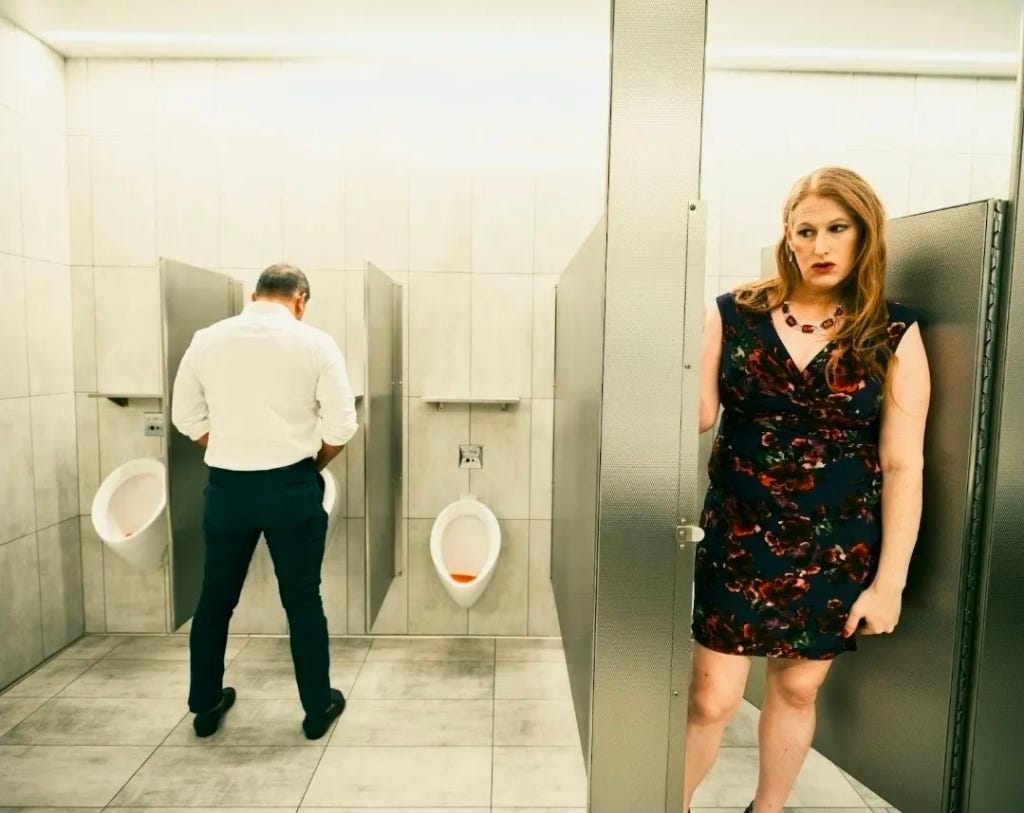
Idaho is preparing to make ordinary restroom use a criminal risk for trans people.
House Bill 752, signed by Gov. Brad Little, is set to take effect July 1. The law makes it a crime for people to knowingly and willfully enter certain bathrooms or changing facilities designated for what the law defines as the opposite sex. That includes government-owned buildings and places of public accommodation, extending the law beyond schools and into many spaces where people live, travel, work, shop, and move through daily life.
The penalty structure is not symbolic. A first offense can be prosecuted as a misdemeanor carrying up to one year in jail. A second offense within five years can be prosecuted as a felony carrying up to five years in prison. That means Idaho is not merely regulating bathroom access. It is attaching criminal punishment to the question of where trans people are allowed to exist in public.
Supporters of the law have framed it as a privacy and safety measure. But the law creates a question its supporters cannot cleanly answer: how does the state decide who belongs in a bathroom without first deciding who looks suspicious enough to investigate?
That question is the center of the danger.
During a federal court hearing challenging Idaho’s bathroom ban, the Idaho Capital Sun reported that Idaho Solicitor General Brian Church Zarian suggested DNA testing as a way to determine sex. The point is not that Idaho has announced a finalized bathroom-by-bathroom DNA enforcement system. The point is that when pressed on how this law could actually work, the state’s answer exposed how invasive and unstable the entire framework becomes.
DNA testing does not solve the enforcement problem. It reveals it. Before any test, warrant question, consent issue, or courtroom fight, someone must first decide that another person’s presence in a bathroom is suspicious. Someone has to look at a person and decide their body, face, voice, clothing, hair, posture, or gender presentation does not fit.
That is where the law’s harm begins.
The practical effect is not limited to a legal theory written into a statute. It is a system of public suspicion. A trans woman using a women’s restroom can be turned into a criminal suspect. A trans man using a men’s restroom can be questioned or exposed. A nonbinary person can be placed under scrutiny no matter which door they choose. A masculine woman, a feminine man, or any gender-nonconforming person can become vulnerable to harassment because someone else thinks they do not look the way a man or woman is “supposed” to look.
That is not privacy. That is gender policing.
The law forces trans people into impossible choices. Use the restroom that matches who they are and risk criminal accusation. Use the restroom the state demands and risk harassment, violence, outing, humiliation, or danger. Avoid public restrooms altogether and face the health, work, travel, school, and daily-life consequences that come with avoiding basic public facilities. For many trans people, the law does not create a safe option. It creates a trap.
Civil-rights groups challenging HB 752 have argued that the law violates constitutional protections, including due process, equal protection, and privacy. That challenge matters because the law reaches far beyond a single restroom door. It gives the state a framework for turning identity, appearance, and ordinary public movement into grounds for suspicion.
This is why calling the law a “bathroom debate” softens the harm. A debate suggests two sides disagreeing over access. HB 752 creates criminal exposure. It threatens punishment. It invites scrutiny of bodies. It gives strangers, business owners, public employees, law enforcement, and prosecutors a reason to treat trans presence as something that must be checked.
The cruelty is not only in the penalty after someone is accused. It is in the climate the law creates before any charge is filed. A person does not have to be arrested for the law to change their life. They may start planning routes around bathrooms. They may avoid restaurants, stores, airports, rest stops, libraries, or public offices. They may calculate whether it is safer to stay home. They may decide not to travel. They may stop participating in public life because the state has made ordinary presence feel risky.
That is how anti-trans laws work even before enforcement. They narrow the world.
Idaho’s law also shows how the language of “privacy” can be used to justify surveillance. Supporters claim the law protects sex-segregated spaces, but the enforcement question moves in the opposite direction. It asks who can be questioned, who can be suspected, who can be reported, who can be tested, and who can be punished. In the name of privacy, the state creates the possibility of bodily investigation.
That contradiction should not be ignored. A law that claims to protect privacy while raising the prospect of state inquiry into someone’s sex, body, documents, or biology is not a privacy law for trans people. It is a surveillance law aimed at trans life.
The impact does not stop with one bathroom. Anti-trans policy often moves by narrowing one public space at a time. Bathrooms. Locker rooms. Schools. Sports. Identity documents. Healthcare. Shelters. Housing. Public accommodations. Each restriction is presented as separate. Together, they form a broader pattern: trans people are told that public life is conditional, that recognition can be revoked, and that safety depends on whether others decide they look acceptable.
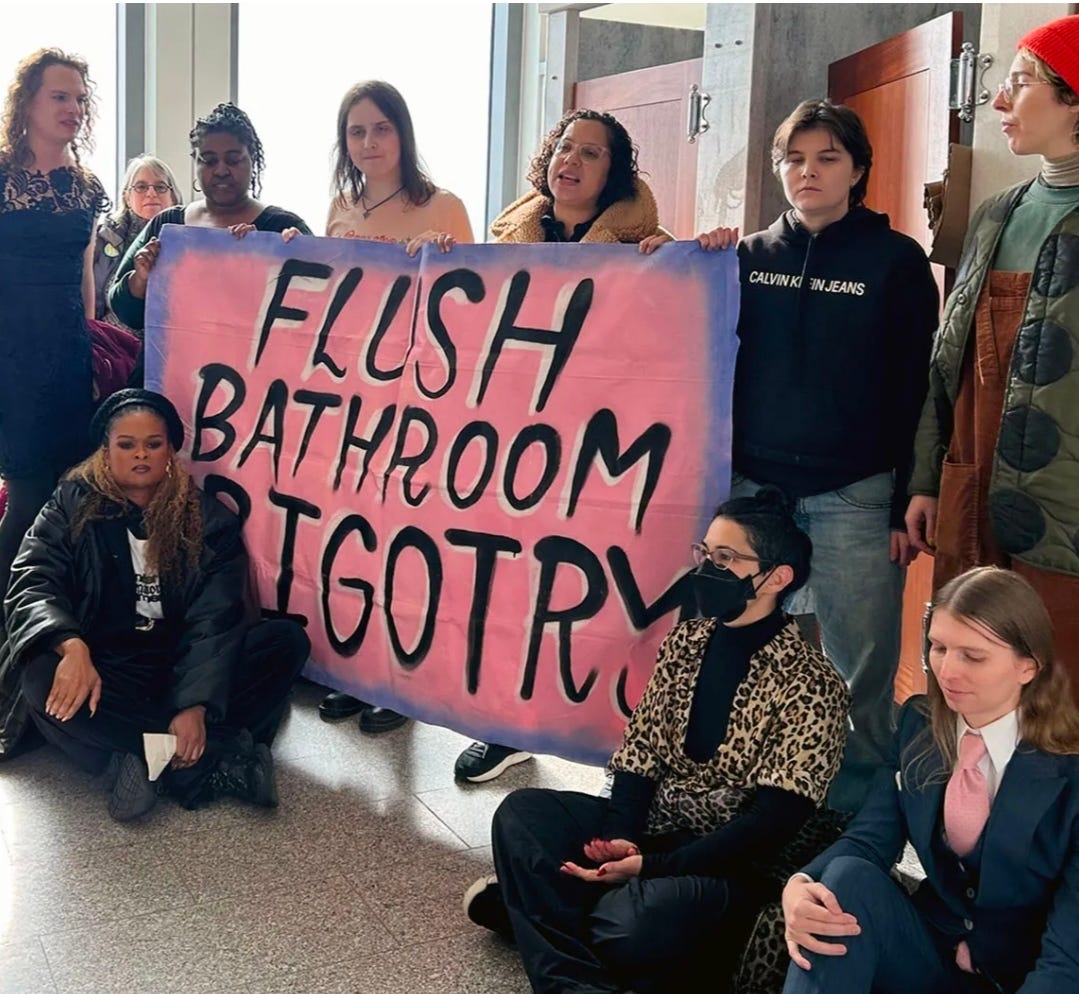
That pattern is why the enforcement question matters so much. Idaho cannot criminalize trans restroom use without creating a method for suspicion. The state cannot punish someone for being in the “wrong” bathroom unless someone first decides there is something wrong about them. That decision will not fall evenly. It will fall on trans people, gender-nonconforming people, and anyone whose appearance unsettles someone else’s expectations.
The law’s danger is not hypothetical for the people it targets. It changes how trans people move through the world. It turns ordinary needs into risk assessments. It tells people that a bathroom door can become a legal boundary, a public accusation, or a path toward criminal punishment.
For Trans United, the issue is not whether Idaho has found a neat enforcement mechanism. The issue is that the law itself turns trans people into suspects. The state has created a criminal framework around one of the most basic parts of public life, then failed to answer the human question at the center of enforcement: who gets stopped, who gets questioned, and who gets investigated for looking trans?
That is the question Idaho’s bathroom ban cannot answer because the answer exposes the law’s purpose. It is not only about where someone goes to the bathroom. It is about whether trans people can move through public life without being watched, challenged, punished, or forced to prove themselves to the state.
A public restroom should not be a site of criminal suspicion. A trans person should not have to calculate whether an ordinary need could lead to harassment, police involvement, or prosecution. And no state should be allowed to turn someone’s appearance into the beginning of an investigation.
Anti-trans laws do not stay on paper. They follow trans people into bathrooms, schools, shelters, workplaces, housing, healthcare, and every public space where survival already requires calculation.
Trans United documents the policies, public attacks, and survival conditions that make trans life more dangerous — and supports the work of keeping trans people visible, protected, and safely housed.
Support Trans United by upgrading to a paid subscription.
As a cis woman with short hair and a preference for jeans, I have been misgendered more than once on going into a restroom. The last thing I need (the last thing anyone needs when making a stop at a roadside rest area) is some empowered jackass challenging my right to go in and close the stall door and pee.
They planning to have a special phone number to call and report a possible offender? Who gets to try to hold the suspect until the potty police arrive? Plans to cope with a flash mob pee-in?
People really need to mind their own fu*king business.
This too shall pass IDAHO. Enforcement?