

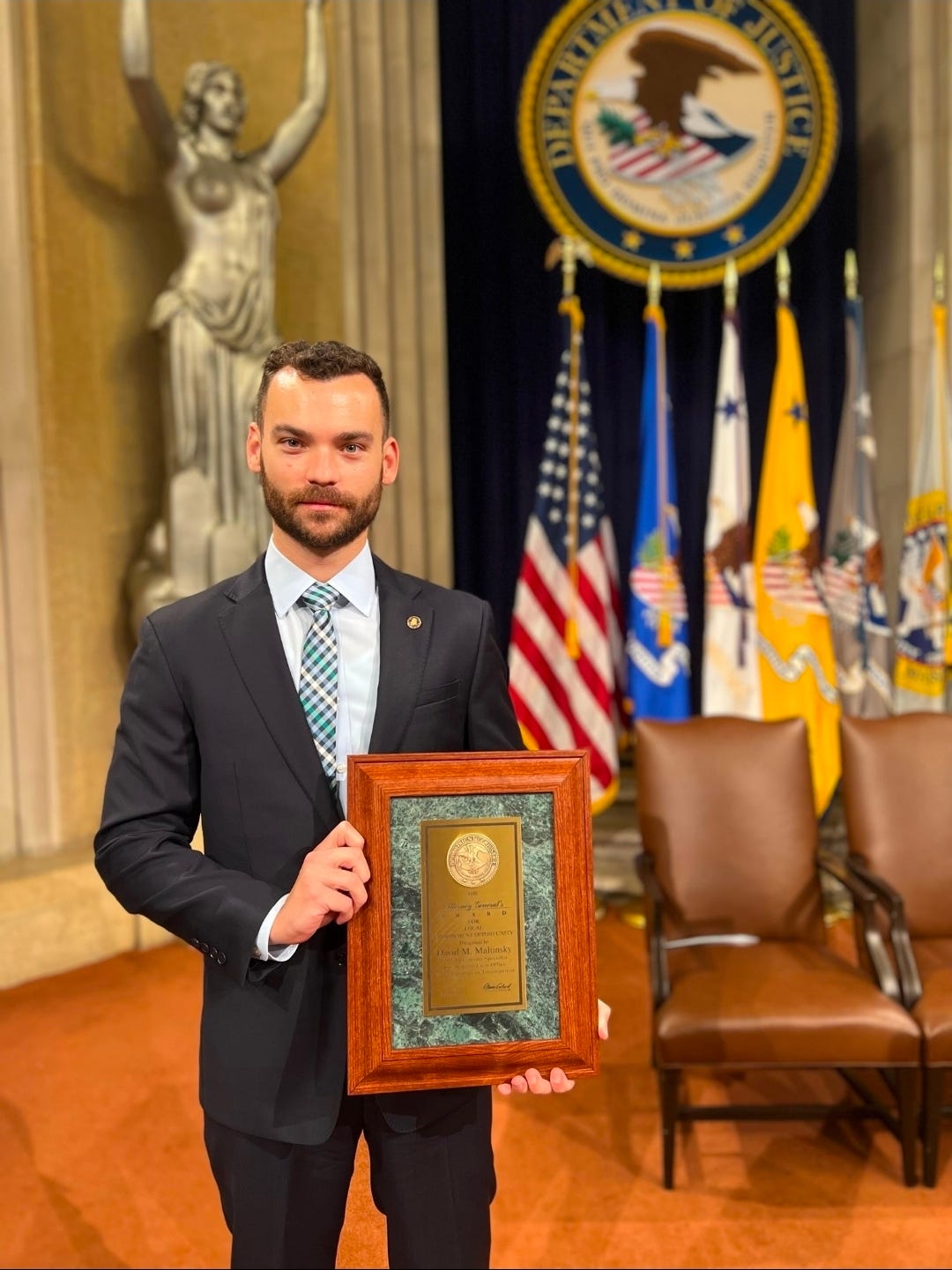
David Maltinsky gave the FBI more than 16 years of service before Kash Patel ended his career over a Pride flag that, according to Maltinsky’s court filings, the bureau had previously flown, entrusted to him and found permissible under its rules.
Maltinsky is now asking a federal judge in Washington, D.C., to let him obtain the internal communications, records and testimony behind that reversal. His attorneys argue that discovery should begin while the Justice Department seeks dismissal of only part of a lawsuit that would continue regardless of how the judge rules.
The request places Maltinsky’s lost career at the center of a larger accountability question: how did a Pride display described as permissible by FBI officials become “political signage” when Patel used it to fire the employee displaying it?
Maltinsky joined the FBI in 2009 and built a career spanning more than 16 years. He supported LGBTQ+ employees through the bureau’s internal equality work and received a Justice Department equal-employment award in 2022. In June 2025, he entered the FBI Academy in Quantico, Virginia, to train as a special agent.
By October, Maltinsky had completed 16 weeks of the 19-week program. He was three weeks from graduation when Patel signed the letter terminating him on October 1, 2025.
The letter accused Maltinsky of exercising “poor judgment” by displaying “political signage” at his former workstation in the FBI’s Los Angeles field office. According to Maltinsky’s filings, the display was a Pride flag with a documented history inside the bureau.
Maltinsky alleges that the Los Angeles field office had flown Pride flags outside the Wilshire Federal Building in 2021 and later entrusted one to him in recognition of his work supporting LGBTQ+ employees. He displayed it at his workstation with a small placard explaining its history.
After another employee complained about the display in early 2025, Maltinsky’s supervisor told him it was entirely permissible and appropriate, according to the complaint. His filings also say the field office’s chief legal counsel determined that the flag and placard violated no FBI policy, rule or regulation.
That alleged approval is central to the case. Maltinsky’s lawsuit does not describe an employee who refused an order to remove prohibited material. It describes a display that FBI officials had accepted before Patel later cited it as evidence of “poor judgment” and used it to end Maltinsky’s career.
Maltinsky sued Patel and other federal officials, alleging discrimination, retaliation and violations of his constitutional rights. The Justice Department has asked the court to dismiss several claims, including his Title VII discrimination and retaliation counts, Fifth Amendment claims, request for monetary relief and an alternative mandamus claim.
The government has not sought dismissal of Maltinsky’s First Amendment or Appointments Clause claims. Those claims remain pending before U.S. District Judge Richard J. Leon because the government’s partial motion does not seek their dismissal.
Maltinsky’s attorneys argue that discovery should begin because the evidence needed for those constitutional claims will substantially overlap with the records and testimony relevant to the disputed discrimination and retaliation claims. They also argue that delay risks fading memories and records becoming more difficult to locate.
Discovery could reveal who participated in the termination decision, what officials said about Maltinsky and the Pride flag, how Patel’s stated justification developed and whether the bureau’s earlier treatment of the display was considered before the firing.
The Justice Department argues that Maltinsky has not plausibly shown he was fired because he is gay. Government attorneys contend that the flag and placard did not expressly identify his sexual orientation and that the complaint does not adequately establish that Patel or other decision-makers knew about his identity or earlier equality work.
Maltinsky’s attorneys argue that this separates the Pride flag from both LGBTQ+ identity and the workplace advocacy the FBI used the flag to recognize. They contend that the government acknowledged in writing that the display caused the firing and that this particular flag represented protected equality work the bureau had already honored.
The dispute is not simply whether a flag appeared at his workstation. It is whether Patel and other FBI officials selectively transformed a previously accepted symbol of LGBTQ+ inclusion into evidence of professional unfitness.
Maltinsky’s complaint alleges that other FBI employees were permitted to display thin-blue-line flags, Gadsden flags and Punisher imagery. It also alleges that Patel distributed challenge coins bearing some of those symbols. Those allegations identify a selective-enforcement question discovery could test.
An institution does not become politically neutral by accepting favored symbols while treating LGBTQ+ visibility as disqualifying. It creates a hierarchy in which some identities and loyalties are absorbed into the workplace while others are marked as political and punished.
For Maltinsky, the direct consequence was the loss of a career he had spent more than 16 years building. Patel fired him three weeks before he was expected to complete special-agent training.
Maltinsky has said the effect extended beyond him. After news of his dismissal spread, he said FBI employees began removing Pride flags and other personal items from their desks. Maltinsky’s account shows how a single firing can discipline an entire workforce without a written bureau-wide ban.
Employees do not need identical termination letters to understand a warning. When one veteran employee loses his career over visible LGBTQ+ expression, others may decide that erasing themselves is safer than waiting to be targeted.
Maltinsky has described that fear as a renewed Lavender Scare. His comparison concerns the use of government employment power to mark LGBTQ+ workers as suspect, political or professionally unfit, then make continued employment depend on silence.
The Justice Department’s partial dismissal motion remains pending. Judge Leon has not authorized discovery, and the court has not decided whether Maltinsky’s discrimination and retaliation claims will proceed.
Maltinsky is asking for the internal record behind Patel’s decision: who drove it, what officials said, which standards they applied and whether the stated justification concealed discrimination, retaliation or punishment for protected expression.
His FBI career ended before he received those answers. Discovery is his effort to force them into the open.
David Maltinsky gave the FBI more than 16 years of service. According to his court filings, the bureau recognized his equality work, permitted the Pride flag at his workstation and found that its display violated no rule. Kash Patel then used that same display to end his career weeks before he could become a special agent.
Trans United documents how public institutions use selective enforcement, political reclassification and fear against LGBTQ+ people—and keeps the record open while the decision-making behind that harm remains hidden from public view.
Upgrade to a paid subscription to support independent reporting that follows the evidence, names the officials responsible and exposes how one targeted firing can spread fear and silence through a workforce.