

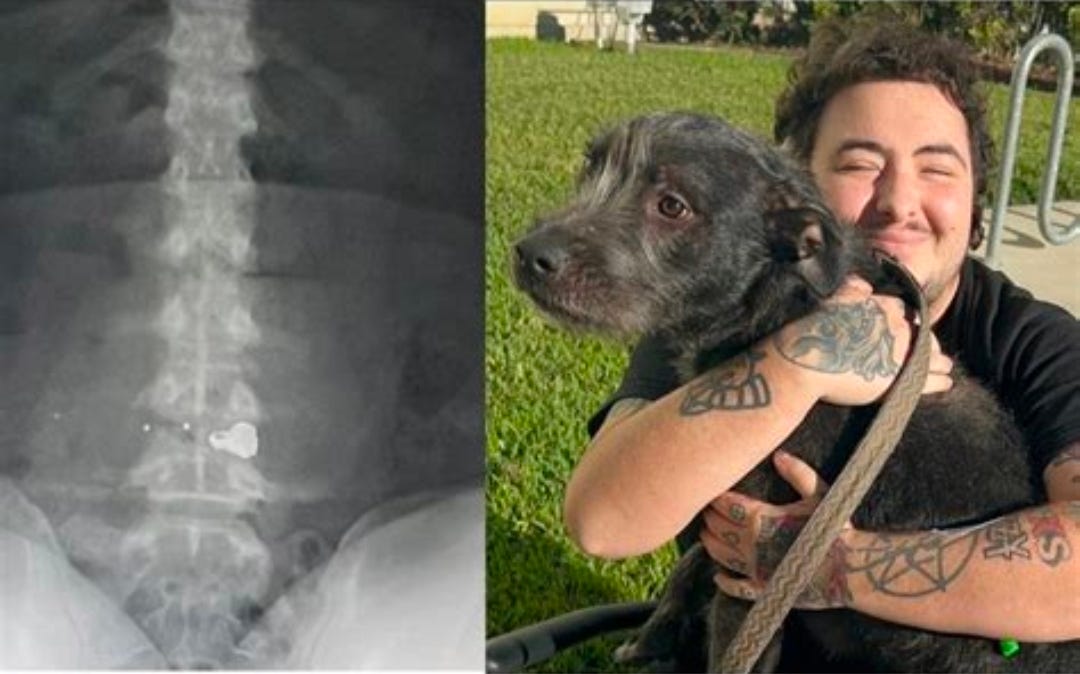
Kyle McFarlane was 24 years old when a bullet entered his back and lodged beside his lower spine. The fundraiser organized on Kyle’s behalf says the bullet remains at the L4 level and is inoperable. It has affected his ability to walk as well as his bowel and bladder function, leaving him facing intensive physical therapy and an uncertain recovery.
The man who fired that bullet, Tyler Getchell, has now been sentenced to seven years in prison after pleading guilty to attempted manslaughter. Getchell had initially faced an attempted-murder charge, but the reduced plea led to a sentence with a defined endpoint. Kyle’s injury does not operate on the same schedule. When Getchell’s prison term ends, Kyle may still be managing partial paralysis, medical treatment, rehabilitation, inaccessible spaces, disrupted bodily functions, and the daily consequences of a spinal injury caused by someone else’s decision to shoot.
The shooting did not emerge from an ordinary disagreement that suddenly became violent. According to Kyle’s account, court-record summaries, surveillance evidence, and local reporting, it followed a pattern of hostility serious enough that he installed cameras around his home. Getchell and his girlfriend were accused of directing anti-gay and anti-trans signs toward Kyle’s property, leaving dog feces on his doorstep and along the side of his home, and engaging in repeated confrontations. One photographed sign reportedly contained explicit slurs aimed at gay and trans people.
Those allegations require precise attribution because Getchell was not convicted through a formal hate-crime enhancement. The conviction establishes criminal responsibility for the shooting through a plea to attempted manslaughter; it does not, by itself, establish anti-LGBTQ bias as an element of the offense. But the absence of a hate-crime conviction does not erase the reported signs, slurs, property harassment, surveillance footage, or the history Kyle described before the shooting. Legal categories determine what prosecutors charged and what a defendant admitted in court. They do not require journalists to discard documented context surrounding the violence.
On November 22, 2025, Kyle was gathering discarded wood and furniture for a bonfire when Getchell’s girlfriend confronted him while holding a belt and threatened him over where he was standing. Reporting based on the police record says surveillance footage placed Kyle on an easement rather than on the couple’s private property. After the confrontation, Kyle began moving away. Getchell retrieved a firearm and shot him once in the back.
That sequence matters because language such as “neighbor dispute” compresses a directional pattern of intimidation into the appearance of mutual hostility. It places the person who installed cameras for protection and the person who ultimately fired a gun on the same narrative level. It makes the confrontation sound balanced even though the reported evidence describes Kyle moving away before he was struck from behind.
A dispute suggests two people exercising comparable power within a shared conflict. Kyle’s reported experience was different. He said he was targeted near his own home, documented hostile signs and property attacks, installed surveillance equipment, faced another confrontation, and then suffered a gunshot wound that transformed the function of his body. Calling all of that a neighborhood disagreement does not create neutrality. It removes the direction of the harm.
The escalation is the central mechanism of this case. Anti-LGBTQ hostility does not become dangerous only when a weapon appears. Repeated slurs, threatening signs, property harassment, and confrontations near the place a person is supposed to feel safe can establish a climate in which the target must reorganize daily life around someone else’s aggression. Kyle’s cameras were evidence that he was already living with that burden before the bullet entered his body.
When harassment is treated as background noise, each act can be isolated and minimized. A sign becomes offensive speech. Dog feces left at a home becomes a prank or nuisance. A threat becomes another argument. Surveillance cameras become evidence of a difficult relationship rather than evidence that someone believed documentation had become necessary for personal protection. The pattern becomes visible only when those acts are placed together, and by the time the pattern ended in gunfire, Kyle had already been carrying its consequences for months.
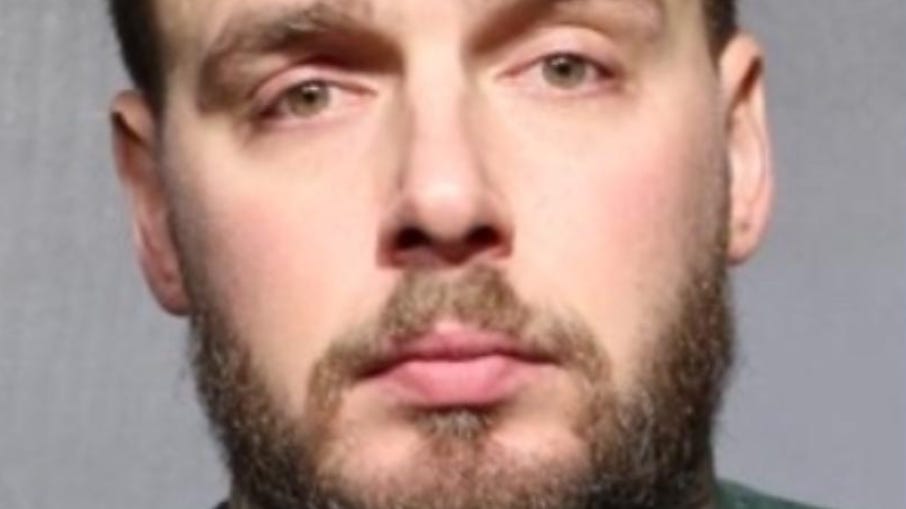
The sentence imposed on Getchell acknowledges criminal responsibility, but it cannot become the emotional conclusion of the story. Seven years in prison, followed by reported probation, restitution, mental-health requirements, and a no-contact order, describes what the legal system required from the man who fired the gun. It does not describe what justice restored to Kyle, because the court could not return his spinal function, remove the bullet, reverse the pain, or guarantee that rehabilitation would return the mobility he had before the shooting.
Kyle addressed that imbalance after sentencing. In a public message directed at Getchell, he listed the prison term and additional court consequences, telling him that he would have a long time to think about what he had done. Kyle also wrote that he did not hate Getchell personally but hated his behavior. His response centered accountability without pretending the sentence could undo the injury.
There is a temptation in sentencing stories to treat the courtroom result as closure. The defendant is led away, a number of years is announced, and the public record acquires an ending. Kyle’s life does not end at the courthouse door. Recovery must be pursued through appointments, physical therapy, medical uncertainty, financial strain, and the intimate work of adapting to changes in movement and bodily function. His future cannot be measured only through the length of Getchell’s punishment.
That is why the human imbalance must remain visible without turning Kyle’s injury into spectacle. Partial paralysis is not merely a dramatic consequence used to intensify a headline. It can affect how someone gets out of bed, uses a bathroom, enters a building, earns money, cares for animals, maintains independence, and plans a future. It can place private bodily functions inside medical routines and require support for tasks that were once ordinary. The harm is not contained in an X-ray, even when the image of the bullet makes the violence immediately visible.
The case also demonstrates why anti-LGBTQ harassment cannot be evaluated only by asking whether each individual incident resulted in a separate criminal charge. Targeted hostility accumulates. It communicates that someone’s home, safety, and ordinary presence are contested. When earlier acts are treated as too minor to matter, the person being targeted is left to absorb the danger, collect the evidence, install the cameras, alter routines, and hope that the next confrontation does not become worse.
In this case, the escalation ended in gunfire. Getchell claimed that he believed Kyle was reaching toward his waistband or pocket, but the reported surveillance evidence showed Kyle moving away when he was shot. A person’s asserted fear after firing a weapon cannot be allowed to erase the preceding months, the direction of movement, the location of the wound, or the documented context that made Kyle believe cameras were already necessary.
The seven-year sentence punishes the criminal act to the extent established by the plea agreement and the court. The broader public record must preserve more than the final charge. It must preserve the reported harassment, the signs, the slurs, the property targeting, the confrontation on the easement, the fact that he was moving away, the shot to his back, and the injury that continues after the sentencing hearing has ended.
Kyle McFarlane did not receive seven years of harm. He received a body profoundly altered by violence and a future shaped by lasting injury and medical uncertainty, while Getchell received a sentence with a release date. Kyle’s spinal injury has no comparable endpoint.
Anti-LGBTQ violence is often minimized before it becomes irreversible and reduced to an isolated incident after the damage is done. Independent reporting preserves the full pattern, keeps the person harmed at the center, and refuses to let a finite sentence erase a lifetime of consequences.
Support reporting that documents anti-LGBTQ harm, names the actors, and protects the public record.
Subscribe to Trans United