

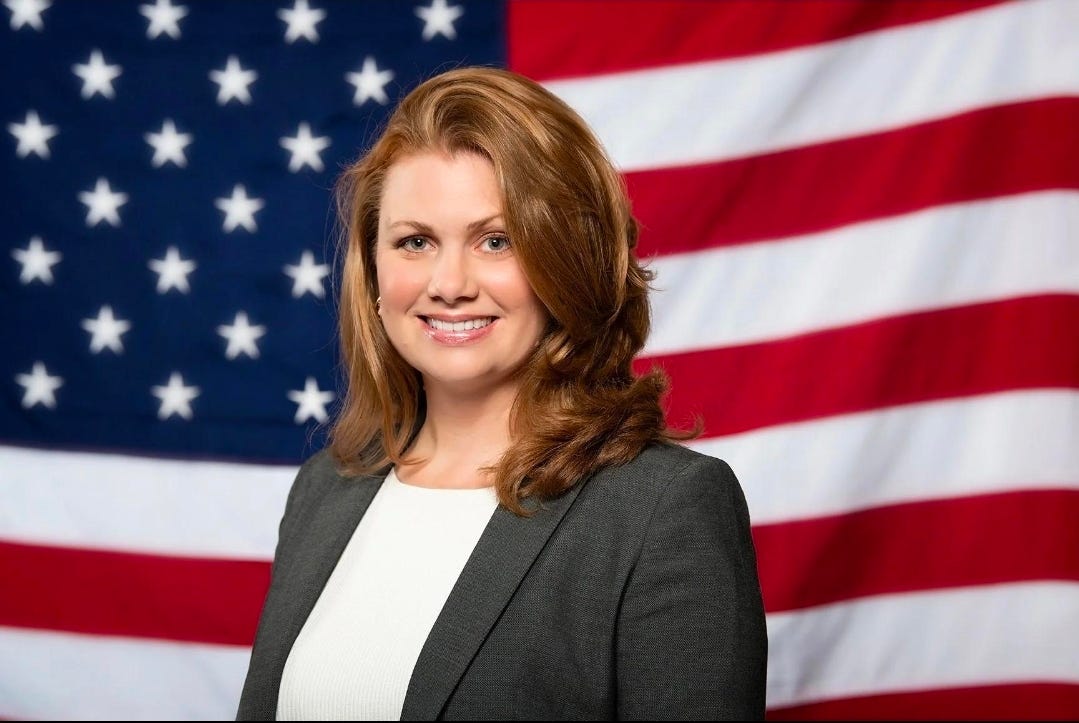
North Carolina Rep. Erin Paré is proposing state control over how transgender teachers dress after complaints targeted an unidentified music teacher working in a Wake County elementary school. Paré identified no inappropriate classroom conduct, professional failure, or harm to a student. The teacher’s transgender identity and appearance were enough to trigger complaints, intervention by a state lawmaker, and the threat of legislation governing whether public employees conform to government-defined sex roles.
Paré, a Republican representing House District 37 in Wake County, said she received emails and phone calls about the school system hiring a transgender teacher whom she described as a “biological male” who “dresses as a woman.” She contacted Wake County Public School System and announced that it might be time to require “gender-appropriate professional attire” for public-school employees. By framing the teacher’s appearance as exposing children to mature questions about gender identity, Paré portrayed visible transgender identity as a danger to children without identifying any harm.
The political attack is not a response to something the teacher did to a student. It is a response to who the teacher is and how the teacher appears. Paré converted complaints targeting the teacher’s transgender identity and appearance into a demand for state control over the conditions of public employment, placing an educator under political scrutiny without establishing any professional offense.
The teacher and school have not been publicly identified, and exposing either would serve no legitimate public-interest purpose. The state action is already clear without placing the employee at greater risk: an elected official wants the government to decide whether a transgender teacher looks sufficiently male or female to remain professionally acceptable.
Paré’s phrase “gender-appropriate professional attire” conceals the reach of the power she is proposing. A government cannot enforce such a rule without assigning employees to sex categories, determining which clothing belongs to those categories, and authorizing administrators to judge whether workers comply. Complaints about a dress, suit, hairstyle, makeup, jewelry, or another aspect of appearance could become grounds for investigation and discipline even when the employee’s clothing has no effect on classroom safety, instruction, or professional performance.
For transgender teachers, such a system would turn gender expression into an employment test. Administrators could be pressured to examine whether a worker’s appearance matched the sex role imposed by the state rather than whether the employee dressed professionally and performed the job. Because Paré raised the restriction specifically after complaints targeted a transgender teacher’s appearance, the proposed rule would make transgender identity central to the employment standard and force trans employees to perform government-approved masculinity or femininity as a condition of public work.
Paré amplified complaints about the teacher, contacted the district, portrayed the employee’s appearance as inappropriate for children, and directed public scrutiny toward an unidentified person working in a local elementary school. That exposure can encourage attempts to locate the school, identify the teacher, pressure administrators, or generate further harassment. It also warns every trans teacher in North Carolina that clothing may become the basis for political intervention even when professional performance is not in question.
For educators whose jobs provide income, health coverage, housing stability, and professional continuity, state-backed scrutiny of gender presentation threatens far more than clothing choices. It places privacy, safety, career security, and economic stability at risk by making continued employment dependent on whether parents, administrators, or politicians approve of how visibly transgender a worker is.
Rep. Julia Greenfield, a Mecklenburg County Democrat, said Paré had presented no evidence of misconduct, inappropriate behavior, or inability to perform the job. Greenfield argued that teachers should be judged by how they treat students and warned that portraying a transgender teacher as dangerous without supporting facts teaches children to fear people who are different. Her response identified the central abuse of power in Paré’s proposal: the teacher’s identity was treated as a threat without conduct that justified intervention.
Wake County’s response did not validate Paré’s accusation. The school system cited Board Policy 1710 and said it prohibits unlawful discrimination while complying with state and federal law. The district did not announce that the teacher violated a dress code, acted unprofessionally, or posed a risk to students. Paré supplied the danger narrative, using the language of protecting children to turn visible trans identity into grounds for government action.
The Campaign for Southern Equality described proposals targeting transgender employees for discrimination and harassment as cruel and likely unlawful. The ACLU of North Carolina argued that government enforcement of sex-based appearance rules would revive workplace stereotypes about how men and women are expected to look. Those objections go directly to the mechanism Paré proposed: imposing different employment expectations on a worker because that worker is transgender.
Title VII prohibits employers from firing workers merely because they are transgender. In Bostock v. Clayton County, the U.S. Supreme Court held that an employer who fires an employee merely for being gay or transgender violates Title VII of the Civil Rights Act. A state rule requiring transgender public employees to dress according to official sex categories would place sex and transgender status directly inside the conditions of employment, exposing workers to adverse treatment because their appearance does not satisfy government expectations about masculinity and femininity.
Paré announced the proposed restriction without publishing definitions, enforcement rules, or penalties. She has not explained which clothes the state would prohibit, whether trans employees would be ordered to dress according to sex assigned at birth, who would classify each worker, what type of complaint would trigger an investigation, or what punishment would follow. Each unanswered question points to the authority the proposal would require: power to classify employees, police their appearance, and discipline those who refuse to conform.
Paré has used complaints about LGBTQ visibility in Wake County schools as a political pressure point before. In 2022, she intervened after LGBTQ-themed flash cards were found in a preschool classroom at Ballentine Elementary School. The cards were removed, and the teacher later resigned amid the backlash. That controversy involved classroom materials, while the current attack concerns an employee’s identity and clothing without an allegation of classroom misconduct. The recurring pattern is Paré’s escalation of LGBTQ-related complaints into public pressure against educators.
By moving from political pressure against one employee toward a proposed statewide restriction, Paré threatens to place every transgender public-school worker under a sex-based appearance standard shaped by political hostility rather than professional conduct. The teacher at the center of this attack entered a Wake County school to teach music, but Paré turned the teacher’s transgender identity and clothing into a political accusation, invoked children without identifying any harm, and proposed giving the state power to decide whether trans educators look acceptable enough to remain employed.
Professional standards should measure how teachers perform their jobs and treat their students, not force transgender employees to surrender their identity as a condition of public employment.
Professional standards should measure how teachers perform their jobs and treat their students—not force transgender employees to surrender their identity as a condition of public employment.
Paid subscriptions support the deeper reporting behind that record: anti-trans workplace targeting, state-enforced gender conformity, employment discrimination, and the public policies threatening trans people’s safety and economic security.
Upgrade to support the work.
Already one of the worst states to teach in. Keep it up lawmakers keep it up. This is ridiculous.
These lawmakers make me sick! Are these rules going to extend to everybody? For example, as the religious right is trying to send us back to the 50's (could be 1950 or 1850 it's all "dark ages" for women), they will probably bring up the wearing of pants by women (something reserved for men unless you're a Scotsman or old Roman). Funny how men could wear skirts but women weren't allowed to wear pants hmm. Anyway, will dress codes concerning the wearing of skirts be brought up? Unless the music teacher is wearing a bikini to class I think this lawmaker needs to mind her own business when it comes to teacher's attire and work on something positive like free lunches for the students. And by the way, I think a person's gender is between themselves and themselves (maybe their physicians) but never, never the business of some two-bit politicians.