

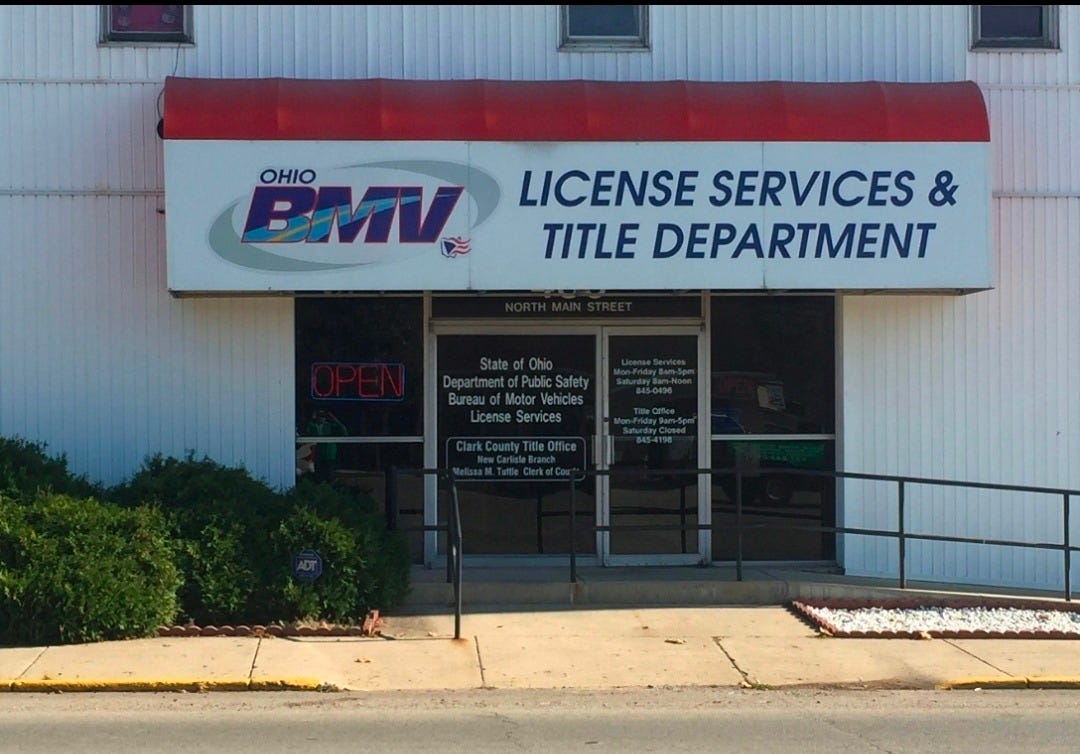
Ohio has removed the form trans people used to correct the gender marker on a driver’s license or state identification card. The Ohio Bureau of Motor Vehicles previously accepted a Declaration of Gender Change, identified as BMV Form 2369, without requiring applicants to amend their birth certificates first. That form is now missing from the BMV’s public directory, and advocates say the agency stopped accepting it without public notice or a transition period. Trans Ohioans who cannot obtain one of the replacement documents may now be forced to carry identification that exposes them every time they are required to prove who they are.
The former process was clearly documented by organizations helping trans people navigate Ohio’s identification system. Equality Ohio’s published instructions directed applicants to submit Form 2369 with certification from a licensed physician, psychologist, therapist, nurse practitioner or social worker. TransOhio also documented the form as the route for correcting a gender marker and stated that surgery was not required. The process operated independently of birth-certificate correction, giving trans Ohioans another way to obtain accurate state identification when the courts controlling birth records were inaccessible or inconsistent.
That separate route has disappeared. The current Ohio BMV forms directory moves from Form 2337 to Form 2407 without listing Form 2369, even though recently indexed versions of the directory still identified it as the Declaration of Gender Change. Equality Ohio and TransOhio told The Toledo Blade that the BMV now requires an amended birth certificate or passport before it will correct a gender marker. The organizations said the agency implemented the change without publicly announcing when the old process would end, what would happen to pending applications or how people without qualifying replacement documents could proceed.
Requiring an amended birth certificate does not create an equally available alternative. Ohio birth-certificate corrections are handled through county probate courts, and those courts do not follow one uniform statewide rule. Following the Ohio Supreme Court’s divided 2024 decision in In re Adelaide, no controlling statewide precedent requires every probate court to approve a gender-marker correction. The ACLU of Ohio says access and requirements continue to vary by county, leaving some trans Ohioans with a viable court process and others with no dependable route at all.
Ohio created that document trap through policy. House Bill 96 enacted Ohio Revised Code §9.05, which took effect September 30, 2025, and declares that the state recognizes only male and female sexes and considers them unchangeable. The statute dismisses gender identity as a meaningful basis for identification, placing Ohio’s rejection of gender identity as a basis for state recognition directly inside state law. The BMV’s removal of Form 2369 turns that policy into a barrier at the identification counter.
BMV spokesperson Lindsey Bohrer reportedly said the former declaration process did not align with the new legislation and that gender markers must now be based on a birth certificate or passport. That explanation identifies the legal mechanism behind the change, but it does not answer why the BMV removed an established process without a public transition plan. It also leaves unanswered whether previously corrected licenses will retain their markers during renewal, whether pending applications will be honored and what remedy exists when a county court refuses to amend a birth certificate. The BMV has not publicly accounted for how many trans Ohioans have already been denied or prevented from applying.
The consequences extend far beyond the printing of a single letter on a plastic card. Trans people use state identification when they drive, begin new jobs, obtain housing, enter secured buildings, seek medical treatment, manage insurance and complete financial transactions. A marker that conflicts with a person’s identity and presentation can disclose that they are trans without their consent and force them to explain private information to strangers controlling access to essential services. Dara Adkison, executive director of TransOhio, described mismatched identification as intentional harm because it creates safety risks and additional barriers involving healthcare and insurance.
Equality Ohio Executive Director Dwayne Steward also called the change a deliberate act of voter suppression. Ohio requires voters to present approved photo identification, and its online registration system relies on information connected to an Ohio driver’s license or state ID. Removing an accessible correction process places another state-controlled obstacle between trans Ohioans and documents they must repeatedly use throughout public life. The state cannot make accurate identification harder to obtain and then pretend the resulting exposure and uncertainty are private problems for trans people to solve alone.
This was not a harmless update to BMV paperwork. Ohio lawmakers denied gender identity as a basis for state recognition, and the BMV removed a correction pathway that had allowed trans people to obtain identification reflecting who they are. The remaining process sends applicants into a county-by-county court system that does not guarantee equal access to amended birth certificates. Trans Ohioans are left carrying the danger, disclosure and administrative damage produced by a decision the state implemented without public accountability.
Accurate identification is part of trans safety. When Ohio removes a correction pathway, Trans United documents the decision, preserves the public record and follows the consequences carried by trans people long after the state expects public attention to move elsewhere.
Paid subscriptions sustain this reporting and strengthen the infrastructure behind Trans United’s work.
Upgrade to support Trans United ↓