

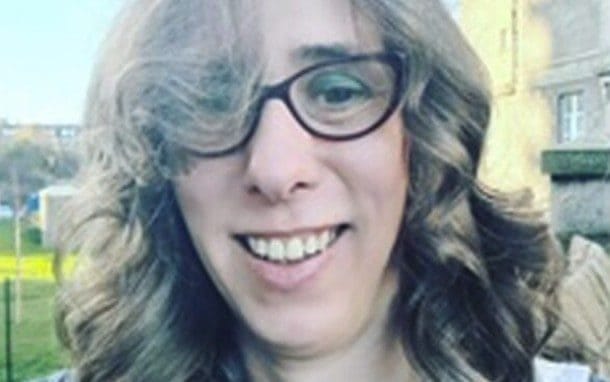
Police Scotland initially examined a social media post written by Heather Herbert and said it contained no criminality. The words were public, their author was known, and the post had already been reported to the force. After the case attracted wider political and media attention, police conducted what they called a further assessment, arrested and charged the 50-year-old University of Aberdeen worker, and announced that a report would be submitted to the procurator fiscal. The precise charge had not been made public.
The reversal is the central accountability question. Herbert’s post had not been hidden during the first assessment, and Police Scotland has not publicly identified what new evidence or legal reasoning moved the matter from no criminality to arrest and charge. The state used its power against a trans woman while leaving the public unable to examine the law it believed she had violated.
Herbert wrote after reports that Ann Widdecombe had died but before authorities announced that the former politician’s death was being investigated as a suspected murder. She called the death good news, expressed hope that Widdecombe had suffered, and rejected demands that she speak kindly about someone she regarded as responsible for human harm.
Herbert’s words expressed contempt. They did not cause Widdecombe’s death. Herbert did not direct anyone to attack her, organize violence against her, or participate in the death under investigation. The later murder inquiry cannot retroactively turn a trans woman’s political anger into responsibility for a killing with which she has not been connected.
That anger did not emerge without history. Widdecombe spent decades using political power and public influence against LGBTQIA+ equality. Her parliamentary record included opposition to equalizing the age of consent for gay men and resistance to measures expanding LGBTQIA+ rights. She opposed the repeal of Section 28 and later continued using her platform against same-sex marriage, transgender recognition, and the acceptance of LGBTQIA+ people as equal members of public life.
Section 28 was not a harmless ideological disagreement. It imposed institutional silence around LGBTQIA+ lives and relationships, leaving schools and local authorities fearful of offering honest recognition or meaningful support. Young people lived beneath the stigma that silence protected. Widdecombe’s opposition to repeal helped defend that structure rather than the people harmed by it.
Political records like hers are routinely softened after death. Campaigns against equality become “strong beliefs,” laws that isolated LGBTQIA+ people become disputes from another era, and the people who carried the consequences are expected to participate in a respectful public memorial that excludes what was done to them.
Herbert refused that ritual by expressing rage toward a politician whose career helped preserve conditions in which LGBTQIA+ people were treated as less deserving of recognition, protection, and legal equality. Her language was aggressive because the political injury behind it was not theoretical. It reached into schools, relationships, families, healthcare, public institutions, and the ability of LGBTQIA+ people to live openly without the government marking their existence as a threat.
Police Scotland then made Herbert’s reaction the object of state intervention. The force first reported no criminality and later announced an arrest and charge following further assessment, but it did not explain whether officers had obtained new evidence, changed their interpretation of the post, or relied on a legal provision not considered during the first review. It also did not explain whether the later murder investigation affected its analysis of words Herbert had written before that investigation was announced.
The sequence does not establish that political pressure caused the charge, but it requires scrutiny. Herbert posted, police initially found no criminality, complaints and coverage intensified, officers reassessed the matter, and Herbert was arrested. The phrase “further assessment” is not a complete public explanation for such a consequential reversal.
Herbert’s transgender identity has no apparent bearing on whether her words satisfy a Scottish criminal statute. It did not cause Widdecombe’s death and cannot determine the legal meaning of a Bluesky post. Yet reports repeatedly foregrounded Herbert as transgender, turning her gender from a biographical fact into part of the public accusation.
That framing invites readers to treat one person’s expression as evidence about trans people collectively. Herbert’s post becomes material for a political culture already determined to portray trans people as unstable, threatening, or consumed by hatred. The legal question—whether a specific statement violated a specific law—is displaced by another spectacle in which transgender identity is placed on trial before the state has publicly identified the charge.
Heather Herbert speaks for herself. She is not a representative assigned to answer for every trans person, and the wider community does not inherit responsibility for every sentence written by someone who is trans. The community will still carry the consequences when media coverage binds her gender to alleged criminality more tightly than Police Scotland has publicly bound her conduct to a disclosed offense.
The University of Aberdeen expanded the consequences beyond policing. It publicly distanced itself from Herbert’s comments, said they did not represent the institution, placed the matter under review, and confirmed that it was cooperating with Police Scotland. Her expression on a personal social media account became an employment matter before she had appeared in court and before the public knew the exact charge.

Herbert has therefore faced punishment outside any courtroom. She has been arrested, publicly named, and nationally exposed. Her employer is reviewing her conduct, while her age, occupation, transgender identity, and most inflammatory words have been circulated together. Her livelihood, reputation, privacy, and safety have been placed at risk while the legal basis of the prosecution remains undisclosed.
Media coverage has deepened that punishment by repeatedly reproducing the most graphic portion of Herbert’s post while reducing Widdecombe’s anti-LGBTQIA+ record to background or omitting it entirely. Widdecombe is presented through public office, television fame, and death. Herbert is presented through gender identity, employment status, and outrage. The LGBTQIA+ people affected by Widdecombe’s political choices disappear between them.
Restoring that history does not diminish the seriousness of Widdecombe’s killing. It prevents a murder investigation from cleansing a public record. Death does not reverse parliamentary votes, repair the damage of discriminatory laws, or return the years LGBTQIA+ people spent living beneath policies designed to silence and exclude them.
The United States and Scotland use different legal systems, institutions, and political language, but trans people recognize the underlying demand. In the United States, officials invoke parental rights, biological truth, the protection of women, or public order while removing healthcare, recognition, and safety from trans people. In Scotland, Herbert’s case has moved through police reassessment, criminal charging, prosecutorial referral, workplace review, and national media exposure. Different countries. Same cruelty. Different labels.
Across both systems, trans people are expected to absorb political attacks without expressing anger in language that makes comfortable institutions uncomfortable. They may document what was done to them, request equality politely, and translate their pain into terms acceptable to people who never had to survive it. When that anger becomes impossible to sanitize, institutions detach the reaction from the injury that produced it and present the reaction itself as the emergency.
Widdecombe was permitted a long political career in which opposition to LGBTQIA+ equality was treated as legitimate participation in public life. Herbert answered the news of her death with contempt and now faces prosecution, workplace scrutiny, and national exposure. The politician’s sustained use of power is softened while the trans woman’s response receives the full attention of police, employers, and the press.
Police Scotland may disclose a charge and supporting evidence that require further examination. Until then, the public record shows that the force initially reported no criminality and later arrested and charged Herbert without publicly identifying what changed. That reversal must remain at the center of this case rather than being buried beneath outrage at her tone.
Trans people do not owe ceremonial tenderness to politicians who spent their power attacking their rights. They are not required to erase political injury because the person responsible has died, nor must they protect a public figure’s reputation by pretending the harm ended when that person’s life did. Different countries give the machinery different names, but the demand remains the same: trans people must absorb the harm, control their anger, and preserve the dignity of those who spent their power attacking theirs.
Heather Herbert refused that demand. Police Scotland placed her inside the criminal system after initially reporting that her post contained no crime, while her employer and the media expanded the punishment beyond the courtroom. Ann Widdecombe’s death did not erase the LGBTQIA+ harm she helped build, and state power cannot erase that history by prosecuting the trans woman who refused to mourn her politely.
Trans United documents the laws, institutions, and public campaigns that place trans people in danger while demanding silence from those forced to survive them. This work preserves the record, names the machinery behind individual acts of punishment, and refuses to let institutional language erase the human beings carrying the consequences.
Subscribe to Trans United and help keep trans lives, trans resistance, and state punishment in the public record.
Who knew that condoning the political murder of a helpless 78 year old woman would've ended up this way.
Why is he being called a woman?