

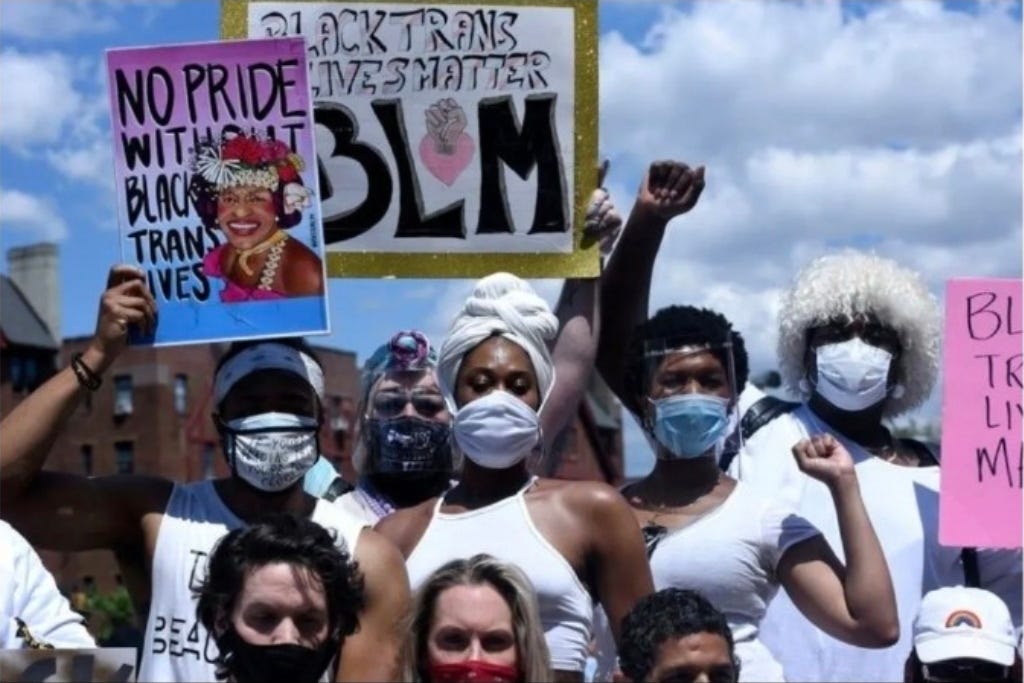
A shared experience of transphobia does not erase race, whiteness, privilege, or the different levels of danger carried by Black trans people and trans people of color.
The pattern begins with color blindness. When white trans people say they “do not see color,” they are not removing racism from the room. They are refusing to see how race shapes lived experience, safety, healthcare, policing, housing, employment, visibility, and survival.
It continues when white trans people minimize privilege by saying they are trans too, as if being targeted for gender identity removes the benefits of whiteness. It does not. A white trans person can be harmed by transphobia and still move through institutions, media, public spaces, and community settings with racial privilege Black trans people are denied.
That denial creates more harm inside trans spaces. It shows up when white trans people borrow language, style, culture, customs, or identifiers from Black communities and communities of color without credit, respect, or accountability. It shows up when one version of “the trans experience” is treated as universal, even when Black trans people and trans people of color are facing different risks and different consequences.
It also shows up in rhetoric. When racism is used casually as a comparison point in arguments about transphobia, both racism and transphobia get flattened. The point is not that white trans people cannot speak about oppression. The point is that oppression cannot be explained by erasing the people who live at its intersections.
This can happen in organizing rooms, online communities, Pride spaces, mutual aid networks, housing programs, and advocacy campaigns. Black trans people and trans people of color are asked to show up for “trans unity” while their own warnings, needs, leadership, and harm are treated as secondary.
That is why “not being racist” is not enough. Apathy keeps the same hierarchy intact. Silence lets racism remain inside spaces that claim liberation. Refusing to listen, refusing to redistribute resources, refusing to protect Black trans people, and refusing to challenge racism are not neutral choices.
Trans solidarity has to mean more than shared language. It has to mean accountability. It has to mean white trans people naming whiteness, challenging racism, protecting Black trans people and trans people of color, and refusing to treat racial harm as secondary to trans survival.
If trans solidarity is going to mean anything, it has to protect the people most often pushed to the margins inside the movement itself. If a trans space cannot confront racism, it is not safe for everyone it claims to represent.
Black trans people and trans people of color should not have to fight racism in the same spaces that claim to fight for trans freedom. Naming that harm, documenting it, and refusing to let it disappear is part of the work.
Support helps keep this public-record work open, searchable, and sustained — including reporting, analysis, and accountability writing centered on Black trans women and trans people facing layered harm.