

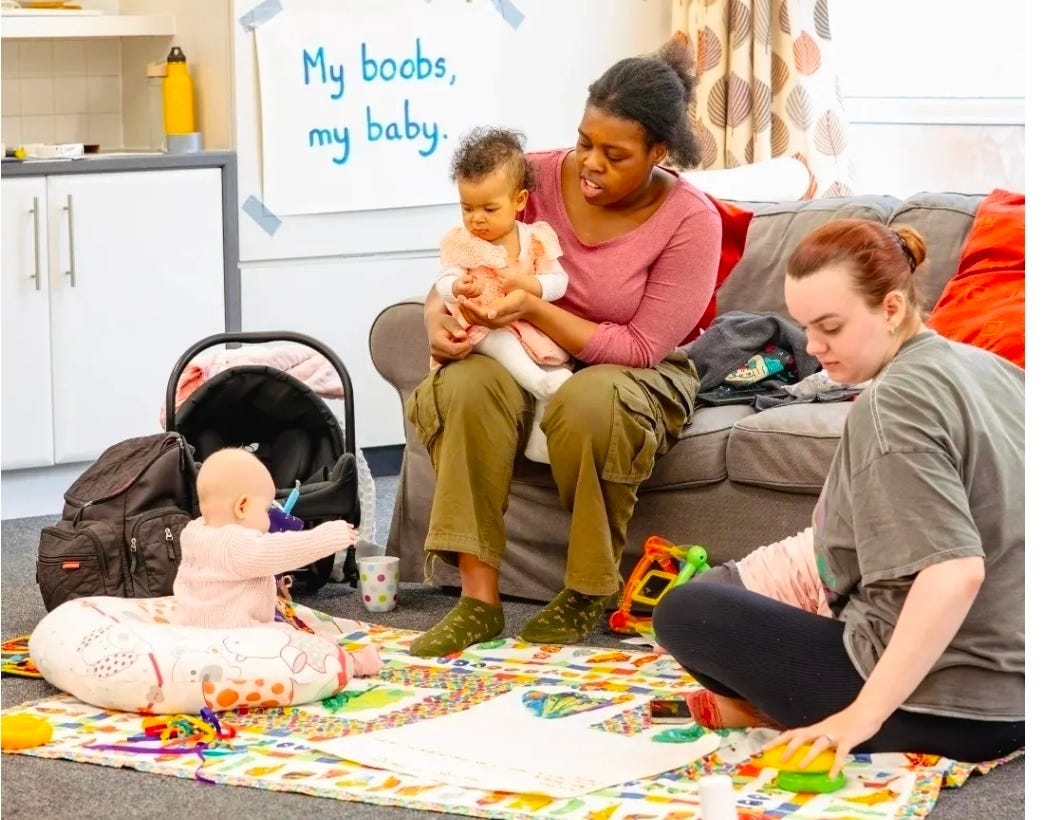
Parents in Edinburgh are gathering for something ordinary: help feeding their babies. Some breastfeed. Some chestfeed. Some use donor milk, mixed feeding, supplemental nursing systems, or other ways of giving human milk. Queer Milk, operated by LGBT Health and Wellbeing, provides LGBTQ+ parents aged 16 and older with a place to share experiences and seek practical support without first defending their bodies, identities, or families. Its current schedule lists a monthly gathering on the final Tuesday in Edinburgh.
Parents need support, and babies need nourishment. Yet GB News transformed that ordinary caregiving into anti-trans outrage by reducing Queer Milk to a story about trans women giving human milk to babies. The outlet used language about “biological men” while pushing the group’s broader purpose—and many of the parents it serves—out of view.
Queer Milk’s official description welcomes LGBTQ+ parents who are breastfeeding, chestfeeding, or otherwise giving human milk. “Chestfeeding” is used by some trans men and nonbinary parents because “breastfeeding” may conflict with how they understand their bodies or gender. The term reflects an existing reality: trans men and nonbinary people can become pregnant, give birth, and feed their children.
GB News did not merely misunderstand a word. It erased the trans fathers and nonbinary parents whose existence made that word understandable, then replaced them with a politically useful panic about trans women. Trans fathers complicated the intended story because their lives expose the falseness of rigid claims about who becomes pregnant, gives birth, or feeds a baby. Nonbinary parents complicated it further because they do not fit the narrow categories the outrage machine depends on.
Trans women became the headline not because Queer Milk identifies them as the group’s sole or primary purpose, but because years of sustained anti-trans attacks have made them a familiar target for fear and disgust. That framing does not mean trans women are illegitimate participants in LGBTQ+ parenting support. Trans women can be parents and deserve support without being treated as threats. The harm lies in using them as a panic device while misrepresenting the broader service and erasing the other LGBTQ+ parents whose experiences explain why inclusive feeding language exists.
For Women Scotland escalated the attack. The organization was quoted describing taxpayers as “sickened” by what it called a “creepy and highly disturbing practice.” Its director, Susan Smith, invoked “defenseless and innocent babies,” called trans women “delusional men,” and described public support for the group as nauseating. The Times also quoted Smith describing the practice as “sinister” and “perverse” and using the phrase “hormone-induced gloop.”
Those statements do more than criticize a support group. They strip trans women of their gender, strip trans parents of parental legitimacy, and portray human milk as contamination. Feeding a baby is recast as dirty, suspicious, or dangerous so that hostility toward trans families can be presented as concern for children.
The babies were not being protected by this rhetoric. They were being used to justify disgust toward their parents. Anti-trans campaigns repeatedly use children as moral shields: a trans child receiving support becomes evidence of abuse, a queer family becomes a threat to childhood, and a parent feeding a baby becomes the subject of national outrage. The language of protection disguises an attack on the family itself.
Queer Milk’s actual work exposes how far that propaganda moved from reality. The group welcomes varied feeding experiences, including breastfeeding, chestfeeding, donor milk, mixed feeding, and supplemental nursing systems. Parents can meet, ask questions, compare experiences, and receive support in an environment designed for families who may already face hostility or invasive questions elsewhere.
LGBTQ+ parents are often asked which parent is “real,” treated as though their bodies are public property, or forced to explain private medical histories to strangers who have already decided their families are fraudulent. An affirming support group offers them somewhere to discuss infant care without first having to defend their right to be parents.
GB News and For Women Scotland took a space intended to reduce that isolation and made its participants more vulnerable to harassment. They turned practical family support into outrage content and told trans parents that even feeding their babies could be photographed, mocked, misrepresented, or used as political evidence against them.
Tanius Posey’s experience shows the human cost of that pressure. Posey, a Black trans father, publicly documented his pregnancy and feeding his son after years of taking testosterone. He described stopping testosterone for pregnancy as “hell” and said he initially did not want to breastfeed because he feared what society would say about him.
Posey continued because he wanted to give his child nourishment and a strong start. He also spoke openly about trans men carrying children because too few trans men of color were visible in public conversations about pregnancy and parenting. His experience restores the parent GB News erased: a trans father navigating pregnancy, physical change, public hostility, and the ordinary decision of how to feed his baby.
The propaganda surrounding Queer Milk makes those choices harder. It teaches trans fathers that pregnancy may be used to invalidate their gender, tells nonbinary parents that affirming language is absurd, and frames trans women’s parenthood as inherently suspicious. It takes intimate acts of care and turns them into material for strangers who want to debate whether trans families should exist.
That harm extends beyond one Edinburgh support group. Erasing trans fathers makes it harder for trans men to find accurate information about pregnancy, birth, lactation, and postpartum care. Erasing nonbinary parents makes necessary language appear artificial. Using trans women as the panic target tells the public that their proximity to children is dangerous. Weaponizing babies turns family support into a referendum on whether trans people deserve dignity.
Right-wing coverage also invoked public funding to intensify the attack. LGBT Health and Wellbeing receives public funding for a range of services, but the Scottish government said its equality funding was not specifically allocated to lactation services. The distinction did not stop anti-trans campaigners from invoking taxpayers because “publicly funded” turns personal prejudice into a claim of civic injury.
That language gives hostility a public-interest disguise. Instead of admitting that the target is trans parenthood, campaigners present the attack as fiscal responsibility, safeguarding, or transparency. Public money becomes the permission structure for the same underlying message: trans families are improper, threatening, and undeserving of ordinary support.
The Queer Milk story also fits a broader right-wing media pattern. Small local events are stripped of context, attached to children, public spending, or institutional corruption, and circulated as proof that trans people are invading ordinary life. GB News had recently generated another anti-trans story from a small art exhibition that included a line about a Care Bear being interpreted as trans representation. That story was then amplified by right-wing media in the United States.
The original event does not need to be large or consequential. A local exhibition, a support meeting, or a single phrase can become national outrage content as long as the story supplies a recognizable enemy. Queer Milk was useful because it was small enough to be vulnerable, ordinary enough that its real purpose offered no scandal, and connected to babies in a way that made emotional manipulation easy.
GB News and For Women Scotland owe the public answers about why Queer Milk’s stated purpose was reduced to a trans-woman panic, why trans fathers and nonbinary parents were erased, why babies were used to portray trans parents as dangerous, and why dehumanizing language was presented as legitimate public concern. Those questions matter, but the families targeted by the attack remain the governing truth.
A trans father feeding his child is caring for his child. A nonbinary parent seeking language that does not deny who they are is caring for their child. A trans woman raising a baby is not a public threat, and an LGBTQ+ family seeking practical support is not a scandal. A parent feeding a baby is not the danger; the danger is a media machine willing to erase trans fathers, dehumanize trans women, and use children to make cruelty look like concern.
Right-wing media turned parents feeding their babies into anti-trans propaganda by erasing trans fathers, dehumanizing trans women, and weaponizing children against LGBTQ+ families.
Upgrade to a paid subscription for exclusive Trans United reporting, deeper analysis of anti-trans media campaigns, and continued documentation of the families, policies, and institutions these attacks target.
If you are not comfortable with your breasts being breasts, is having children really right for you?