

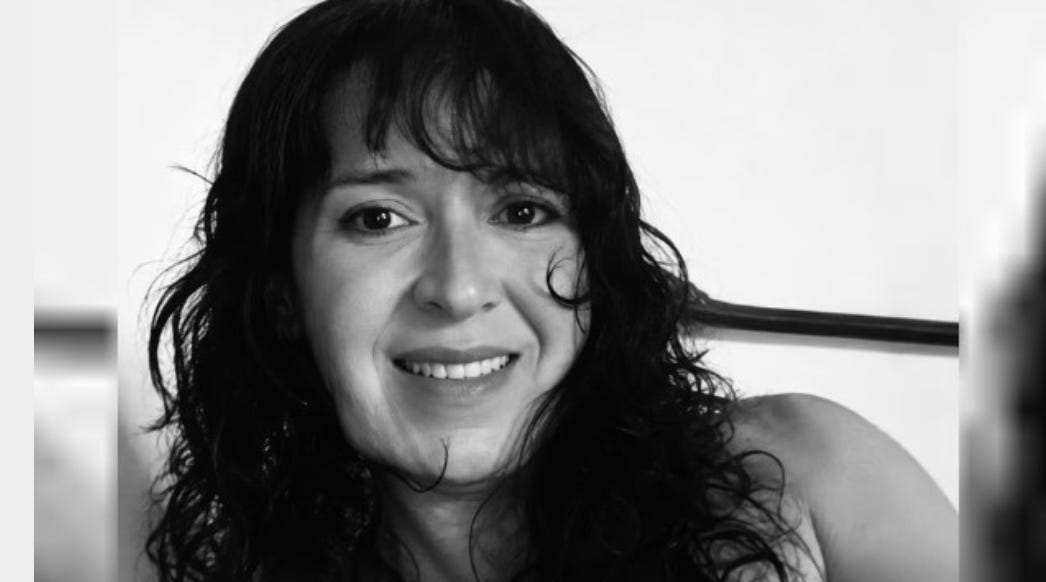
Jessica Núñez was known in Córdoba’s LGBTQ+ community before her name entered a homicide investigation. The 44-year-old trans woman was identified in local reporting as an activist involved in LGBTQ+ rights work, part of a community that is now demanding that the circumstances of her killing be examined without erasing the gendered violence trans women face.
Jessica was fatally stabbed in the early hours of August 13, 2026, in the La Floresta neighborhood of Villa Nueva, Córdoba. She was taken to Hospital Regional Pasteur in nearby Villa María, where she died. Within hours of Jessica’s killing, LGBTQ+ organizers were demanding that investigators examine it through a gender-and-diversity lens.
Prosecutor Juliana Companys is handling the investigation. Authorities detained Johana Mailen Rogero, 22, who was accused as the alleged principal perpetrator of simple homicide, and her father, Cristian Oscar Rogero, 48, who was accused as an alleged necessary participant. Prosecutors said there had been previous conflicts involving Jessica and the accused and initially treated the case as simple homicide rather than gender violence.
That classification has been challenged by people who knew Jessica and by LGBTQ+ organizations in Córdoba. Activists have demanded that investigators apply a gender-and-diversity perspective and examine whether Jessica’s killing should be understood as a travesticide or transfemicide. Their demand places an unresolved accountability question at the center of the case: whether investigators will fully examine the role Jessica’s gender and the conditions surrounding trans women’s lives may have played in the violence against her.
The distinction matters because an initial criminal charge does not tell the whole story of a victim’s life or the context in which violence occurs. Jessica’s killing can be prosecuted under a particular legal classification while investigators still examine whether misogyny, transphobia, structural exclusion, or other forms of gendered violence shaped the circumstances around it. The community demanding that broader examination is refusing to let Jessica’s trans identity disappear behind the language of a case file.
Jessica was not known only through the circumstances of her death. Local reporting described her as a trans activist recognized within the region’s LGBTQ+ community. Local advocate Fanny Bustos recalled that Jessica had obtained her first formal job through work connected to the local ombudsman’s office, a detail that preserves part of the life she built before her killing became public news. Keeping that history in the record matters because homicide coverage can quickly reduce a person to an age, a wound, a location, and the names of the accused.
Her family has also moved directly into the legal fight. By August 18, Jessica’s mother had moved to join the case as a private complainant, represented by attorney Joaquín González. That move was intended to give the family a formal role in the investigation and a way to press for answers about what happened to Jessica and how her killing is being understood.
The language activists are using carries its own history. Travesticide and transfemicide are terms used across Latin America to describe killings of travesti and trans women within broader structures of gendered violence, discrimination, and social exclusion. In Jessica’s case, activists are using that framework to demand a fuller investigation. Their argument is that the existence of a prior conflict should not automatically close the door on examining whether gendered violence was also present.
That demand comes amid broader concern from LGBTQ+ organizations in Córdoba. Activists have pointed to other killings involving LGBTQ+ people in the province and have argued that Jessica’s death cannot be understood only as an isolated act of interpersonal violence. Those claims remain part of the community’s public record and add pressure on investigators to examine the circumstances of her killing with the depth her life and identity require.
The accountability question is therefore larger than the wording of the initial charge. Jessica was killed, prosecutors selected an early legal frame, her community challenged the limits of that frame, and her family moved to enter the case. The investigation now carries the responsibility of determining whether the violence against Jessica is being understood completely rather than narrowed before every relevant dimension has been examined.
Jessica was a trans woman, an activist, and a member of a community that knew her before the violence that killed her became public news. Her death deserves an investigation capable of examining every relevant dimension of that violence, including the possibility of gendered harm, without treating her trans identity as incidental simply because prosecutors began with a simple-homicide charge.
Jessica Núñez’s life mattered before there was a criminal case. The fight now is to make sure the investigation preserves the full record of who she was, what was done to her, and whether the violence that killed her is being understood completely.
Jessica Núñez was killed. Her community is still fighting to make sure every part of that violence is examined.
Trans United documents the people, institutions, and failures behind that harm.
Upgrade to a paid subscription to support independent Trans United reporting and accountability work.