

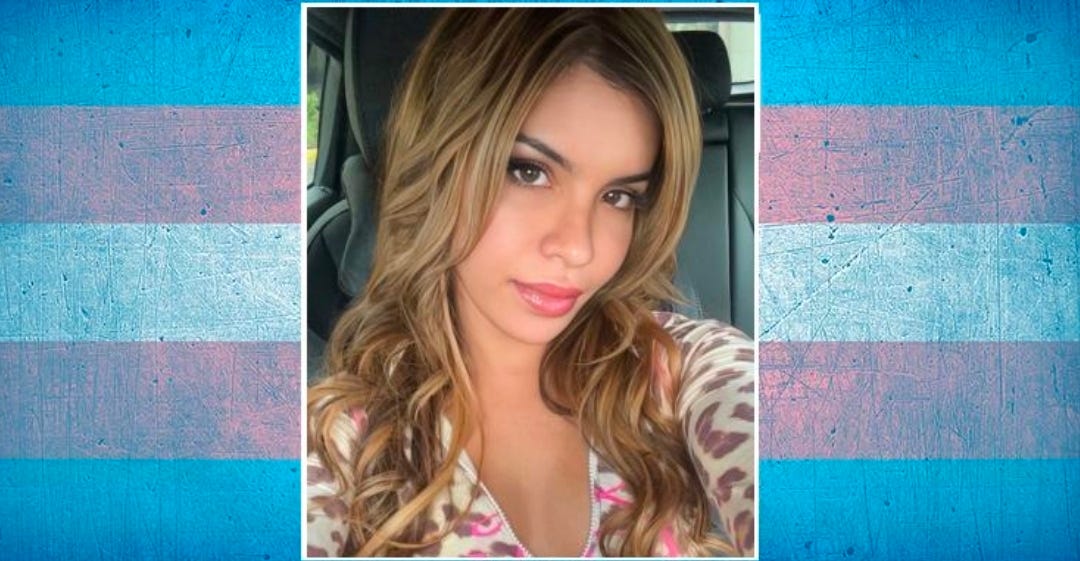
Lanessa Rodriguez was not just the victim of a local crime story. She was a 35-year-old trans Latina woman, a business owner, a friend, a daughter, a person with plans, pride, and a future she had worked hard to build. Friends remembered her as confident, generous, ambitious, and deeply alive in a way that stayed with people after they met her. One friend described her as “energy,” the kind of person people could not get enough of because she carried herself with force, warmth, and presence.
That matters because the public record often does something cruel after trans women are killed. It shrinks them. It turns a whole life into a location, a police statement, a charge, or a headline about a homicide. The person becomes background. The violence becomes the main event. The official record moves forward, but the woman at the center is left for loved ones and community writers to rebuild back into visibility.
Lanessa’s friends did that work immediately. They spoke about her as a woman who was “finally falling into her own,” someone who had worked hard and was proud of what she was building. She had business plans. She had reportedly expanded beyond Fort Pierce into Vero. She was proud of her professional accomplishments, proud of the life she was creating, and close enough to the future she wanted that her friends could see it taking shape around her.
That is the first truth of this story. Lanessa was alive, loved, building, and becoming more fully herself. Any article that begins and ends with the crime misses the person. Any public record that cannot hold her full identity repeats the same erasure that trans women face even after death.
What Happened in Fort Pierce
Lanessa was killed on April 28 inside Cash Out Gold and Silver on U.S. Highway 1 in Fort Pierce, Florida. Police say 20-year-old Landen Ballard entered the pawn shop, pulled out a gun, shot her multiple times, tried to open the cash register, and left the scene. Court records reportedly show Ballard later said, “Is it bad that I have no remorse?”
That sentence is horrifying because it strips away even the performance of human concern. Lanessa was shot multiple times inside a business she had helped build, then left on the floor while the person accused in her killing allegedly treated remorse like a question he could ask later. The brutality is not only in the shooting. It is in the indifference afterward, the casualness of a life taken, and the way a woman’s future was ended and then spoken about as if the absence of remorse were just another detail in a court file.
Police later announced a second arrest. Tylen Jerome Ryan, 22, of Vero Beach, was arrested on a charge of tampering with evidence. That charge does not replace the central fact of Lanessa’s killing, but it does show that the case is not simply one clean paragraph. There is an investigation, a second arrest, and an expanding record around what happened after Lanessa was shot.
The facts matter. But they are not enough by themselves. A fact pattern can tell the public that a woman was killed. It cannot, by itself, protect her from being flattened. That is why the way Lanessa is named, remembered, and placed inside the wider record matters as much as the timeline of what happened.

She Was Secure in Her Womanhood
Lanessa’s best friend, Nayomy Nomelin, gave the public the part of the record that official language never can. She described Lanessa as strong, resilient, secure in herself, secure in her womanhood, proud, hardworking, generous, and someone who poured into the people around her. That testimony matters because it does more than mourn Lanessa. It restores her.
The phrase “secure in her womanhood” carries weight here. It names what the public record too often refuses to hold clearly when trans women are killed. Lanessa was not an abstract victim. She was a woman who knew herself, lived as herself, and was loved as herself. Her womanhood was not a side note. It was part of her life, her presence, her joy, her friendships, and the way people remembered her.
Her social media presence reflected someone who loved beauty, humor, style, pets, nostalgia, and the ordinary pleasures of being alive. Friends and loved ones remembered a woman who had worked hard, celebrated her life, and was proud of what she had achieved. After her birthday, she wrote about feeling like “the happiest, luckiest woman in the world,” grateful for a blessed year and proud of the life she had worked to enjoy.
That is the human center. Lanessa was not only what happened to her. She was what she built, what she loved, how she moved through the world, and how people felt when they were near her. Her death should not be remembered only through the violence that ended her life. It should also be remembered through the life that violence interrupted.
The Record Still Tried to Make Her Smaller
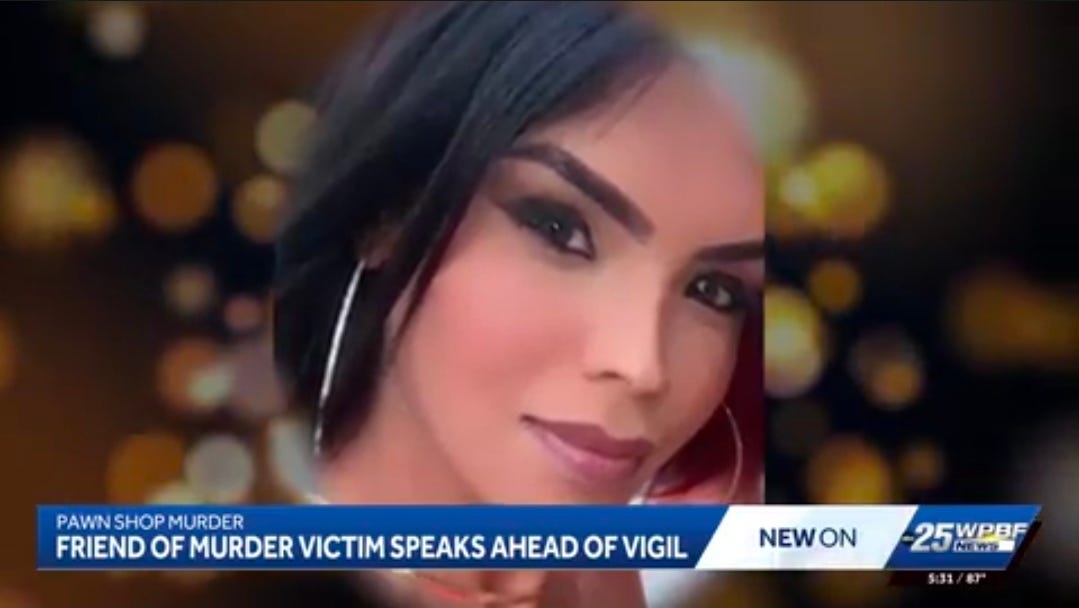
Local reporting helped preserve parts of Lanessa’s humanity. WPBF reported her name, her age, the killing, the arrests, and the grief of her friends. It included powerful testimony from Nomelin and gave space to Lanessa’s work, ambition, generosity, and presence. That matters. But the reporting did not center her as a trans Latina woman in the way this story requires.
That absence is not a small detail. When a trans woman is killed and the record does not clearly hold her trans identity, the public can easily process the violence as a generic local homicide. The crime remains visible, but the pattern becomes harder to see. The woman is remembered as a victim, a business owner, or a person killed in a pawn shop, while the specific reality of violence against trans women gets pushed to the edges.
A trans Latina woman was killed inside her own business. That alone belongs in the record. Her identity does not need to be argued, defended, or treated like a footnote. Lanessa Rodriguez was a woman, she was loved as a woman, and her life should not be reduced after death to a generic crime category.
That is the difference between a complete record and a flattened one. Lanessa’s name, womanhood, work, grief, and future all belong together. The public should not have to search multiple places to see the whole person who was taken.

This Is What Data Erasure Looks Like in Real Life
Lanessa’s death connects directly to a larger crisis: the erasure of trans people from public data, crime records, and institutional memory. When federal systems remove or weaken gender identity data, they do not only change forms and surveys. They change who can be counted. They change what violence can be tracked. They make it easier for trans victims to vanish into categories that do not name them.
That is why the Trump administration’s erasure of trans victims from federal crime data matters here. When gender identity is removed from national victimization surveys and public data systems, violence against trans people becomes harder to measure. Journalists lose tools. Advocates lose evidence. Families lose public recognition. Communities lose the ability to prove what they already know from grief, vigils, and repeated names.
Lanessa’s case shows how that machinery works at ground level. A trans Latina woman is killed. Local news reports the homicide and speaks with grieving friends. A trans-centered writer names what the mainstream record does not fully center. Then the public has to piece together the whole truth from separate sources: one holding the facts of the killing, one holding the trans context, one holding the human memory, one holding the structural pattern.
That fragmentation is the problem. Trans women should not have to be rebuilt after death from scattered fragments because public systems cannot or will not hold them whole. A record that names only the crime but not the woman’s full life is incomplete. A record that names the woman but strips out the trans context is incomplete. A record that counts the death but loses the pattern is incomplete.
A Trans Latina Woman Should Not Have to Be Rebuilt After Death
Lanessa’s friends knew who she was. They did not need a government form or an official category to know her. They remembered her as proud, secure, generous, hardworking, and full of life. But public memory does not operate only through friends. It moves through headlines, statements, court documents, crime databases, social media, obituaries, and data systems. When those systems fail trans women, the public record becomes another site of violence.
This is why trans-centered documentation matters. It does not exist to decorate a tragedy with identity language. It exists because the machinery of erasure is real. Trans women are killed, misgendered, deadnamed, flattened, or filed away in ways that make it harder to see the scale of violence against them. Then officials can claim the numbers are unclear, the patterns are unproven, or the crisis is exaggerated.
Lanessa’s life pushes against that erasure. She was not only a person killed in a business. She was a trans Latina woman who had worked hard to create a life, expand her work, care for people around her, and live with pride. Her death belongs in the record of violence against trans women because her life belongs there first.
To name that is not sensational. It is responsible. The danger is not in saying Lanessa was trans. The danger is in allowing her transness to be treated as optional after death, as if the public can mourn her humanity while editing out the part of her life that systems most often fail to protect.
Her Name Belongs in the Record
Lanessa Rodriguez should be remembered by name. Not as a case number. Not as a pawn shop headline. Not as a crime scene. Not as a generic victim in a local homicide. Her name belongs in the public record because her life mattered before the violence, and because trans women are too often made smaller after they are killed.
She was 35. She was a trans Latina woman. She was proud. She was loved. She was building a future. She was described by friends as generous, hardworking, secure in her womanhood, and unforgettable. She was shot multiple times inside her own business, and the people who loved her are now left to carry the grief of a life taken too soon.
The public record should not need to be corrected into humanity after a trans woman dies. But that is where we are. Friends have to say her name. Community writers have to name her identity. Trans-centered journalists have to connect the dots. Independent publications have to preserve the pattern. Every part of the record has to be forced to hold what should have been obvious from the start: Lanessa Rodriguez was a whole person, and her life cannot be reduced to the violence that ended it.
That is why this article is not just about one killing. It is about the way violence and erasure work together. The bullet ends a life. The record can shrink what remains. The fight is to stop both forms of disappearance.
Trans United documents the violence, erasure, and public-record failures that make trans women harder to count, harder to protect, and easier to disappear after death.
Lanessa Rodriguez’s life deserves more than a generic crime story. Her name, her womanhood, her work, her ambition, and the grief of the people who loved her all belong in the record.
Help keep trans-centered documentation and survival work alive:
Read the connected report:
The Trump Administration’s Erasure of Harm Against Trans People from the Internet — How Federal Data Changes Hide Violence

Have you noticed the sudden drop in media reporting about violence against transgender people? In recent months, fewer national stories have documented killings, assaults, and hate-motivated attacks targeting trans communities. That silence does not necessarily mean the violence has stopped. In fact, the explanation may lie elsewhere — in changes to the…