

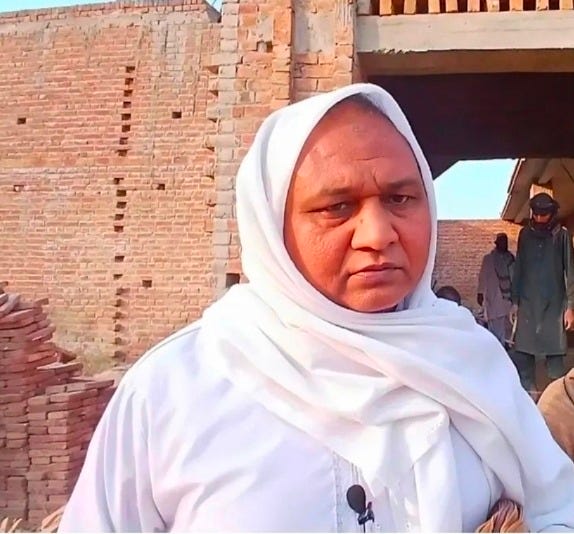
Rajab Ali spent his life savings building a mosque where he hoped to pray in peace. The 46-year-old trans man put 6 million Pakistani rupees, roughly $21,000, into the mosque in the Okara district of Punjab. According to testimony he gave Global Voices, hostility followed him through the construction and into the mosque itself.
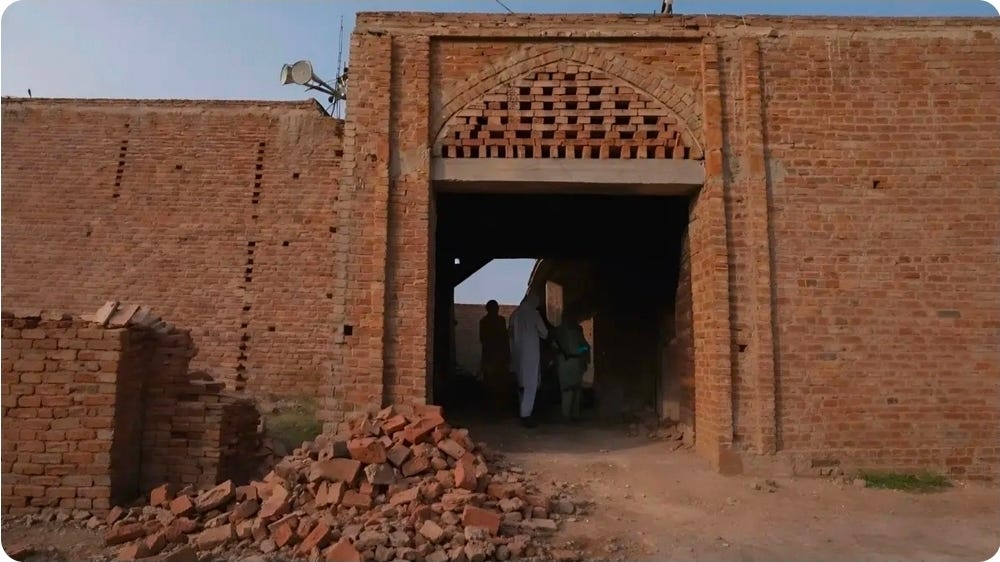
Rajab told Global Voices that harassment began during construction in December 2022. He said people stole motor parts, water taps, and fans from the site, while local women were sent to harass him. Some residents, he said, declared that they would never pray in a mosque built by a trans person. Construction later paused for roughly a year and a half before Rajab resumed work in November 2025.
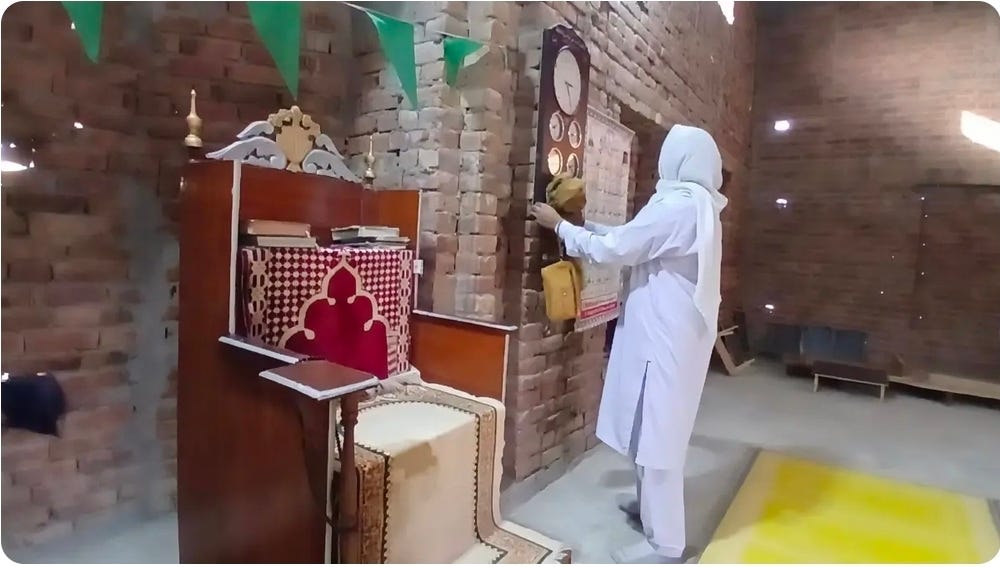
The mosque eventually became the sanctuary Rajab had sacrificed to build, but completing it did not end the hostility. He told Global Voices that people questioned his presence and authority when he tried to lead prayers. He had invested his savings in the mosque, yet his trans identity was still being used to challenge whether he should lead worship there at all. Rajab described the danger without ambiguity: “I fear they could harm me.”
What makes Rajab’s experience especially stark is that Pakistan’s federal law already recognizes the right he is struggling to exercise. The Transgender Persons (Protection of Rights) Act, passed in 2018, prohibits discrimination against trans people across multiple areas of public life. Section 14 specifically protects access to public places and places intended for religious purposes, barring exclusion based solely on sex, gender identity, or gender expression.
Rajab financed and built the mosque himself, creating a place for prayer and religious teaching, yet he says he still encounters rejection and fears physical harm there. The gap between the protection written into Pakistan’s statute and the safety available to Rajab in practice is not an abstract legal problem; it is the burden he carries every time his presence inside the mosque is challenged.
That gap extends beyond one man and one building. In a 2025 qualitative study, researchers interviewed trans participants in and around Gujranwala and documented experiences of exclusion from religious life, including hostile staring, humiliation, social avoidance, and pressure to worship elsewhere. Researchers described the pattern as “sacred exclusion,” connecting exclusion from holy places with isolation from the religious communities trans people were trying to participate in.
Rajab built a religious space of his own amid that exclusion. A legal protection against religious exclusion rings hollow when a trans man can spend his life savings building a mosque and still face harassment inside it. The failure is not Rajab’s inability to prove that he belongs; it is the continuing discrimination that forces him to defend a right Pakistan’s own law already recognizes.
Pakistan’s legal protections for trans people have also faced sustained pressure. In May 2023, the Federal Shariat Court ruled that several provisions of the 2018 Act were inconsistent with its interpretation of Islamic injunctions. The ruling targeted provisions involving gender identity, recognition based on self-perceived gender identity, and inheritance. It did not strike down the entire Act, and Section 14’s protection for access to religious places was not among the provisions targeted.
The ruling was appealed to the Supreme Court’s Shariat Appellate Bench. The legal fight has placed trans rights under continuing pressure even as protections such as religious access remain part of the statutory record. For Rajab, however, the most immediate measure of protection is not what appears in a legal text. It is whether he can stand inside the mosque he built, lead prayer, and leave without fearing what someone may do to him.
Even the money Rajab used to build the mosque became another point of attack. Before putting his savings into the project, he had earned money dancing within the trans community. According to the Global Voices reporting, some residents used that history to question whether his money was appropriate for financing a sacred space. His livelihood became another way critics challenged his religious legitimacy.
His livelihood, his gender, and his role leading prayer have each been used to question his religious legitimacy, according to Rajab’s testimony and the Global Voices reporting. Even after he spent his own money building the mosque, his right to stand inside it without harassment has remained vulnerable. The burden is repeatedly pushed onto Rajab to defend his access, respect, and safety while the discrimination directed at him continues.
Rajab began presenting as male in 2021 and began teaching Islam, according to Global Voices. By building the mosque and teaching Islam, he has continued practicing his faith openly as a trans man despite the rejection surrounding him. He put his life savings into creating a permanent religious space, and the mosque now stands as evidence of what he built despite that hostility.
But a building cannot, by itself, guarantee belonging. Pakistan’s law can prohibit discrimination in religious places, and Rajab can construct a mosque with his own money, yet neither automatically stops the people who question whether he deserves to worship there. That is the failure at the center of his story: formal rights exist, a sanctuary exists, and Rajab is still forced to confront hostility inside the very space he created to pray in peace.
His final wish is not about legislation or courts. Rajab told Global Voices that after his death, he hopes “people will remember me and pray for me.” After spending his life savings building a place where others can worship, he is asking to be remembered within the faith community he has worked to serve. His story is not about whether a trans man belongs in a mosque. It is about how much Rajab has already sacrificed for a belonging that should never have required permission.
Rajab Ali spent his life savings building a mosque where he hoped to pray in peace. Pakistan’s law says trans people have the right to enter and worship in religious spaces, yet Rajab says harassment and fear followed him inside the sanctuary he created.
That gap between rights written into law and the lives trans people are actually forced to live is part of the record Trans United exists to document.
Upgrade to a paid subscription to help Trans United keep documenting the people, laws, and institutions behind that harm.