

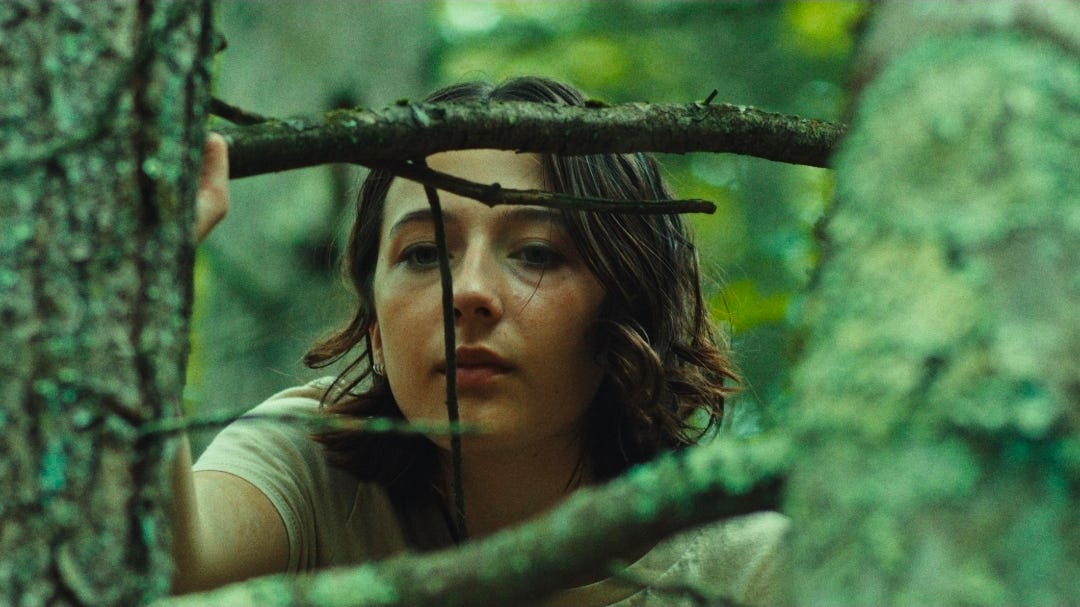
Juju Nadeau, a 21-year-old trans woman, was chased down and fatally stabbed while walking with friends on Back Cove Trail in Portland, Maine. She had gone there on the evening of August 5 to show her friends the graffiti beneath Tukey’s Bridge, one of her favorite places in the city. They planned to spend time together and open Pokémon cards beside the trail. Instead, court documents describe a man threatening the group, drawing a knife, and pursuing Juju and her friend along the path. Glen Rodney, 58, is now charged with murder in her killing.
According to the police affidavit, Rodney approached the group on a bicycle and became involved in an argument as he passed them. The document alleges that he kicked Juju and threatened to kill members of the group before pulling out a knife. Juju and her close friend, Liz McGehee, ran along the trail beside Interstate 295 as Rodney allegedly chased them. McGehee told investigators that he knocked Juju to the ground, climbed on top of her, and stabbed her once in the chest. Police found Juju near the southbound breakdown lane of the interstate shortly before 10 p.m. and transported her to Maine Medical Center, where she died.
McGehee did not stand at a distance while her friend was attacked. She told investigators that she punched and kicked Rodney to force him away from Juju, then called 911 and stayed with her until emergency responders arrived. Juju’s loved ones have described McGehee as a hero who risked her own life trying to save her friend. The responsibility for what happened on that trail belongs to the man accused of drawing the knife, giving chase, and driving it into Juju’s chest. McGehee survived the attack, but she must now carry the trauma of witnessing Juju’s killing and fighting desperately to stop it.
The court record documents the final minutes of Juju’s life. It cannot explain everything that existed before them. Juju was an urban explorer who loved discovering new places, climbing, swimming, dancing, making crafts, collecting pins, and wearing handmade bracelets. She built friendships through furry conventions across New England and was remembered for turning brief encounters into lasting connections. Her partner, Kasper DeWitt, described her as loving, playful, and socially magnetic—a woman whose presence changed the atmosphere around her.
Juju did not merely attend conventions; she created a community around herself. At Anthrocon in Pittsburgh, she could spend hours near the waterfront, drawing people together before dancing through the night. Her white, green, and pink hyena fursuit carried the same bright energy her loved ones recognized in her daily life. Friends remember the colors, jokes, familiar drinks, animals, and small moments that now make them think of her. DeWitt told Them that Juju was “an angel sent here to make things better.” That is the woman her loved ones are determined to preserve beyond the violence that ended her life.
Kasper and Juju had been together for two years. Kasper planned to propose at the next Anthrocon, turning a place filled with shared memories into the beginning of their marriage. They expected more conventions, more waterfront afternoons, more parties, and more ordinary days in the apartment they shared. Those plans did not gradually fade; they were severed in a single night. Kasper is now preparing to leave the apartment, the city, and two jobs while grieving the person with whom they expected to build a life.
The public record created after Juju’s death did not initially preserve her with the same care. Police identified her using another recorded name, and early news reports followed that official record. Them later reported that initial coverage also misgendered and deadnamed her. When newsrooms treat a government document as a complete identity rather than a procedural record, the state’s label can displace the person known by partners, relatives, friends, and community. Juju Nadeau is the name attached to the life her loved ones described, the future she was building, and the accountability record that must remain after her death.
Rodney was arrested shortly after the attack and remains jailed at the Cumberland County Jail without bail. He reportedly told investigators that he had been attacked, while the affidavit and McGehee’s account describe him threatening the group, drawing a knife, chasing the two friends, and stabbing Juju. The murder charge will now move through the court system, but the investigation remains open. On August 13, Portland police renewed their request to speak with several people who may have been near Tukey’s Bridge between 9:30 and 9:45 that night. Investigators are seeking three men who were walking on the path, two helmeted cyclists, and the driver of a light tan or gold pickup truck that stopped nearby before police arrived.
A criminal case can determine legal responsibility, but it cannot contain the full damage left behind. Juju’s mother has lost her daughter. Liz must recover from the violence she witnessed and the intervention that placed her own life at risk. Kasper must break a lease that began only weeks before Juju’s death, pack their shared home, relocate to another city, leave two workplaces, find new employment, and begin again without the person who was supposed to move forward beside them. Every one of those consequences carries a financial cost on top of grief.
Juju went to Tukey’s Bridge to share a place she loved. Kasper was preparing to ask her to share the rest of their lives. The murder charge records the accusation against the man alleged to have taken that future away, but Juju’s complete record belongs to the people who knew her joy, her energy, and the life she was still creating. Supporting them now is one way to keep the cost of her killing from being transferred entirely onto those already carrying its deepest harm.
Juju was walking toward a place she loved. Kasper was planning a proposal and a future with her. Now the people closest to Juju are carrying grief alongside early lease termination, relocation costs, lost work, emergency expenses for her mother, and support for Liz after she fought to save her friend.
Help give Juju’s loved ones the time and stability to grieve without forcing them to carry the financial damage of her killing alone.
Trans United keeps the public record centered on trans people whose lives are too often reduced to a headline, a case number, or the violence committed against them. Paid subscriptions sustain this reporting and help build the support infrastructure that turns attention into material help for trans people and their communities.
Upgrade to support Trans United’s work ↓
Some one in jail should revenge her killing
💔