

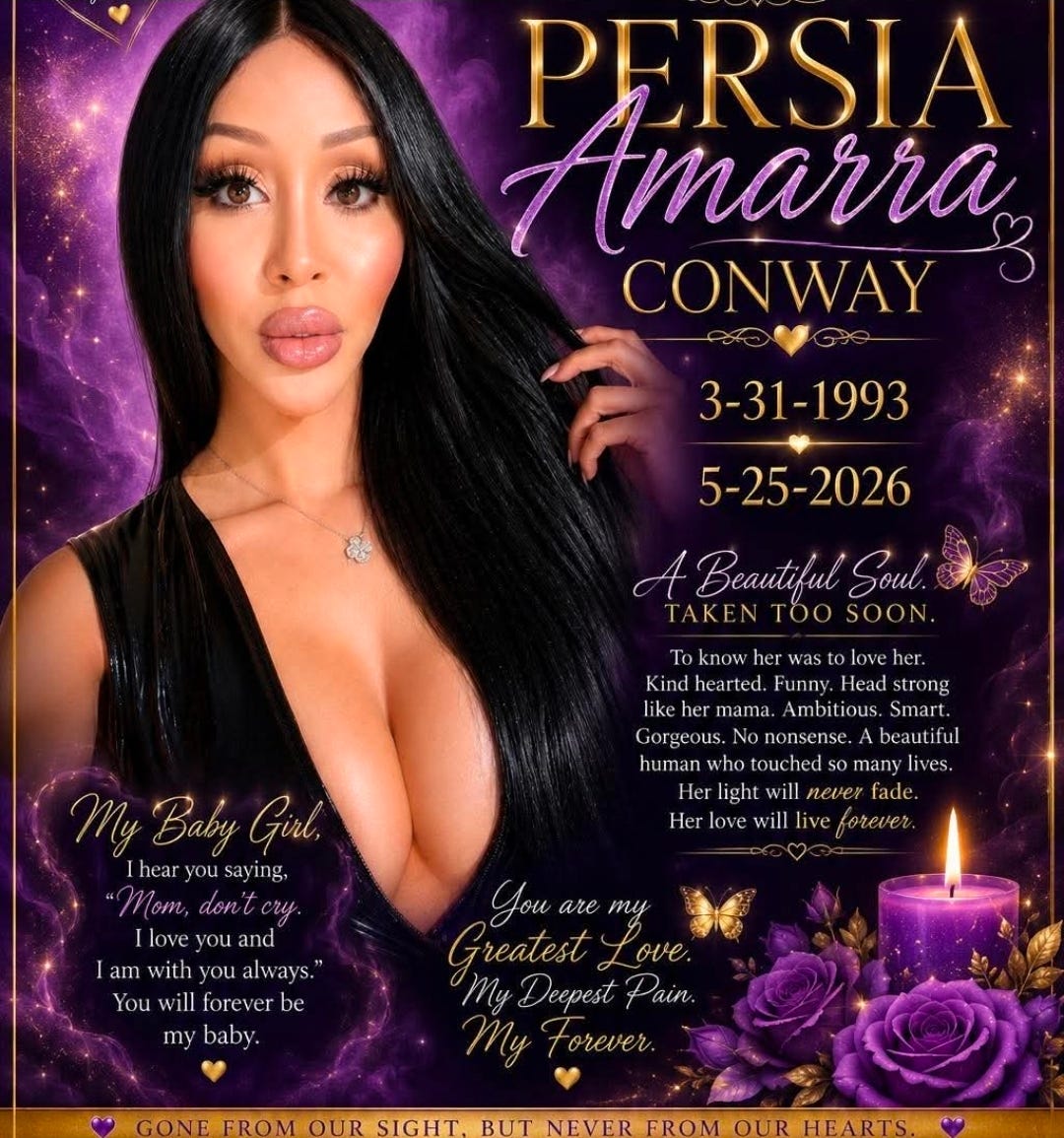
Persia Amarra Conway has been identified as the transgender woman whose body was found near Brays Bayou in Houston, Texas. Before her name reached the public, early reporting described her only as an unidentified transgender woman, placing the first version of the story inside the cold language of location, investigation, and uncertainty. Her family later restored what that first record could not carry: Persia’s name, her gender, her relationships, and the fact that she was deeply loved before the public ever learned how she died.
Persia was 33 years old. She was a Black trans woman, a daughter, a sister, a friend, and someone her mother, Michelle P. Simmons, described as kind-hearted, funny, ambitious, intelligent, fearless, and breathtaking. Those details matter because they move the story away from the place where her body was found and back toward the life that was taken. Persia was not an unidentified body to the people who loved her. She was already known, already named, and already held inside a family and community that understood the size of the loss.
Houston police have released limited public information since Persia was found near the bayou. The public record, as it currently stands, still leaves major questions unanswered about what happened, how she died, who killed her, and whether anti-trans violence is being treated with the seriousness it demands. That lack of public clarity matters because Black trans women are too often failed twice: first by the violence that takes them, and then by records that delay, blur, or thin out the truth of their lives.
Persia’s mother stepped into that silence with a public statement that changed the shape of the story. Simmons identified herself as the proud mother of Persia Amarra Conway, her beautiful transgender daughter, and said that someone in Houston had taken her baby’s life. Her words did more than give the public a missing name. They placed Persia back where she belonged: inside family, grief, gender, love, and the truth of a life that should not have been cut short.
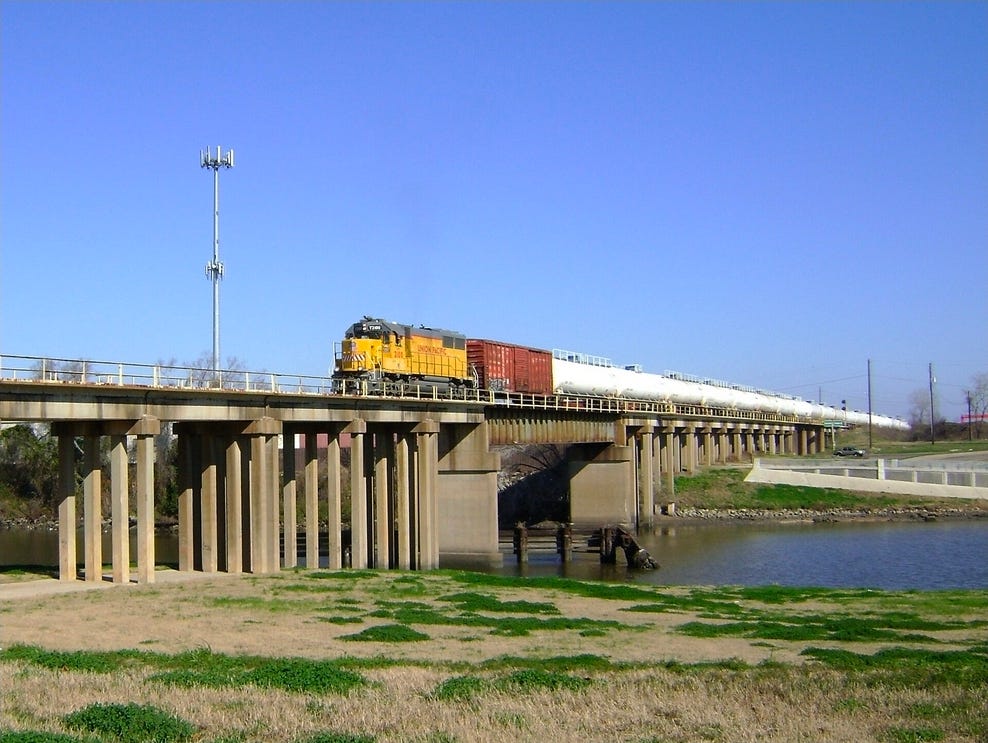
Simmons remembered Persia as someone whose presence changed the feeling of a room. Her tribute described a daughter who carried light, force, beauty, humor, determination, and a spirit that could not be confined by other people’s expectations. That is not background material. It is essential to the record because public coverage of Black trans women too often begins at death and never makes enough room for the life that came before it.
That is one of the failures this article has to name directly. A crime report can tell readers where a body was found, but it cannot tell the whole truth if it never returns the person to life. Persia had relationships, personality, joy, ambition, stubbornness, and people who understood what her presence meant. Her mother’s tribute makes clear that Persia was not merely the subject of an investigation. She was someone’s child, someone’s safe place, someone whose absence now reshapes the lives around her.
The grief in Simmons’ statement also belongs in the public record. She wrote about the impossible questions that follow the death of a child: how to keep going without hearing Persia’s voice, how to accept that the world continues when her own has stopped, and how to live with the reality that she could not protect her daughter. That grief is part of the story because violence does not end with the death itself. It enters a family’s memory, their daily life, their silence, and every future moment where the person should still be present.
The early description of Persia as unidentified shows why family and community confirmation can become so important in cases involving Black trans women. Public records often move slowly, and official updates often arrive with only fragments of a life. When that happens, loved ones and community reporters are left doing the work of restoration while also carrying the weight of grief. They have to name the person, preserve the memory, and make the public see a full human being where the first record offered only absence.
Blaque Out magazine, which focuses on Black queer culture, helped bring attention to Persia’s name after citing social media posts from her family. That pathway matters because Black queer and trans community sources are often the first to hold these stories with the care they require. They do not simply report a death. They help repair the public record by carrying the name, the family’s words, the identity, and the context that official systems frequently fail to provide at the beginning.
This is not only a question of delayed identification. It is a public-record problem. When Black trans women are first described without their names, when their identities are delayed, and when police updates remain limited, the burden shifts onto grieving families and community journalists to restore the person to the record. That burden should not exist. A serious public record should be able to investigate a death while still recognizing the humanity, gender, and dignity of the person who died.
Persia’s case also connects to a wider pattern of trans erasure. When government systems remove trans people from data, when agencies fail to ask the questions needed to measure violence, and when records blur identity after death, anti-trans violence becomes harder to count and easier to minimize. That is not an abstract policy problem. It affects who becomes visible, whose death can be tracked, whose name becomes searchable, and whose life is recognized as part of a larger pattern of harm.
The erasure frame belongs here because Persia’s story shows how it works on the ground. The public first learned that a transgender woman had been found near Brays Bayou, but the name and the fullness of the person came later through family and community confirmation. That gap is where erasure lives. It is the space between the official description and the human truth. It is the difference between a body found near a waterway and Persia Amarra Conway, a Black trans woman whose mother called her beautiful, fearless, and loved.
Persia’s life deserves to stand against every record that first failed to carry it fully. She was not a data gap, a delayed identification, or a location attached to a police update. She was a person who deserved to grow old, chase her dreams, and live the life she imagined for herself. Her mother’s tribute made that clear by describing not only what was taken, but who was taken.
The investigation still needs answers. Houston police should be pressed for clarity about what happened near Brays Bayou, whether a suspect has been identified, and whether investigators are examining anti-trans violence as part of the case. Limited public updates are not enough when a Black trans woman is found dead and her family is left to carry both grief and the work of public identification. Accountability requires more than acknowledging her name after the fact. It requires a serious investigation and a public record that does not let her disappear.
A record worthy of Persia must carry her name, her gender, her family’s words, and the demand for answers with the same seriousness. It must make clear that Persia Amarra Conway lived, mattered, and was taken from people who loved her. It must not reduce her to the place where her body was found or the silence that followed. Persia was named before the public knew her name, loved before the first reports could hold her, and remembered by her mother as her beautiful transgender daughter.
Now that her name is known, the record has a responsibility to carry it with care.
When Black trans women are killed during Trump’s anti-trans presidency, the harm does not end with the crime scene. It continues through delayed identification, incomplete police updates, public-record silence, and every system that forces grieving families to restore the names of the people they loved.
This work exists to keep those names in the record — with dignity, clarity, and no permission from the systems that erased them first.
Support independent reporting that tracks anti-trans violence, challenges public-record erasure, and refuses to let silence decide who gets remembered.
Upgrade to a paid subscription or share this report so more people can see what erasure tries to hide.
Additional Reading
How federal data removal, public-record gaps, and institutional silence make trans people harder to count, harder to protect, and easier to erase.
The Trump Administration’s Erasure of Harm Against Trans People from the Internet — How Federal Data Changes Hide Violence

Have you noticed the sudden drop in media reporting about violence against transgender people? In recent months, fewer national stories have documented killings, assaults, and hate-motivated attacks targeting trans communities. That silence does not necessarily mean the violence has stopped. In fact, the explanation may lie elsewhere — in changes to the…
That’s a damn shame. Young beautiful woman brutally murdered. Enoughs Enoughs. I want her family to get justice. R.I.P. to her. Great piece glad you gave her this tribute.
RESTORE THE RECORD: STOP MEDIA ERASURE OF BLACK TRANS WOMEN AFTER DEATH
Persia Amarra Conway’s case shows why this work has to continue. Her family had to restore what the public record did not carry first: her name, her life, her gender, and her dignity.
Trans United is building a living record to find them, name them, and restore them to public memory.
Help fund the research, documentation, and memorial reporting needed to keep Black trans women from being disappeared by police language, media neglect, incomplete data, and public silence.
🔻 Upgrade to a paid subscription.
And/ or Tap Donate 🔻 button on-site.