

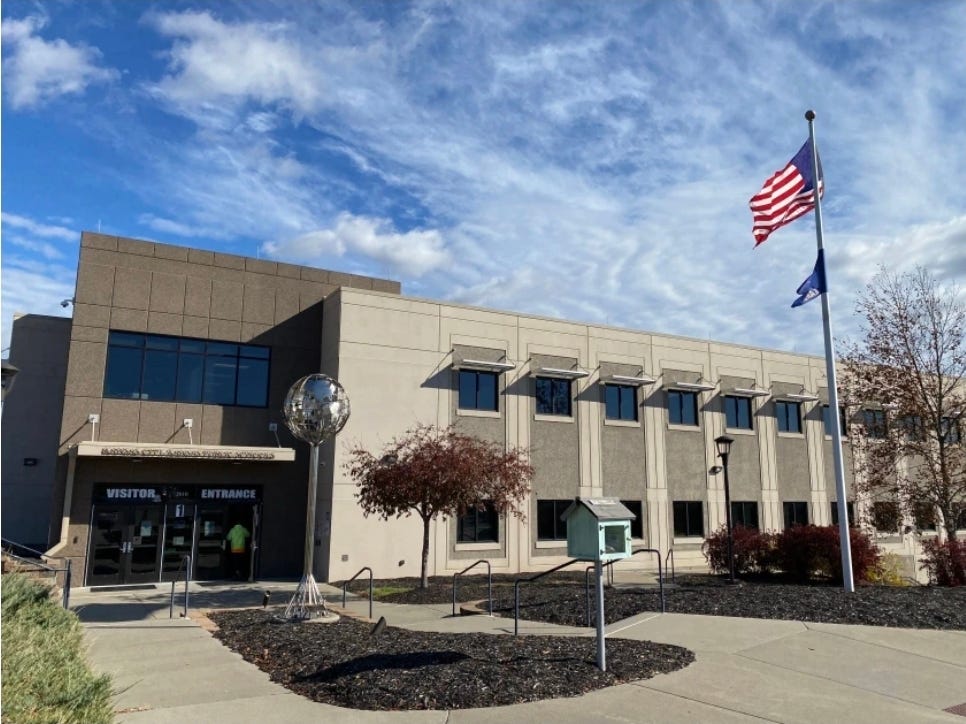
Trans students are the people placed at risk by the Trump Justice Department’s new lawsuit against Kansas City, Kansas Public Schools. Filed September 1, the case uses the Family Educational Rights and Privacy Act and the Protection of Pupil Rights Amendment to challenge district guidance that allows schools to handle disclosure of a student’s gender identity, name, pronouns, or transition-related information case by case. The federal government is asking a court to expand parental access to information that can expose a trans student’s identity before that student has chosen to disclose it at home.
The lawsuit turns federal education-record law into a mechanism for forced disclosure pressure. DOJ argues that parents are entitled to inspect records connected to a student’s gender identity and that the district’s guidance unlawfully interferes with those rights. It is also asking the court to stop the district from using the challenged transgender guidance. If the government succeeds, schools could face stronger federal pressure to provide gender-identity information to parents rather than preserve individualized decisions about when disclosure is safe or appropriate for a student.
Kansas City, Kansas Public Schools has rejected the government’s characterization of its practices. The district says it complies with federal law, and reporting on the guidance shows that parental involvement is handled individually rather than through an automatic rule requiring schools to conceal information. The district has also said the guidance is not mandatory board policy. No court has found that the district violated FERPA or PPRA.
That distinction matters because DOJ has framed the case around what it calls “secret gender transitions,” language that turns trans students into the problem and school confidentiality into the alleged misconduct. The underlying mechanism is more concrete: the government wants broader parental access to records that can reveal a student’s gender identity, and it is using federal enforcement power to attack practices that leave room for schools to consider each student’s circumstances.
For trans students, control over disclosure is not an abstract administrative issue. A student who uses a different name or pronouns at school may not be ready, willing, or safe to disclose that identity at home. A federal rule that pushes schools toward disclosure can remove that choice from the student and place the decision in the hands of institutions and adults around them. The harm is the loss of privacy and control over deeply personal identity information.
The Kansas lawsuit also appears to be part of a broader federal strategy rather than an isolated dispute. The Education Department had already pressured multiple Kansas school districts over its interpretation of FERPA before DOJ filed this case, including districts beyond Kansas City, Kansas. A court victory for the administration could give federal agencies a stronger model for using education-record law against other districts that allow case-by-case handling of trans students’ information.
The stakes extend beyond one school system because this lawsuit could establish a federal template for challenging similar protections elsewhere. A ruling for DOJ could give the administration a stronger legal tool to pressure other districts that preserve case-by-case confidentiality for trans students.
The Trump Justice Department has chosen to make trans students’ records a new target of federal enforcement. Until the court decides how far FERPA and PPRA can be stretched in this context, the central harm remains clear: the government is trying to expand access to information that can out trans students and take decisions about disclosure out of their hands.
Upgrade to a paid subscription to help support Trans United Fund’s reporting, public-record accountability, and direct support for trans people facing forced disclosure, violence, displacement, and crisis.
Sources: U.S. Department of Justice, Associated Press, Reuters, Kansas City, Kansas Public Schools.