

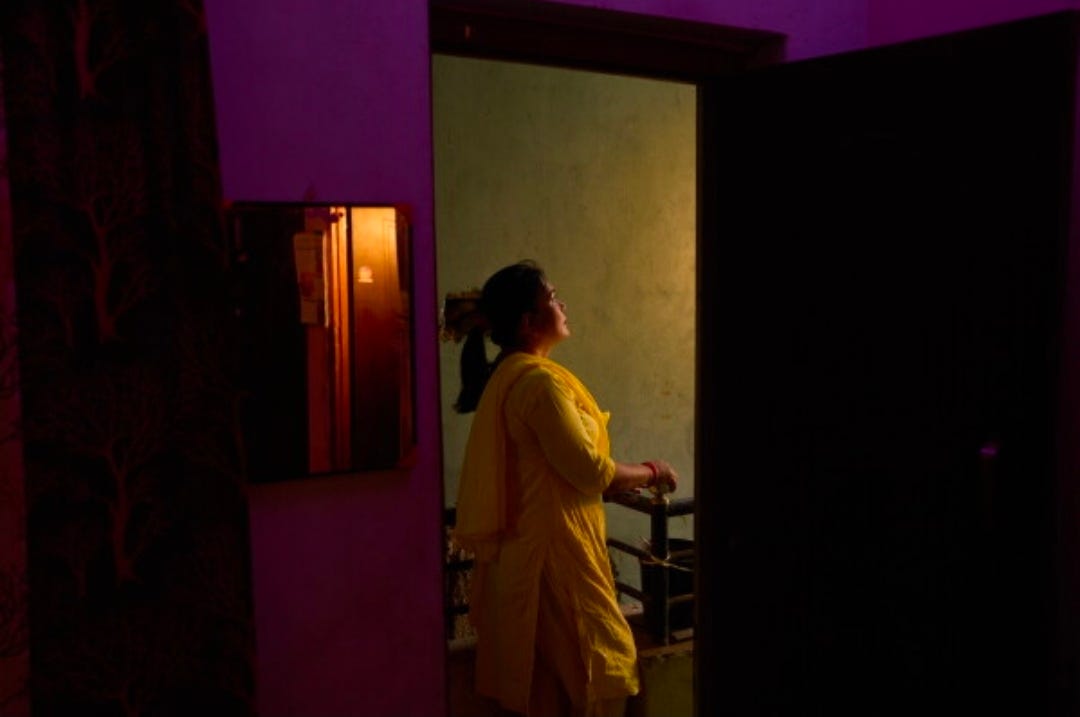
Trans HIV outreach workers in Nepal once spent their days testing people for HIV, distributing condoms, connecting patients with prevention medication, counseling sex workers, and reaching communities often excluded from ordinary healthcare. After the Trump administration cut U.S. foreign assistance and dismantled much of USAID’s operating structure, many of those workers lost their jobs—and the income, professional standing, and relative safety those jobs provided.
They were not simply “activists” supported by American taxpayers. They were trained outreach workers and peer educators performing public-health labor. Rubi Lama spent nine years finding, counseling, and testing people at high risk of HIV. Barsha Magar worked for 16 years as a peer educator, outreach worker, and data collector. Princy Tamang worked as an HIV outreach counselor. Their knowledge helped people understand HIV risk, obtain testing, use condoms, and reach treatment or prevention services.
When the funding disappeared, the need for that work did not disappear with it. HIV testing, counseling, condom distribution, and prevention outreach remained necessary, but the workers and communities were left without the system that had supported them.
Friends Hetauda, an organization serving LGBTQ+ communities in central Nepal, lost 262 of its 350 staff members. Some of its HIV testing, counseling, and prevention services were shut down, while others were severely reduced, and more than 1,200 clients lost access to PrEP, medication used to prevent HIV. Desks were emptied, condom distribution containers went unused, and workers were left without salaries and struggling to pay rent, while the communities they served lost access to prevention medication and trusted care.
The workers did not move directly from outreach employment into sex work. Many spent months applying for other jobs, exhausted their savings, skipped meals, fell behind on rent, and struggled to afford basic needs. Employers rejected some of them after realizing they were transgender. In Nepal, where openly trans people face severe discrimination in lawful employment, nonprofit organizations had been among the few places where they could work openly and be treated as professionals.
Lama applied for local government positions and was initially told she had been selected, according to the reporting. When she appeared in person, the opportunities disappeared. With no income and no reliable path into other work, she returned to a dark stretch of highway where she had once tested sex workers and their clients for HIV. This time, she was there seeking customers herself.
Around 100 LGBTQ+ former aid workers in Nepal reportedly entered sex work after the cuts. Between 35% and 45% of former Friends Hetauda staff members did so, according to the organization’s executive director. They arrived there after their public-health work was eliminated, their savings were exhausted, and anti-trans discrimination closed other employment pathways.
The danger followed quickly. Princy Tamang reported being beaten and forced into sex without condoms, while Bharati Thapa survived a gang rape on her first night in sex work. Other former outreach workers described rape, robbery, police abuse, threats, and repeated demands for unsafe sex. AP interviewed 15 displaced workers and reported that nearly all had experienced violence after entering sex work.
These accounts should not be treated as spectacle. They document what happens when income disappears, discrimination blocks other employment, and survival takes place in conditions where violence carries little consequence for the people committing it.
The harm extends beyond the workers themselves because the people who lost their jobs were part of the protection system for sex workers, trans people, and others facing heightened HIV risk. They supplied condoms, testing, counseling, and access to PrEP. Their relationships and lived knowledge allowed them to reach people who might avoid hospitals because of stigma or mistreatment. When their jobs disappeared, the community lost both the workers and the services they delivered.
Trump’s foreign-aid cuts created two connected forms of exposure. They stripped trans workers of stable employment while weakening the HIV-prevention network surrounding the same communities those workers belonged to. People once paid to reduce infection risk were pushed into conditions marked by condom coercion, violence, and shrinking access to prevention medication. That outcome was not an irony. It was the consequence of dismantling employment and public-health infrastructure at the same time.
The Trump administration began the damage with a January 2025 pause on foreign assistance, including programs connected to the global HIV response. It later radically reduced USAID’s operations while describing much of foreign assistance as wasteful or inconsistent with its priorities. The language of efficiency concealed the people inside those programs: health workers, peer educators, patients, and communities whose access to care depended on services that vanished with little transition.
The second harm came through the media framing. The Daily Caller repackaged the story under a headline suggesting USAID had been the only barrier between Nepal’s “trans activists” and “prostitution.” Its opening described the workers as activists “claiming” they had no other employment options. That language erased years of HIV-prevention labor, converted documented discrimination into a questionable excuse, and treated survival sex work as evidence of trans dependency rather than the outcome of job destruction and exclusion.
The workers’ experiences were not a punchline about government spending but the human consequences of a political decision. Calling them activists instead of HIV outreach workers makes their jobs easier to dismiss. Calling their accounts “claims” makes discrimination sound invented. Calling the result an “apparent irony” hides the causal chain: the administration removed the jobs, the prevention system weakened, other employers rejected trans applicants, savings disappeared, hunger deepened, and some workers entered dangerous conditions to survive.
The trans workers at the center of this story had careers, training, colleagues, clients, and communities that relied on them. They were already trained professionals doing work that protected public health, supported vulnerable communities, and allowed them to live openly with dignity.
Trump’s cuts took that work away, anti-trans discrimination restricted where they could go next, and violence followed some of them into the survival economy. Right-wing media then stripped away their labor and used the suffering created by those conditions as evidence against them.
These trans workers once stood beside a highway trying to keep other people safe from HIV. Now some stand in the same place trying to earn enough to eat. The policy dismantled the protection their work provided, and right-wing media erased that work afterward, leaving the people harmed by both decisions to carry the consequences.
Trans HIV outreach workers in Nepal lost jobs that protected their income, dignity, and communities. After discrimination pushed some into dangerous survival sex work, right-wing media turned their documented harm into an anti-trans attack.
Upgrade to a paid subscription to support independent reporting that keeps trans workers and survivors at the center and names the systems responsible for their harm.
I hate the suffering. Its cruel. I hate that its by our hand. I hate our hand. And im so sorry for all of it and its effects on others. This affects me deeply. Im sorry