

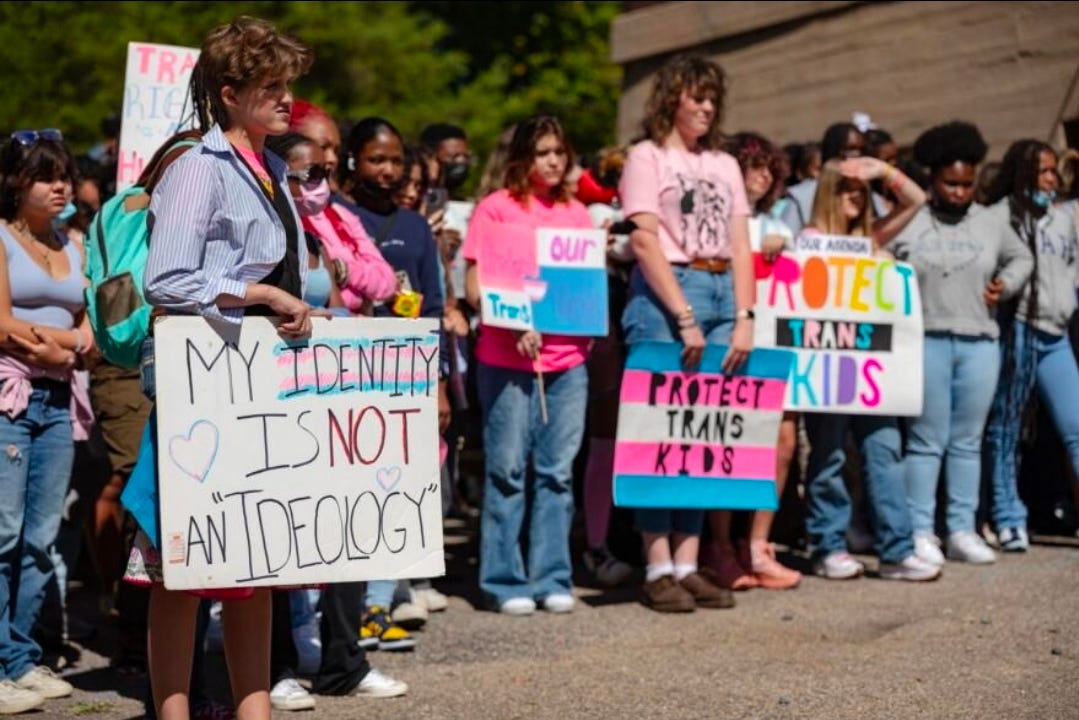
The Trump administration is deleting federal evidence that identifies nonbinary students and exposes anti-trans harm inside public schools. The Department of Education’s final 2025–26 Civil Rights Data Collection removes the nonbinary reporting category from federal tables covering enrollment, discipline, arrests, restraint, seclusion, and academic access. It also eliminates separate reporting of harassment based on gender identity, removes questions documenting whether districts prohibit that harassment, and deletes “gender identity” from the survey’s definitions of rape and sexual assault.
Transgender and nonbinary children will continue facing bullying, discriminatory discipline, physical attacks, exclusion, restraint, police referrals, and institutional neglect. What the administration is removing are the federal fields that identify nonbinary students across educational outcomes and separately record when gender identity motivated harassment.
The Civil Rights Data Collection is a mandatory national survey administered by the Department of Education’s Office for Civil Rights. Public school districts report enrollment, educational access, discipline, harassment, restraint, seclusion, school arrests, law-enforcement referrals, rape, sexual assault, and other conditions tied to civil-rights enforcement. The department identifies the collection as part of the evidence used to investigate discrimination, conduct compliance reviews, guide policy, and expose unequal treatment.
Under the previous 2023–24 form, districts that already maintained nonbinary enrollment records reported those students through a nonbinary category. That category appeared across federal measurements of suspensions, expulsions, corporal punishment, school arrests, police referrals, restraint, seclusion, advanced coursework, gifted programs, testing, athletics, and other educational outcomes.
Those records gave investigators, families, and advocates a way to determine whether nonbinary students were receiving harsher punishment, facing more police contact, or losing access to educational opportunities at disproportionate rates. The previous form did not separately identify every transgender student; transgender students could be reported as male, female, or nonbinary. Where districts maintained nonbinary records, however, the federal survey preserved them.
The 2025–26 form deletes that category throughout the federal tables. When a nonbinary child is suspended, restrained, arrested at school, or excluded from an academic program, the dataset records the outcome without preserving the category needed to identify the student as nonbinary. The federal record therefore prevents those outcomes from being isolated and compared.
The Department of Education is also eliminating separate reporting of harassment or bullying based on gender identity. The previous form defined that harm as targeting connected to a student’s actual or perceived gender identity, including conduct directed at someone perceived as transgender, cisgender, or nonbinary. Schools reported those allegations separately from harassment based on sex, sexual orientation, race, disability, religion, or national origin.
The new survey removes the gender-identity category and eliminates questions asking whether districts maintain written policies prohibiting gender-identity harassment or where families can find those protections. The broader harassment categories do not preserve a separate count showing that gender identity motivated the abuse.
That deletion allows recurring anti-trans harm to remain concealed inside broader federal numbers. When several transgender students report threats, humiliation, or physical attacks, investigators need a field connecting those complaints to the same motive. Without that field, the federal dataset folds repeated anti-trans abuse into broader numbers that record incidents without identifying gender identity as the motive.
The deletion also reaches the survey’s language concerning rape and sexual assault. The 2023–24 form stated that students could be victims regardless of sex, sexual orientation, or gender identity. The final 2025–26 form retains sex and sexual orientation while removing gender identity from both definitions.
Schools must continue reporting total rape and sexual-assault incidents. The administration did not eliminate those incident counts. It deleted “gender identity” from the federal language explicitly acknowledging that students can be victims of rape or sexual assault regardless of gender identity while dismantling the separate reporting structure that exposed gender-identity harassment elsewhere in the survey.
The Office for Civil Rights claimed that the costs of collecting the removed information “outweighed its benefits.” The department also defended binary reporting by pointing to districts that maintain only male and female classifications. That justification turns institutional refusal into federal policy because districts that maintain only male-and-female classifications become the excuse for deleting accurate records submitted by districts that preserve nonbinary data.
The Department of Education’s own 2021–22 report found that approximately 1,880 districts across 39 states and Washington, D.C., reported nonbinary students. Those figures covered only districts already maintaining that information and did not represent every nonbinary child attending public school. The category preserved records connected to an existing student population; it did not create that population.
The timing further dismantles the department’s paperwork defense. The 2025–26 school year has ended, but districts have not yet submitted those records to the federal government. Former Office for Civil Rights official Seth Galanter told K–12 Dive that affected districts must revisit their completed data and decide how to recode students into the form’s male and female fields. That forced recoding destroys the federal civil-rights value of the nonbinary information those districts collected.
Donald Trump supplied the political command behind the deletion. His January 20, 2025 executive order directed federal forms requesting sex to list only male or female and prohibited them from requesting gender identity. The Department of Education then rebuilt the national school civil-rights survey around that binary mandate.
The Office of Management and Budget approved the revised collection on July 20, 2026. The final forms were released two days later, and districts are expected to begin submitting their 2025–26 records in December. Trump prohibited federal forms from requesting gender identity, the Department of Education removed the nonbinary and gender-identity fields, and OMB approved the resulting collection.
Those deletions weaken civil-rights investigations, district comparisons, family complaints, and demands for school accountability. Families reporting repeated anti-trans harassment lose a federal comparison showing whether their district records a broader pattern of gender-identity targeting. Investigators lose data identifying where that harassment is concentrated. Removing the nonbinary category prevents disciplinary, policing, restraint, and academic outcomes involving nonbinary students from being isolated, while deleting the harassment and district-policy fields removes the separate motive count and the record showing which districts lacked written policies prohibiting gender-identity harassment.
Transgender and nonbinary children remain in the classrooms covered by this survey. They will continue learning, building friendships, joining programs, facing discipline, reporting abuse, and asking adults to protect them while the Trump administration removes the federal categories that identify nonbinary students, name gender-identity harassment, and expose districts that fail them.
Trump’s Education Department is stripping the federal record of the categories that expose anti-trans harm in public schools. A paid subscription funds Trans United’s reporting on the agencies, policies, and school systems making that harm harder to document and easier to ignore.