

Martin Higgins was 45 years old when he was shot and killed on West Hunting Park Avenue in Philadelphia.
Six days later, Sharef Holman was killed on the same street.
Police say both men were gay. Law enforcement sources told local reporters they believe the wanted suspect, 21-year-old Jahylin Melchur, may have targeted victims because of their sexual orientation. Authorities say Melchur remains at large and is wanted in connection with both killings and a separate shooting that left a 55-year-old man injured.
That is the center of this case: two gay men killed days apart, on the same Philadelphia street, while police say the same wanted suspect may have been preying on gay victims.
Higgins was killed on June 20. Authorities say he was shot around 10 p.m. at a baseball field on West Hunting Park Avenue and died at the scene.
Holman was killed on June 26. Authorities say he was found a few blocks away around 11 p.m. and was taken to a hospital, where he died later that night.
Law enforcement sources told NBC10 Philadelphia that both Higgins and Holman were shot in the back. That detail matters because it shows the violence was not abstract. These were two men killed from behind, days apart, in the same area, while police now say the wanted suspect may have targeted victims because they were gay.
There is also a third victim. Authorities say Melchur is wanted in connection with the May 29 shooting of a 55-year-old man on Lycoming Street. That man survived after being found next to his car with gunshot wounds to his elbow and side.
His survival does not make that shooting secondary. It shows the broader pattern police are investigating: one surviving victim, two dead men, and a suspect authorities say remains loose.
This is not just a local crime file. When two gay men are killed on the same street within the same week, and police believe the accused shooter may have targeted victims because they were gay, the public safety question becomes larger than one homicide report.
It becomes a warning about targeted anti-gay violence.
A person accused of targeting gay men does not only threaten the people directly attacked. The threat spreads through the community around them. It changes how people move at night, who feels safe on familiar streets, and how long it takes institutions to warn the public with the urgency the pattern demands.
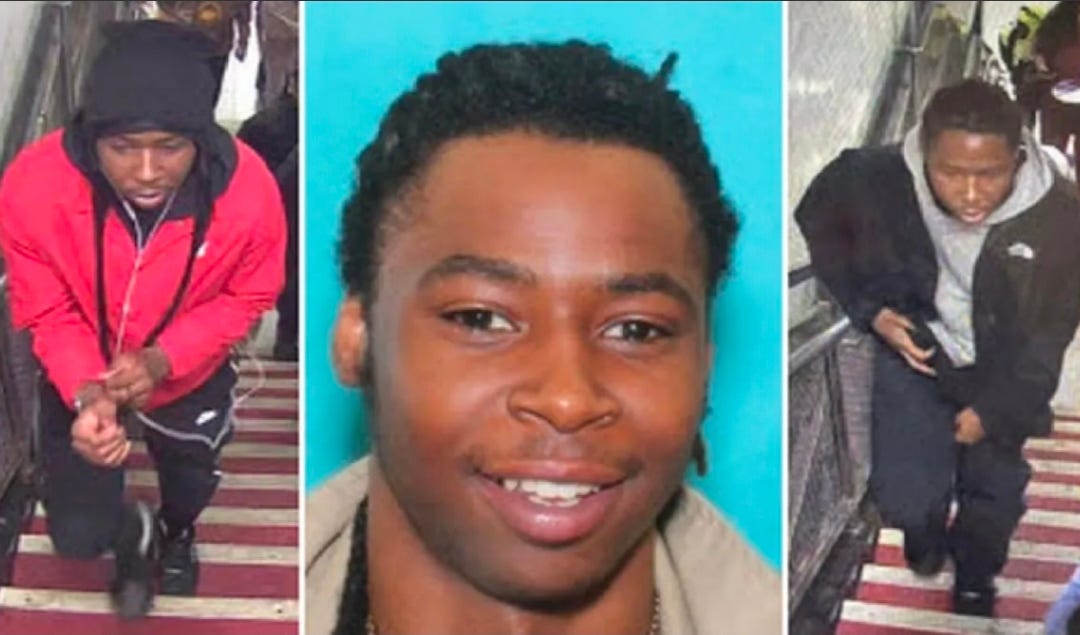
Police have released images of a person they believe to be Melchur, including images showing a red-and-black hoodie and another showing a gray hoodie under a black jacket. Authorities also said they believe he was seen using SEPTA’s Broad Street Line.
Philadelphia Deputy Police Commissioner Frank Vanore told local reporters that the individual “seems to be preying on people in that area” and asked people who ride SEPTA around that time of night to come forward if they know him or know where he may live or spend time.
That public warning matters. But it also raises the harder question: how many signs have to appear before anti-gay violence is treated as a live community threat?
Two gay men were killed days apart. Both were killed on West Hunting Park Avenue. Both were reportedly shot in the back. A third man had already survived a shooting weeks earlier. Police now say the same wanted suspect is connected to all three cases and may have targeted victims because they were gay.
That cannot be buried under generic crime language.
Precision matters while a suspect is wanted and has not been convicted. But precision cannot become erasure. When authorities believe gay men were targeted, the public record has to say that clearly.
Martin Higgins and Sharef Holman were not just victims in two separate shootings. Their deaths now sit inside an alleged pattern of anti-gay targeting that police say may involve a suspect still moving through Philadelphia.
The burden is not on gay men to disappear from public life. The burden is on the city, the public, and law enforcement to treat targeted violence against gay people as a serious community threat before more people are harmed.
Higgins and Holman should be named before the suspect. They were men with lives, families, histories, and communities before they became part of a police pattern. Their deaths should not be flattened into surveillance images, hoodie descriptions, and manhunt updates.
The warning is already in the record: police say gay men may have been targeted, two men are dead, a third survived being shot, and the accused suspect remains at large.
Anti-gay violence does not become less dangerous because institutions describe it carefully.
This work documents targeted harm, public safety failures, and the systems that let violence against LGBTQIA+ people become visible only after lives are already gone.
Upgrade to support the work.
Isn’t it interesting that when a black perish is killed by someone other than a black person they can rarely find the suspect, there is rarely video available, etc.