

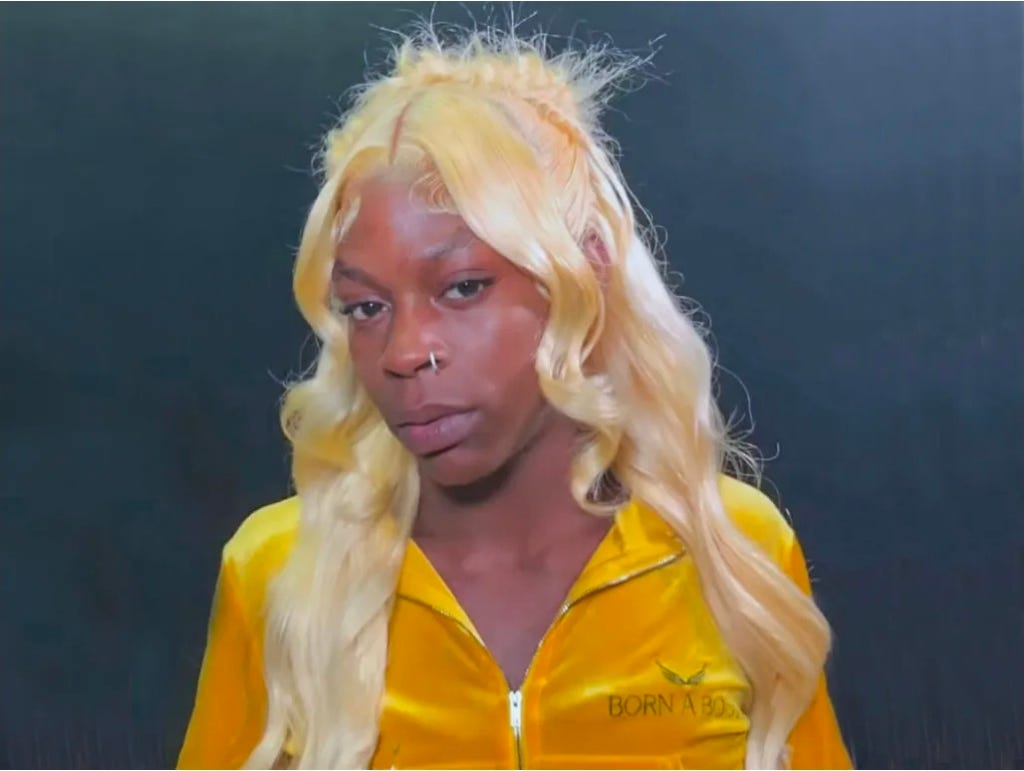
Paris Harris should not have to enter the public record first through police language, media uncertainty, or an obituary that could not fully hold who they were. They were 21 years old. They were Black. They were young. They were loved. They were remembered as bright, joyful, funny, stylish, and “unapologetically Paris.” Before the record reduced them to a crime scene, a headline, a case number, or a dispute over language, Paris had a life that mattered.
Paris was born in Wichita Falls, Texas, and graduated high school in 2023 before relocating to Dallas. According to reporting from Pittsburgh Lesbian Correspondents, their favorite color was yellow. Their social media reflected the life of a young adult building identity, friendship, style, and joy in public. Nail artistry, laughter, self-expression, and friendship were part of the world they left behind. That world ended too soon.
Paris was shot around 2 a.m. on Friday, April 17, 2026, in Dallas, Texas. Dallas police records placed the shooting in the 1800 block of Park Row Avenue. They were transported to a hospital, where they died. Police later arrested and charged 30-year-old Richard Coleman with murder. Coleman was held in the Dallas jail on a $100,000 bond, and police said they would consider whether the shooting was motivated by hate.
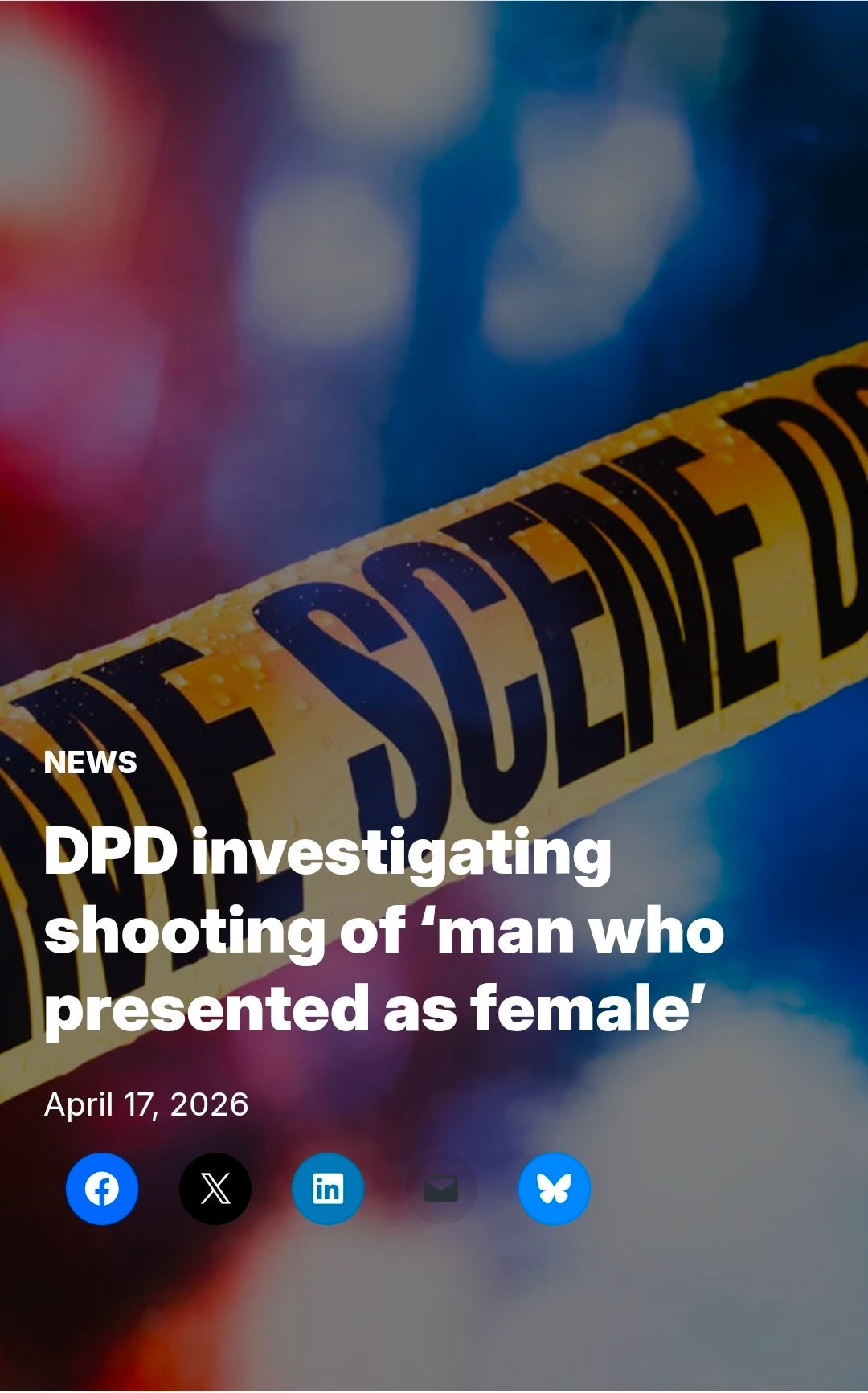
Those are the crime facts. But they are not the whole story. The other part of the story is what happened to Paris after death, when the public record struggled to describe them without reducing them. Dallas police did not initially identify Paris by name. Instead, police described the victim as “a man who presented as female.” Dallas Voice repeated that framing in an early headline, and its article said the outlet had not yet determined whether police were referring to a transgender woman or “a man dressed in women’s clothing.” That kind of language does not simply report uncertainty. It becomes part of the harm.
Because the public record does not provide full clarity on how Paris identified, this article uses the broad framing Black trans / gender-nonconforming and they/them pronouns. That caution should not be mistaken for neutrality. Paris belongs in the record of anti-trans violence and the wider pattern of Black trans lives being misnamed, misgendered, or blurred after death. When the available record is incomplete, the answer should not be to follow the coldest version of the state’s language. The answer should be to restore as much dignity as possible while naming the failure clearly.
WFAA later described Paris as a 21-year-old gender-nonconforming person and reported that police would consider hate crime as a possible motivator. That framing was cleaner than the initial police language, but it also shows how much work had to happen before Paris could be described with even basic care. First came the police phrase. Then came media uncertainty. Then came later identification. Then came the work of community writers and LGBTQ sources trying to place Paris back into the record with a fuller sense of who they were.
That is why Pittsburgh Lesbian Correspondents’ framing matters. It did not treat Paris as only a crime item. It described them as a young Black trans gender-nonconforming adult, acknowledged the lack of absolute clarity in the available record, and still refused to let uncertainty erase the broader truth. It placed Paris in a context that law enforcement and mainstream reporting often fail to hold: the ongoing violence against Black trans and gender-nonconforming people, and the way that violence is often hidden by bad records, delayed identification, misgendering, and silence.
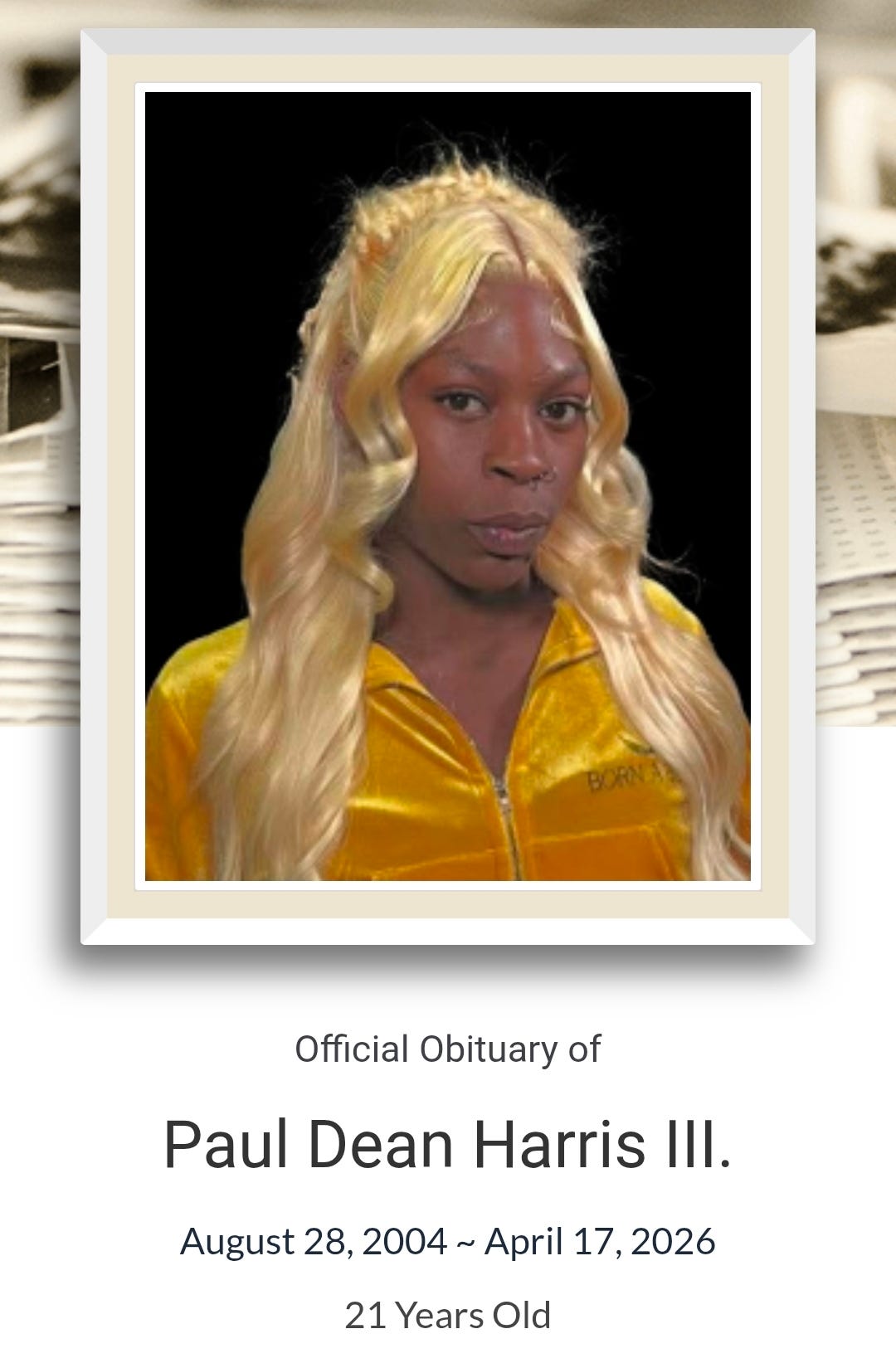
Remembered as “unapologetically Paris.”
Paris’ obituary described someone with “a pure heart and soul,” someone who could test patience and make people smile in the same moment. It remembered them as a ray of sunshine, a ball of joy, and the life of the party. It said Paris danced to the beat of their own drum and was always unapologetically Paris. Even where the obituary used language that did not fully align with the public trans framing, the love in it is unmistakable. The people who knew Paris remembered a full human being.
That is the tension at the center of this story. Paris was loved in life, but after death the public record fractured around language. Their name, identity, and dignity had to be reconstructed from police reports, media updates, obituary wording, community memory, and LGBTQ reporting. That should never be normal. A person should not have to be made legible after death by sorting through the same systems that failed to name them clearly.
Pittsburgh Lesbian Correspondents reported that Paris was the ninth trans person whose violent death had been reported in the United States in 2026, the sixth trans person of color, the fifth Black trans person on that list, and the youngest person listed at the time. That context is devastating because it makes clear that Paris was not an isolated entry. They were part of a pattern of young trans and gender-nonconforming people, especially Black trans people, whose lives are cut short and then filtered through systems that often refuse to see them clearly.
This is where the reporting connects to the broader erasure of transgender people in public data. When government systems remove gender identity questions from major victimization surveys, transgender people become harder to identify in national violence data. When police reports misgender victims or describe them through degrading language, their deaths become harder to track. When media outlets repeat that language without enough care, the public record becomes distorted before families and communities have even had a chance to grieve.
The National Crime Victimization Survey matters because it captures crimes that never reach police. Research using NCVS data has shown that LGBT people experience approximately five times the rate of violent victimization compared with cisgender heterosexual people. Transgender people face especially severe disparities. Using pooled 2022 to 2023 data, researchers estimated that transgender people experienced violent victimization at 93.7 incidents per 1,000 people, compared with 21.1 incidents per 1,000 people among cisgender heterosexual individuals. That data helps reveal violence that police systems alone do not capture.
But if transgender people are removed from the data, or if their identities are blurred after death, the violence becomes easier to miss. It becomes easier for officials to say they do not see a pattern. It becomes easier for journalists to undercount. It becomes easier for the public to treat each death as isolated. That is the danger. Erasure does not only happen through hate. It also happens through paperwork, surveys, headlines, police language, and records that cannot or will not name people correctly.
Paris’ death shows how that erasure works on the ground. Police first described a person through language that treated gender expression as suspicion. Dallas Voice repeated that framing in a way that kept the state’s language at the center. WFAA later used broader language, and Pittsburgh Lesbian Correspondents worked to restore context, dignity, and care. The record did not move cleanly from death to truth. It moved through confusion, misnaming, correction, and community repair.
That repair matters because Paris was not just a statistic. Paris was not just the ninth reported trans violent death of 2026. Paris was not just the youngest person on a list. Paris was a 21-year-old who loved yellow, made people laugh, shared style, built friendships, and lived with a presence people remembered. The point of naming the data is not to flatten Paris into a category. The point is to show that a system capable of misnaming Paris after death is also capable of hiding the scale of violence against people like them.
This is especially urgent for Black trans and gender-nonconforming people, whose deaths are too often filtered through racism, transphobia, police language, and media neglect. When a Black trans person is killed, the public record often asks the wrong questions first. It asks how to categorize them before it asks how to honor them. It repeats police phrasing before it listens to community memory. It treats uncertainty as an excuse for distance instead of a reason for care.
Paris deserved better than that. They deserved to be named with dignity from the beginning. They deserved reporting that treated their life as more than a question mark. They deserved a record that did not force advocates, community writers, and loved ones to repair the harm after the damage had already been done.
The charge against Richard Coleman may move through the courts, and the legal process will determine what happens in that case. But the accountability here is larger than one arrest. It also belongs to the police systems that shape the first public description of a victim. It belongs to media outlets that choose whether to repeat state language or challenge it. It belongs to a country where transgender people face disproportionate violence while the government moves to make that violence harder to measure.
Paris Harris was killed. Then the record struggled to name them. That struggle is not separate from the violence. It is part of the same public failure that leaves Black trans lives vulnerable, undercounted, misgendered, and too often remembered only after community members fight to correct the record.
Paris was unapologetically Paris. The record should say that without hesitation.

When Black trans and gender-nonconforming people are killed, the harm does not end at the crime scene. It continues through police language, public records, headlines, data gaps, and every system that makes their lives harder to name after death.
This work exists to keep those lives from being erased.
Support independent reporting that names Black trans lives with dignity, tracks anti-trans violence, challenges public-record misgendering, and refuses to let state language decide who gets remembered.
Upgrade to a paid subscription or share this report so more people can see what erasure tries to hide.
Related report:
The Trump Administration’s Erasure of Harm Against Trans People from the Internet — How Federal Data Changes Hide Violence

Have you noticed the sudden drop in media reporting about violence against transgender people? In recent months, fewer national stories have documented killings, assaults, and hate-motivated attacks targeting trans communities. That silence does not necessarily mean the violence has stopped. In fact, the explanation may lie elsewhere — in changes to the…