A Man Faces a Murder Charge in the Killing of Trans Man Lucas RedBeard Knapp
David Thomas Byington has been indicted in the killing of Lucas “RedBeard” Knapp, a 39-year-old trans man, farmer, builder, educator, and beloved community member in rural New Mexico.

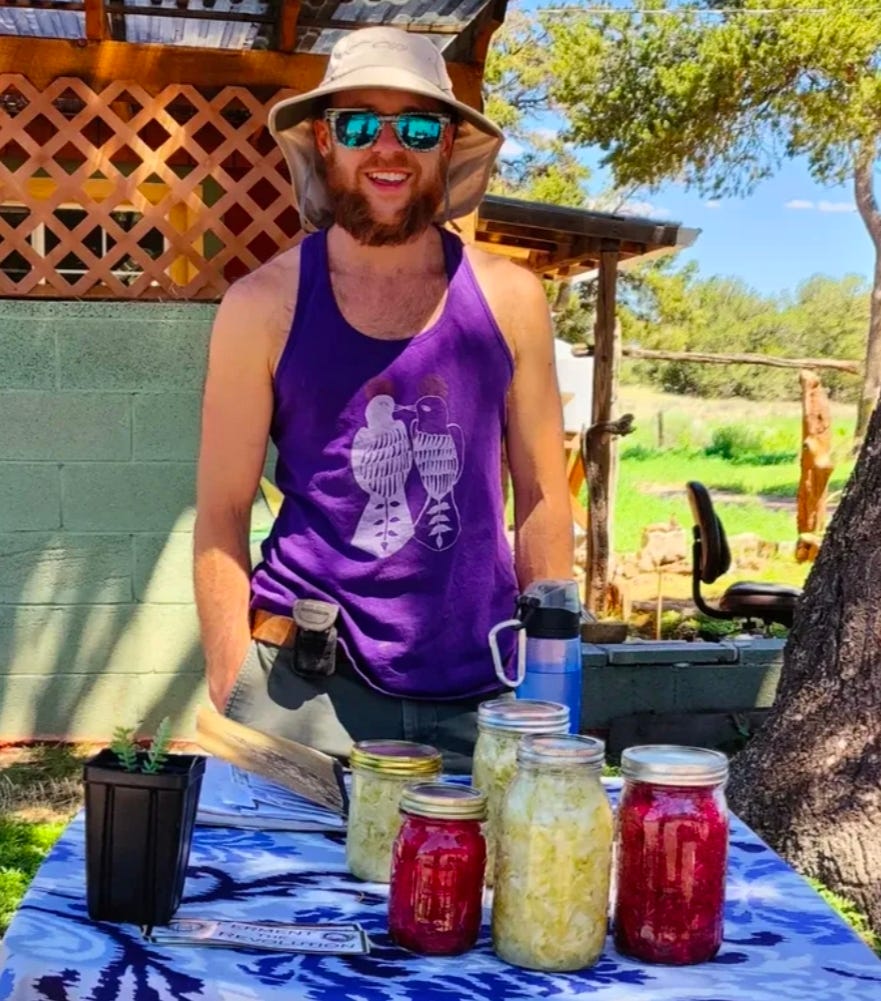
Lucas “RedBeard” Knapp was not a case file, a category, or a passing mention in a crime report. He was a 39-year-old trans man, a farmer, a builder, a chef, a fermenter, an educator, and a beloved member of his community in rural New Mexico. His life deserves to remain at the center of the record.
Now there is an update in the case surrounding his killing.
David Thomas Byington, 57, of Pinehill, New Mexico, has been indicted on felony charges connected to Knapp’s death, including second-degree murder, tampering with evidence, and assault with intent to commit a violent felony. Byington is accused of fatally shooting Knapp during a confrontation on April 18 in the remote Candy Kitchen area of Cibola County, a rural community with a population of about 100.
According to the report, deputies with the Cibola County Sheriff’s Office responded to shots fired around 11:30 a.m. and found Knapp with gunshot wounds. An eyewitness reportedly told deputies that Byington shot Knapp multiple times during the confrontation, striking him in the midsection and causing him to fall. Investigators also reported finding multiple .223 caliber shell casings consistent with a rifle-style firearm.

The confrontation reportedly centered on whether Knapp and another person were “supposed to be” at the Candy Kitchen property. That detail matters because it shows how quickly a dispute over presence, belonging, and authority allegedly became deadly. Lucas was killed in a rural place where he lived, worked, built, and belonged. The record should not flatten that into a sterile phrase about “the death of a transgender person.”
Byington is being held without bond until trial. His wife, Tania Byington, described in the report as a co-defendant, was released from jail and is also scheduled for arraignment. Prosecutors dismissed a second-degree murder charge against her, and she now faces a felony count of tampering with evidence. According to the affidavit summarized in the report, David Byington fled the scene after the shooting and told Tania Byington, “don’t tell anyone.” The report says she did not report the incident to police.
That alleged sequence is not a footnote. It is part of the harm. Lucas was shot. The accused man allegedly left. The people around the violence allegedly did not immediately bring the truth forward. A few days later, David Byington reportedly contacted police and arranged to turn himself in.
The legal process will now move through the courts. But the legal process is not the only record that matters.
Lucas’s community has already had to fight to keep his life visible. His family’s GoFundMe described him as “a cherished friend, beloved family member, and devoted brother of trans experience in our LGBTQIA+ community.” That is the language the record needs. Not language that turns him into a detached identity marker. Not wording that makes his transness feel like a spectacle or a disclaimer. Lucas was a person with a name, a life, a community, and a body of work that mattered before the state named a charge.
This is why victim-centered reporting matters. When a trans person is killed, the public record often becomes cautious in all the wrong places. It can name charges clearly while naming the victim thinly. It can describe shell casings, court dates, and legal categories in detail while giving only a narrow glimpse of the person who was taken. That imbalance is not neutral. It teaches readers where to place their attention.
The attention belongs first with Lucas.
It is not yet clear whether hate-motivated sentencing enhancements will be pursued in connection with Knapp’s killing. New Mexico does not have separate hate-crime charges in the way some states do; crimes motivated by hate can carry sentencing enhancements if a jury makes a special finding that the crime was motivated by hate based on a protected class. That legal question remains part of the public record, but the absence of an official hate finding does not erase the fear that trans communities carry when another trans person is killed.
That fear is not abstract. It is communal memory. It is the knowledge that trans people are too often harmed, misnamed, reduced, blamed, or turned into legal language after death. It is the knowledge that violence against trans people does not have to announce itself with a slogan to leave an entire community shaken. It is the knowledge that every killing becomes another test of whether the public record will hold the person fully or reduce them again.
The report also places Lucas’s killing near another devastating loss connected to New Mexico: Juniper Blessing, a 19-year-old trans teen from Santa Fe attending college in Seattle, was fatally stabbed in the laundry room of their off-campus student housing complex less than a month later. These deaths are separate cases, but the grief lands inside overlapping communities already carrying too much. Lucas was 39. Juniper was 19. Both deserved futures.
That pattern has to be named carefully, without collapsing their lives into statistics. Trans people are not symbols of violence. They are people who keep being forced into public memory through the worst thing that happened to them. The point is not to turn Lucas into a number. The point is to refuse a public record that makes his life smaller than the violence used against him.
Lucas “RedBeard” Knapp was a farmer. He was a builder. He was an educator. He was a chef and fermenter. He was a beloved brother of trans experience. He was part of rural New Mexico’s living fabric, part of a community of people who knew him beyond the headline.
David Thomas Byington now faces a murder charge in connection with his killing.
That is the update.
The deeper obligation is to keep Lucas’s name, life, and humanity at the center of the record.
Because a murder charge can tell the court what the state believes happened.
It cannot tell the whole story of who Lucas was.
And it cannot repair the hole left in the lives of the people who loved him.
Support the work that keeps trans lives centered in the record.
Trans United exists because trans people are too often reduced by systems that only name us clearly after harm has already happened. Our lives deserve more than neutral language, thin coverage, and public records that remember the charge more vividly than the person taken.
Help support reporting that names the victim, names the harm, and refuses to let trans lives disappear into court language, police summaries, or sanitized headlines.
Subscribe to Trans United ↓
Source / earlier report ↓


My heart breaks at these unnecessary and tragic losses. Humans need to be better. End Stop.
Great good. I’m glad. I hope they get justice. May the wonderful trans warrior R.I.P.