

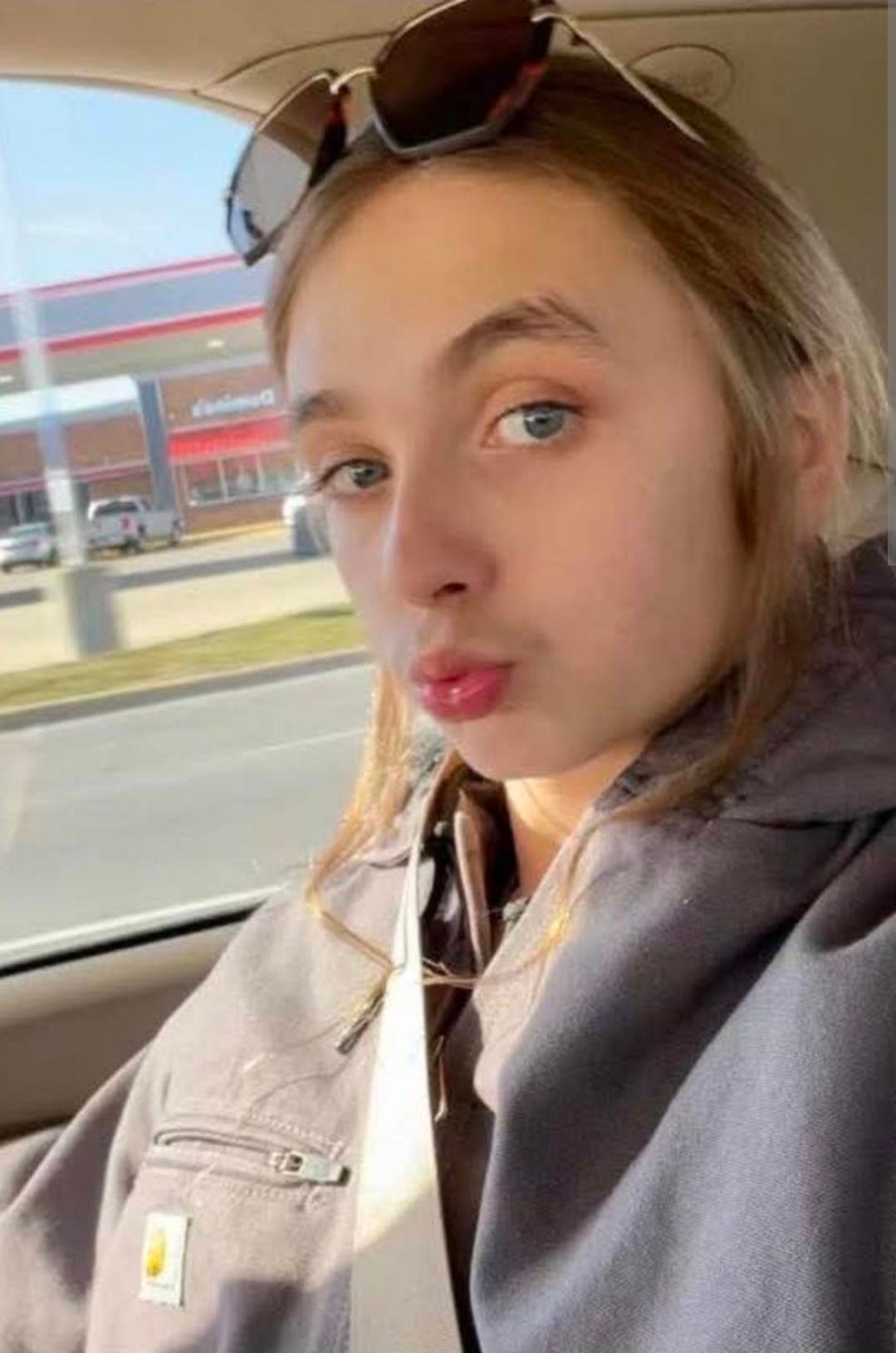
Nathaniel Potts was 16 years old. He was unarmed. He was gender-nonconforming. According to reports, he was running away when he was shot in the back.
That is where the public record has to begin.
Not with an attempt to put a dead teenager on trial. Not with a rush to make the house more important than the gun. Not with questions that turn Nathaniel’s presence into the center of the story while the adult who allegedly fired the fatal shot becomes background.
Nathaniel was killed on May 20, 2026, in Raleigh, Illinois. Justin D. Maloney, 41, has been charged with three counts of first-degree murder in connection with his death. Local reporting said Maloney claimed he was responding to a break-in at the home of his grandfather, Charles Maloney. Investigators recovered spent shotgun shell casings outside the home and determined that two shots had been fired.
The second shot took Nathaniel’s life.
That detail matters because the case is not only about a reported confrontation. It is about an armed adult, an unarmed teenager, and what prosecutors say happened as Nathaniel tried to flee. During the detention hearing, the court cited the assaultive nature of the incident, a six-second lapse between gunshots, alleged statements before the shooting, and allegations that Nathaniel was attempting to flee. A Saline County judge ordered Maloney held in jail pending trial after finding that prosecutors met the burden for pretrial detention and that no release conditions would adequately reduce the danger.
That ruling is the update. It means the court did not treat this as a simple misunderstanding or a routine self-defense claim at this stage. The judge heard testimony, reviewed the arguments, and ordered Maloney to remain detained while the murder case moves forward. That does not decide guilt before trial, but it does show the seriousness of what prosecutors placed before the court.
The law will sort through the charges, the evidence, and the courtroom arguments. But the public framing matters too, because the first instinct in cases like this is often to ask what the child did wrong before asking why an adult used deadly force.
Nathaniel is not on trial.
The “why was he there” question can matter legally, but it cannot become a public excuse for his death. Teenagers are supposed to survive bad decisions. They are supposed to be questioned, corrected, protected, brought home, or held accountable through systems that do not end with a shotgun blast. A 16-year-old reportedly running away from an armed adult should not become a death sentence.
Illinois State Police took over the investigation because of a potential local conflict involving local authorities. Local reporting said Saline County deputies first responded to the Raleigh Chapel Road home after 9 p.m., and Illinois State Police were called in to assist because of an internal conflict of interest. That makes public scrutiny necessary. In a small town, grief can be pressured into silence fast. Families can be left fighting not only for justice, but for the facts to stay visible long enough for accountability to survive.
No charges have been filed against Charles Maloney based on the reports available. Family members and community voices have raised questions about Nathaniel’s relationship to the household and why he was there. Those claims should be handled carefully because they may become part of future proceedings, and not every community allegation can be independently confirmed before trial.
But one thing does not require speculation: Nathaniel was an unarmed teenager. He is dead. The adult with the gun is alive and charged with murder.
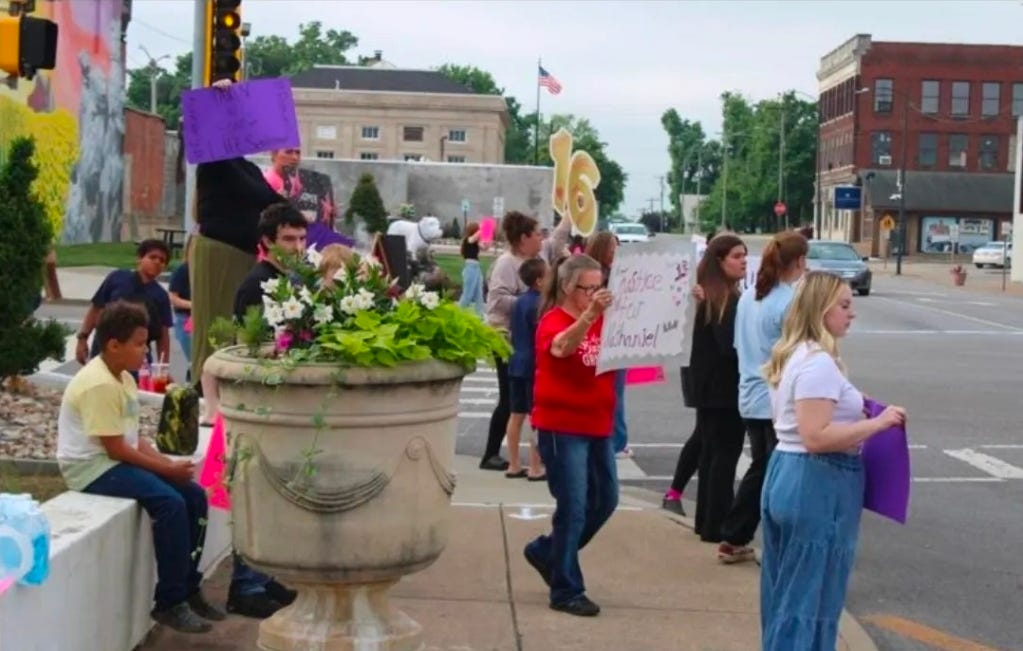
Nathaniel’s family and friends have demanded that his name stay in the public eye. They protested outside court, held signs, and pushed back against any attempt to let the case disappear into a local crime brief or courtroom docket number.
That public pressure matters because gender-nonconforming children are often denied the full dignity of being seen after violence. Their identity can be weaponized against them, their choices dissected, and their vulnerability twisted into blame. Too often, their deaths are softened, misclassified, or buried under language that never fully names who they were.
Nathaniel’s friends described him as kind, respectful, helpful, and full of life. People remembered doing hair, trying on clothes, experimenting with makeup, and sharing the ordinary teenage moments that make a life feel real. He was still becoming himself. He was still exploring who he was. He was still at the age when identity should have had room to breathe.
That is part of the loss.
Nathaniel was denied the future where he could define himself more fully. He was denied the years where language, confidence, community, and safety might have given him more ways to name his own life. Because of that, this article uses gender-nonconforming carefully. Friends and family have placed Nathaniel within the LGBTQ+ community, but there is not enough public confirmation to assign a more specific identity.
That precision is not hesitation. It is respect.
When this publication discusses trans victims in a broader data and violence context, trans is used as an umbrella term that can include people whose lives, identities, or presentation resist rigid gender binaries. But Nathaniel’s own public description should stay grounded in what is known: he was a gender-nonconforming teenager whose life was taken before he had the chance to keep becoming.
That loss sits inside a larger pattern. Trans and gender-nonconforming people are often made invisible twice: first by violence, then by the systems that fail to record them accurately. When a victim is misgendered, reduced to a legal name, stripped of community context, or reported only through the language of the accused, the public record becomes another site of harm.
Nathaniel’s death should not be treated that way.
The public does not need to decide every question before trial to understand the moral center of this case. An unarmed 16-year-old was reportedly running away. An adult allegedly fired. Prosecutors charged murder. A judge ordered detention. Family and friends are demanding justice.
That is enough to keep the pressure where it belongs.
Under the prosecutor’s account, the fatal choice belonged to the adult with the gun. Nathaniel paid for it with his life.
Related pattern: When the government erases trans people from federal data, deaths like Nathaniel Potts’s become easier to misclassify, undercount, or forget.
The Trump Administration’s Erasure of Harm Against Trans People from the Internet — How Federal Data Changes Hide Violence

Have you noticed the sudden drop in media reporting about violence against transgender people? In recent months, fewer national stories have documented killings, assaults, and hate-motivated attacks targeting trans communities. That silence does not necessarily mean the violence has stopped. In fact, the explanation may lie elsewhere — in changes to the…
Nathaniel Potts should still be alive.
He should have had time to grow, change, define himself, find his people, and become more than the last moments now being argued over in court. Instead, his name is being carried by family, friends, and a community trying to keep a gender-nonconforming child from being reduced to a case file.
Trans United keeps the record public because trans and gender-nonconforming people are too often erased after violence: erased by bad data, erased by careless reporting, erased by systems that refuse to name the harm clearly.
Upgrade to a paid subscription to help keep this record visible.
Visibility can become pressure. Pressure can become accountability. Accountability is the least a child deserves after being shot in the back.
Source note: Reporting reviewed from WFIW, WPSD Local 6, The Southern / Paxton Media Group, PGH Lesbian Correspondents, and local coverage citing Illinois State Police and Saline County court proceedings.
I am from Alabama and have been to this part of Illinois, you can’t tell the difference in rural Alabama and southern Illinois. Sometimes I think the racism and gender bigotry is greater in the rural areas of northern states. Maybe because there has not been as much diversity. Just white Lutheran and Catholics straight people.
Such a Shame A beautiful young life snuffed out