

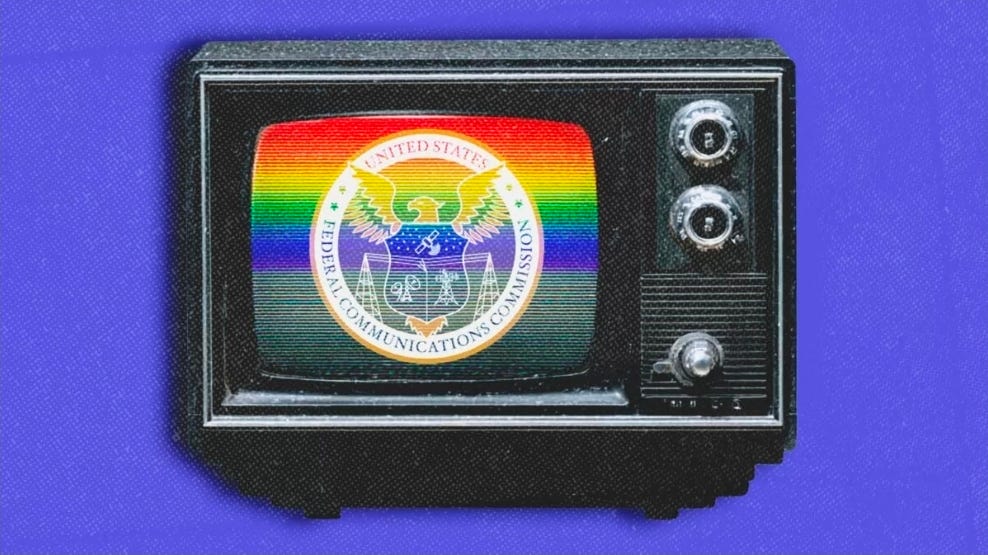
The Federal Communications Commission is considering whether television ratings should be changed to flag programs that depict or discuss gender identity. On paper, the agency is presenting the question as a matter of parental disclosure. In reality, the proposal tests something far more dangerous: whether the federal government can pressure the television industry to treat trans content and trans existence as material that requires a warning label. That is not a neutral ratings update. It is an attempt to move anti-trans politics into the machinery of broadcast regulation.
The current television ratings system was created after the Telecommunications Act of 1996, when broadcasters developed voluntary content ratings for television shows. Those ratings already include broad categories such as TV-Y, TV-PG, TV-14, and TV-MA, along with labels for violence, sexual content, suggestive dialogue, and language. The FCC’s April notice suggests those existing warnings may not be enough because some parents have complained that “controversial gender identity issues” are appearing in children’s programming without additional disclosure. That framing is the heart of the problem. The agency is not talking about violence, explicit sexual content, or profanity. It is talking about transgender and nonbinary people being present, discussed, or represented on screen.
That distinction matters because a warning label is never just a label. Ratings systems tell audiences what the culture considers dangerous, mature, inappropriate, or requiring supervision. When the government asks whether “transgender and gender non-binary programming” should be specially flagged, it is not simply giving parents more information. It is placing trans and nonbinary lives in the same regulatory neighborhood as content treated as potentially harmful for children. That is how stigma becomes policy: not through a ban first, but through a mark.
The FCC’s legal authority is also a central issue. The 1996 law allowed the government to act only if the private sector failed to create a voluntary ratings system within a set period. The television industry did create that system, and the FCC accepted it in 1998 as meeting the statutory requirements. That history matters because the government is now reaching back into a system it does not directly control and inviting pressure around a politically targeted category of speech. Even if the FCC does not formally write a new rating rule, the act of asking whether trans-related programming needs special treatment can chill speech by signaling what content the agency considers suspect.
Free speech groups have warned that the proposal raises First Amendment concerns because it appears to target viewpoint and identity. If any program featuring or discussing transgender or nonbinary people can trigger a special warning, then the government is not regulating a neutral content category. It is pressuring speech based on a political and cultural message. The issue is not that a child might see a trans character on television. The issue is that the government is treating the sight of that character as something parents need to be warned about.
Supporters of the proposal claim this is only about transparency, but that argument collapses under the weight of what is being labeled. Parents already have tools to review programs, block content, read descriptions, and make viewing choices for their homes. The FCC is not filling a gap around explicit material. It is responding to political complaints that trans identity itself is being “included or promoted” in children’s programming. That word, “promoted,” is doing a lot of work. It turns representation into recruitment, presence into agenda, and ordinary visibility into a threat.
This is the same old pattern with a new target. In the late 1990s, when gay characters appeared more visibly on mainstream television, some social conservatives called for warnings around “homosexual content.” Now the same logic is being recycled against transgender and nonbinary people. The claim is always framed as concern for children, but the function is always the same: mark LGBTQ presence as suspect, pressure media companies to avoid it, and tell families that some people’s lives are inappropriate for public view.
The human consequence is not theoretical. Trans children watch television. Trans parents watch television. Families with trans and nonbinary loved ones watch television. When the federal government suggests that gender identity content may require a special warning, it tells those families that their ordinary lives are controversial material. It tells trans kids that seeing themselves on screen is not normal representation, but something adults may need to filter out. That message lands far beyond one rating label. It becomes another signal that the state sees trans content and trans existence as a problem to manage.
This is why the free speech frame and the civil rights frame belong together. A government agency cannot constitutionally convert political hostility toward trans people into broadcast guidance. It cannot pressure private ratings boards to mark trans content as dangerous while pretending it is only helping parents. And it cannot treat transgender and nonbinary representation as a category of harm without reinforcing the same public stigma that fuels censorship, harassment, and exclusion.
The proposal also exposes the deeper contradiction in the “parental rights” framing. Parents who do not want their children to watch certain programs already have the ability to make that decision. What they do not have is a constitutional right to make the government stigmatize an entire group of people on their behalf. The state does not issue a warning because a child might see a nonbinary person at a grocery store, a trans teacher at school, or a queer family at the park. It should not pressure broadcasters to issue one because a similar person appears on television.
The FCC is testing the boundary between disclosure and state-backed stigma. If the agency can turn trans content into a ratings issue, the next step is obvious: media companies begin avoiding trans stories, children’s programming becomes more hostile to trans visibility, and public speech narrows under the threat of regulatory attention. That is censorship pressure even if no formal ban is written. It teaches the industry what kind of visibility may invite trouble.
This is not about protecting children from harm. It is about making trans and nonbinary people look like harm. The FCC should not be helping political actors turn identity into a warning label. Trans people are not obscene, indecent, profane, or dangerous because they appear on screen. They are human beings, families, neighbors, children, parents, artists, teachers, and citizens whose lives cannot be pushed behind a government-backed content alert.
A ratings system should not become a tool for state-sponsored trans erasure. The government has no business teaching the public that transgender and nonbinary existence is something to screen, flag, filter, or fear. The real issue is not whether parents can choose what their children watch. The issue is whether the federal government can pressure media systems to mark trans people as inappropriate before the story even begins.
When the government tries to turn trans content into a warning label, the harm does not stop at television. It teaches media companies to avoid trans stories, teaches families that trans visibility is dangerous, and teaches trans children that their lives are something adults should be warned about.
This work exists to name that pattern before it becomes policy.
Support independent reporting that tracks anti-trans state power, public-record erasure, censorship pressure, and the systems trying to push trans people out of public life.
Upgrade to a paid subscription or share this report so more people can see how anti-trans censorship is being built.
but bombs being dropped on the boats of fisherman, or on a school for girls? Spread that shit everywhere!
FCC should check to see if their own content is harmful wtf