

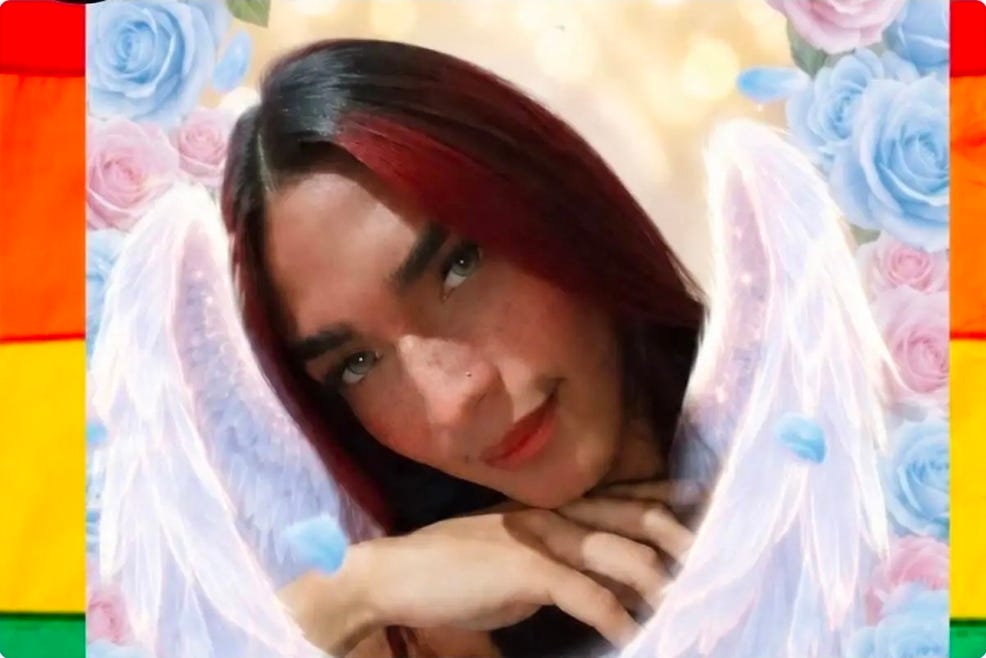
Laura is the protected name used by Asociación Silueta X and Observatorio Runa Sipiy for a trans woman killed in Quevedo, Ecuador. The organizations documented her gender identity while her full forensic identification remained pending.
Her remains were found Aug. 14 in two locations in the Venus del Río Quevedo area of Los Ríos province. Runa Sipiy reported that Laura had been killed, decapitated and dismembered. The unresolved record extends beyond that violence: her full identity, who killed her, the motive and the extent of the state’s investigative response remained unanswered.
Before those answers existed, trans organizations were already working to keep Laura’s identity from disappearing behind descriptions of unidentified human remains. They also called for her full identification and for her remains to be returned with dignity.
Trans United describes that gap as erasure after death: Laura entered the public record as unidentified remains while trans organizations worked to preserve her gender and humanity before her full forensic identity had been established.
Laura’s case also connects to a documentation pattern Trans United has previously tracked: when gender identity disappears from official records or early reporting, a trans person can become harder to find, count and connect to the broader record of violence against trans people. In Laura’s case, the first public record centered unidentified remains; trans organizations later supplied the protected name and gender identity needed to restore a trans woman to that record.
The accountability process was unclear from the beginning. Local reporting said police responded to the discovery and began investigating the remains. But Runa Sipiy reported that, as of Aug. 15, no formal Fiscalía investigative process had been opened in Laura’s case and demanded that Ecuador’s Fiscalía assign a prosecutor. The distinction matters: authorities were examining the scene, while trans-rights organizations were simultaneously asking for a formal prosecutorial case capable of moving from identification toward responsibility.
By Aug. 19, those questions remained unresolved. Diane Rodríguez of Silueta X told Radio Pichincha that there was still insufficient public information about an official investigation, possible detainees or the circumstances surrounding Laura’s killing. The Runa Sipiy alert had already called for identification, investigation and arrests; advocates were still asking what authorities had established.
No perpetrator has been publicly identified in Laura’s killing. No anti-trans motive has been publicly established. Silueta X and Runa Sipiy have preliminarily classified Laura’s killing as a transfemicide and called for investigators to examine whether hatred or discrimination connected to her gender identity played a role. Rodríguez has also emphasized that determining that motive is the responsibility of investigators. Laura’s trans identity belongs in the record because community organizations identified her as a trans woman.
Her death also sits inside a wider record of lethal violence documented by Ecuador’s trans community. Silueta X said its monitoring had recorded 18 killings of LGBTIQ+ people in Ecuador during 2026 as of Aug. 19, including 16 trans women. Those are the organization’s community-monitoring figures, not official national statistics, and Rodríguez has criticized the absence of consolidated official data capable of showing patterns and accountability gaps affecting LGBTIQ+ people.
The consequences of that violence extend beyond the people already killed. Rodríguez said some trans people in Ecuador are changing how they work, limiting their exposure in public spaces and even considering leaving the country because of fear. That broader climate explains why an unresolved killing of a trans woman carries consequences far beyond one police file.
Laura should not remain only a protected name attached to an unresolved killing. Trans organizations began demanding full identification, notification of her family or support network, dignified return of her remains and a formal investigation. Those demands now sit alongside the unanswered questions of who killed her and why.
The public record began with remains found in two places. It now identifies Laura as a trans woman whose protected name was preserved by community organizations while the circumstances of her killing and responsibility for her death remain unresolved. Accountability requires that the record move beyond identifying what was found in Quevedo and establish what happened to Laura, who was responsible, and whether her gender identity played any role in her killing.
Laura was killed in Quevedo, and trans-rights organizations intervened to keep her identity visible while demanding full identification, a formal investigation and accountability for her death.
Support Trans United as we preserve Laura’s name in the public record and continue documenting the unanswered questions surrounding her killing and the demand for accountability.
Upgrade to a paid subscription ↓
TRANS UNITED — ERASURE PATTERN NOTE
Laura’s case extends an erasure pattern Trans United has documented across multiple trans deaths: the violence happens first, then the public record struggles to preserve who the trans person actually was.
In the United States, that has appeared through deleted gender-identity data, police misgendering, deadnaming, thin homicide coverage, and public systems that leave families and communities to reconstruct the record. Trans United documented that pattern in its broader investigation into disappearing gender-identity data, and again in the deaths of Asia Williams, Paris, Jade Roberts, and Jayla McGee.
Laura shows that the outcome can extend across borders without assuming the same institutional cause. In Quevedo, her death entered the public record through unidentified remains before trans organizations restored a protected name and her identity as a trans woman. Different systems may produce the gap differently, but the consequence is recognizable: when official records fail to preserve trans identity, trans deaths become harder to find, count, connect, and remember.
Related Trans United records
The Trump Administration’s Erasure of Harm Against Trans People from the Internet
A Black Trans Woman Was Shot To Death In Baltimore. Her Name Was Asia Williams